- Challenges Faced by Survivors
- Unique Challenges Faced by Vulnerable Populations
- Challenges Faced by Childhood Cancer Survivors
- Challenges Faced by Adolescents and Young Adults
- Challenges Faced by Older Adults
- Improving Quality of Life and Health Outcomes
- Participating in Physical Activity
- Eating a Healthy Diet and Maintaining a Healthy Weight
- Eliminating Alcohol and Tobacco Use
- Improving Mental Health
- Integrating Supportive Care
- Delivering Care to Cancer Survivors
- Supporting Caregivers
Advancing Cancer Survivorship Care
In this section, you will learn:
- As of January 1, 2025, an estimated 18.6 million people were living with a history of a cancer diagnosis in the United States.
- Cancer survivors face a multitude of physical, emotional, and financial challenges because of their cancer and treatment.
- Eating a healthy diet, eliminating alcohol and tobacco use, and engaging in regular physical activity can improve overall health and quality of life during survivorship.
- Childhood, adolescent and young adult, and older adult survivors have unique survivorship needs that require specialized approaches to care.
- Effective survivorship care requires coordinated approaches that help survivors access the care and resources needed to support their long-term health, well-being, and quality of life.
- Caregivers play an essential role in supporting people with cancer, yet they often experience significant challenges of their own. Recognizing and addressing caregiver needs is an important component of comprehensive survivorship care.
Contents
According to the National Cancer Institute (NCI), an individual is considered a cancer survivor from the time of diagnosis throughout the remainder of life (749)Mollica MA, et al. (2025) Cancer, 131: e70039.. Cancer survivors represent a diverse population with a wide range of experiences, disease trajectories, and care needs. For example, some individuals complete treatment and remain cancer-free, whereas others may live with cancer as a chronic disease.
Remarkable advances in cancer research and treatment over the past decade have led to more patients living longer and fuller lives after a cancer diagnosis. As of January 1, 2025, more than 18.6 million adults and children with a history of cancer were living in the United States (US), and this number is projected to exceed 22 million by 2035 (13)Wagle NS, et al. (2025) CA Cancer J Clin, 75: 308.. This represents a substantial increase since 1971, when there were an estimated three million cancer survivors in the United States (750)Centers for Disease Control and Prevention. (2004) MMWR Morb Mortal Wkly Rep, 53: 526.
As more people are living longer and fuller lives after a cancer diagnosis, a greater understanding of survivorship experiences is needed. These include physical, psychosocial, and financial challenges that can affect health and quality of life during and after treatment. Many survivors also experience long-term health problems as a result of their cancer and its treatment, known as late effects. These late effects can emerge or persist long after treatment ends, highlighting the importance of long-term follow-up care.
A diagnosis of cancer also impacts friends, family members, and other caregivers, who often serve as the primary support network of the survivor. Survivors and caregivers from medically underserved populations frequently face additional financial, emotional, and logistical burdens that can compound the challenges of survivorship. As a result, survivorship research, support, and care must extend beyond the cancer patient and survivor to include individuals who make up the broader support network.
The following sections highlight key challenges faced by cancer survivors and their support networks, strategies to improve long-term health and quality of life, and evidence-based approaches for delivering high-quality survivorship care.
Challenges Faced by Survivors
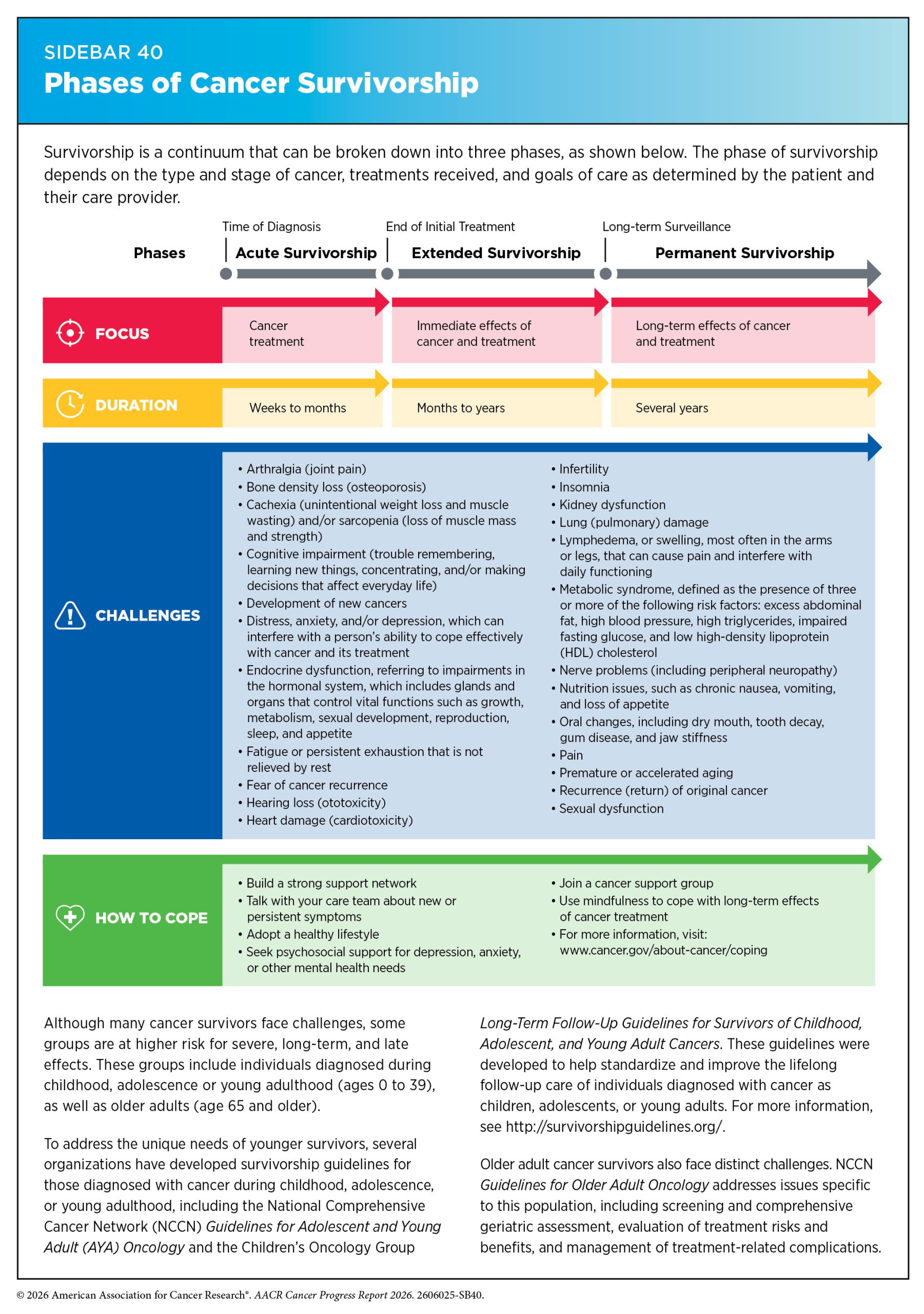
Depending on the cancer type and stage, as well as the age at diagnosis, survivorship encompasses a broad range of experiences related to living with and beyond cancer (see Sidebar 40). Cancer survivors often face physical, psychosocial, and financial challenges that arise from the cancer itself and its treatment. These challenges can emerge during treatment or long after its completion, requiring ongoing care and support.
Physical Challenges
Survivors can experience a wide range of short- and long-term symptoms caused by cancer or its treatments. Short-term effects include hair loss, pain, nausea, vomiting, and loss of smell and appetite, with varying severity of symptoms depending on the person, cancer type, and treatment regimen. As cancer survivors are living longer because of better therapies, the development of long-term side effects, such as heart damage (cardiotoxicity), lung damage, loss of bone density, neuropathy, and cognitive decline, is becoming more common and demands a greater understanding to reduce or manage these conditions.
Many common cancer therapies can adversely affect the cardiovascular system, contributing to long-term morbidity and mortality among cancer survivors (752)Li Q, et al. (2025) EClinicalMedicine, 84: 103274.(753)Strongman H, et al. (2022) JACC CardioOncol, 4: 113.. This treatment-related heart damage, known as cardiotoxicity, can occur during or after cancer therapy. Certain chemotherapeutic agents (e.g., anthracyclines), molecularly targeted therapies, and radiation exposure can cause cardiotoxicity, leading to cardiomyopathy, coronary artery disease, heart failure, and other cardiovascular complications (752)Li Q, et al. (2025) EClinicalMedicine, 84: 103274.(754)Herrmann J (2020) Nat Rev Cardiol, 17: 474..
Recent studies are helping to explain why some cancer survivors are at greater risk of cardiovascular complications after treatment. A recent study found that clonal hematopoiesis—an age-related buildup of genetic changes in blood-forming stem cells—was associated with higher risk of heart failure after cancer therapy (755)Shyr D, et al. (2026) JAMA Oncol, 12: 251.. These findings suggest that testing for clonal hematopoiesis may one day help identify high-risk survivors who could benefit from closer cardiac monitoring. Researchers are also developing risk prediction models that use clinical data from electronic health records (EHRs) to identify patients at greatest risk for treatment-related cardiovascular complications and guide more targeted cardiac surveillance during and after cancer treatment (756)Barac A, et al. (2025) JAMA Oncol, 11: 1479.(757)Shah I, et al. (2026) Radiother Oncol, 218: 111455..
Chemotherapy-induced peripheral neuropathy (CIPN) is a common and often debilitating adverse effect of cancer treatment. Symptoms of CIPN include numbness, tingling, burning, painful, or electric shock–like sensations in the hands and feet that can impair daily functioning and overall quality of life (758)Karschnia P, et al. (2025) Nat Rev Cancer, 25: 887.. In severe cases, CIPN may require dose reductions or early treatment discontinuation to alleviate symptoms, potentially compromising treatment effectiveness and survival (758)Karschnia P, et al. (2025) Nat Rev Cancer, 25: 887.. While some symptoms subside over time, nearly one-third of survivors experience persistent, painful neuropathy lasting 6 months or longer after treatment completion (759)Seretny M, et al. (2014) Pain, 155: 2461..
Options for managing CIPN remain limited, as there are no medications approved by the US Food and Drug Administration (FDA) specifically for its treatment or prevention. Duloxetine, an antidepressant medication also used to treat certain types of nerve pain, is recommended by some cancer-focused organizations for treating painful CIPN, but its effects are modest (760)Jordan B, et al. (2020) Ann Oncol, 31: 1306.(761)Loprinzi CL, et al. (2020) J Clin Oncol, 38: 3325.. Recent studies suggest that nonpharmacologic strategies, including hand cooling with frozen gloves and compression of the hands and/or lower limbs with snug-fitting surgical gloves or compression stockings during chemotherapy, may reduce the risk of CIPN (762)Hanvic B, et al. (2025) Eur J Cancer, 229: 115791.(763)Michel LL, et al. (2025) JAMA Oncol, 11: 408.. Beyond cooling and compression, topical treatments may offer another strategy for reducing CIPN. Findings from a small randomized clinical trial suggest that a topical nociceutical cream, a medicated topical cream intended to calm or protect the skin’s pain-sensing nerves, may reduce or delay CIPN among patients receiving taxane- and/or platinum-based chemotherapy (764)Servitja S, et al. (2026) Clin Transl Oncol, 28: 1040.. However, additional studies are needed to confirm the effectiveness of these approaches across broader patient populations and determine how best to implement them in routine cancer care.
Cachexia is a serious condition characterized by unintentional loss of body weight and muscle mass, weakness, and progressive functional decline in individuals with cancer or other chronic diseases. Cachexia is estimated to affect 50 percent to 80 percent of cancer patients and is associated with reduced treatment tolerance, diminished quality of life, and shorter survival. Cachexia accounts for approximately 20 percent of all cancer-related deaths and is widely recognized as an indicator of poor prognosis (765)Argiles JM, et al. (2014) Nat Rev Cancer, 14: 754.(766)Tan Y, et al. (2026) Signal Transduct Target Ther, 11: 16.. Despite its severity, there are currently no FDA-approved treatments specifically for cachexia (767)Koh K, et al. (2025) Cancer Discov, 15: 1543.. However, recent research is improving understanding of the biological mechanisms underlying the condition and identifying potential therapeutic strategies.
A recent clinical trial found that ponsegromab, an investigational drug that blocks growth differentiation factor 15 (GDF-15), a protein involved in weight loss, improved body weight, appetite, and physical activity in patients with advanced cancer (768)Groarke JD, et al. (2024) N Engl J Med, 391: 2291.. Ponsegromab is now being evaluated in a larger clinical trial to determine whether the drug can improve outcomes in a broader patient population (769)Mullard A (2025) Nat Rev Drug Discov, 24: 811.. At the same time, emerging research is beginning to reshape how scientists understand cancer cachexia. Rather than being viewed simply as a consequence of reduced food intake, cachexia is increasingly understood as a whole-body condition in which cancer disrupts normal communication among organs and tissues (766)Tan Y, et al. (2026) Signal Transduct Target Ther, 11: 16.(770)Garrett A, et al. (2025) Cell, 188: 6044.(771)Zhang Y, et al. (2026) Cancer Cell, 44: 913.. Early studies suggest that these disruptions may affect inflammation, metabolism, muscle, and brain function in ways that contribute to hallmark features of cachexia, including muscle loss, poor appetite, fatigue, and reduced motivation (770)Garrett A, et al. (2025) Cell, 188: 6044.(772)Bhatt BJ, et al. (2025) Nature, 646: 973.(773)Zhu XA, et al. (2025) Science, 388: eadm8857.. These discoveries are helping researchers identify new ways to detect cachexia earlier and develop treatments that target the underlying biological drivers of the condition.
Cancer and its treatments can contribute to broader physical and functional limitations, placing survivors at increased risk for disability. Recent data show that the prevalence of disability among US cancer survivors, defined as difficulty in any of six functional activities (e.g., difficulty seeing, hearing, remembering or concentrating, walking or climbing stairs, dressing or bathing, or living independently), has increased in recent years, from 40 percent in 2016 to 46 percent in 2024 (774)Pu J, et al. (2026) Cancer Epidemiol Biomarkers Prev.. This growing burden has important implications for survivors’ long-term health and well-being. Studies show that functional limitations and disability among cancer survivors are associated with increased risk of mortality, greater use of emergency room services, psychological distress, and socioeconomic hardship, including employment disruption and cost-related barriers to care (775)Feng Y, et al. (2026) Support Care Cancer, 34.(776)Mevawalla A, et al. (2026) J Cancer Surviv.. These findings underscore the importance of identifying and addressing functional limitations as part of comprehensive survivorship care.
A major concern for cancer survivors is the risk of recurrence or the development of a new, biologically distinct, second primary cancer (SPC). The likelihood of developing an SPC is influenced by many factors, including the type and stage of the original cancer, treatments received, genetic predisposition, lifestyle behaviors (e.g., smoking), and socioeconomic status (777)Zeng M, et al. (2025) J Transl Med, 23: 115.. Compared to the general population, cancer survivors face an estimated 16 percent increased risk of developing an SPC (778)Wang Y, et al. (2025) J Transl Med, 23: 355.. This risk is particularly elevated among individuals with a history of childhood cancer, survivors of Hodgkin lymphoma, and survivors of cancers linked to obesity and tobacco use (777)Zeng M, et al. (2025) J Transl Med, 23: 115.. Recent data also suggest that the risk of SPCs among US cancer survivors has increased substantially over the past two decades, reinforcing the importance of risk-based survivorship care and long-term surveillance (779)Cheng HG, et al. (2026) Cancer Med, 15: e71778..
Population-based data on cancer recurrence remain incomplete because recurrence information is not routinely collected by most cancer registries (780)Penberthy L, et al. (2024) J Natl Cancer Inst Monogr, 2024: 110.. Although the evidence is limited, available studies show that recurrence risk varies widely by cancer type, stage at diagnosis, treatments received, and age at diagnosis (781)Thompson TD, et al. (2020) Cancer Epidemiol, 64: 101653.. For example, a recent study of adolescents and young adults (AYAs) with cancer found that nearly 10 percent developed metastatic recurrence, with the highest risks observed among those with sarcoma, colorectal, cervical, and breast cancers (782)Brunson A, et al. (2026) JAMA Oncol, 12: 75.. As more people live longer after a cancer diagnosis, recurrence tracking has become increasingly important for understanding long-term outcomes and strengthening cancer surveillance. Researchers are developing AI-based and machine learning–based tools to identify recurrence from pathology reports, radiology reports, insurance claims, and other clinical data sources, which may help fill this gap and provide a more complete picture of outcomes after cancer diagnosis (783)Hsu E, et al. (2024) J Natl Cancer Inst Monogr, 2024: 145..
As cancer treatment continues to evolve, the long-term effects of newer therapies are becoming an increasingly important focus of survivorship research. Immune checkpoint inhibitors (ICIs), a type of immunotherapy, are increasingly used to treat a wide range of cancers (see Releasing the Brakes on the Immune System). While ICIs have revolutionized cancer care and improved patient survival, their use has been associated with a distinct range of side effects known as immune-related adverse events (irAEs) (784)Adashek JJ, et al. (2025) Cancer Metastasis Rev, 44: 43.. These irAEs occur when the immune system attacks healthy tissues and can affect nearly any organ system, including the skin, endocrine organs, gastrointestinal tract, lungs, heart, kidneys, joints, and nervous system (703)Wang Y, et al. (2025) NPJ Precis Oncol, 9: 346.(785)Johnson DB, et al. (2022) Nat Rev Clin Oncol, 19: 254.(786)Jayathilaka B, et al. (2025) Br J Cancer, 132: 51.(787)Abraham PE, et al. (2025) Drugs, 85: 1535.. Chronic irAEs, defined as those lasting more than 3 months after treatment discontinuation, may affect up to 50 percent of patients treated with ICIs, with endocrine and joint-related side effects among those most likely to become long-term (785)Johnson DB, et al. (2022) Nat Rev Clin Oncol, 19: 254.(787)Abraham PE, et al. (2025) Drugs, 85: 1535..
Other novel cancer therapies are also creating new survivorship challenges. Chimeric antigen receptor (CAR) T-cell therapies can cause serious immune and neurologic side effects during treatment and may also increase the risk of infections, prolonged low blood cell counts, and SPCs (788)Zhu Y, et al. (2025) EClinicalMedicine, 84: 103267.(789)Camacho-Arteaga L, et al. (2025) JAMA Netw Open, 8: e2461683..
Antibody–drug conjugates and molecularly targeted therapies can also cause treatment-specific side effects, including lung inflammation, ocular toxicities, skin changes such as rash and itching, gastrointestinal symptoms, and cardiovascular complications (790)Tan HN, et al. (2025) J Hematol Oncol, 18: 71.(791)LeVee A, et al. (2025) Am Soc Clin Oncol Educ Book, 45: e473384.. As these therapies are used more widely and earlier in the course of cancer treatment, continued research is needed to better understand their long-term effects.
Advances in immune cell-based therapies are also creating new opportunities to reduce serious long-term complications of cancer treatment. In 2026, FDA approved Tregzi, a treatment made from donor immune cells that is designed to lower the risk of chronic graft-versus-host disease, a serious complication after stem cell transplant that can affect long-term health and quality of life for patients with blood cancers (792)US Food and Drug Administration. FDA Approves New Treatment That Uses Donor Immune Cells to Prevent Serious Complications in Blood Cancer Patients. Accessed: June 30, 2026..
Psychosocial Challenges
A cancer diagnosis can pose serious challenges to an individual’s mental and emotional well-being. Studies consistently show that cancer survivors experience a greater burden of mental health and psychosocial challenges than individuals without a history of cancer, including elevated risks of depression, anxiety, post-traumatic stress disorder, cognitive difficulties, and fear of cancer recurrence (793)Ge MW, et al. (2025) Psychooncology, 34: e70077.(794)Kim I, et al. (2025) BMJ Open, 15: e090157.. These challenges may be especially pronounced in the months and early years following a cancer diagnosis, as patients navigate the psychological, physical, and practical demands of cancer care. In a large study of nearly 372,000 adults with cancer, more than 1 in 10 patients developed a new mental health disorder within the first year of diagnosis, most commonly anxiety or depressive disorders (795)Ganjouei AA, et al. (2026) Cancer, 132: e70254.. These early mental health disorders were associated with a 51 percent increased risk of death in the first several years after diagnosis.
Loneliness is an increasingly common and concerning issue among cancer survivors. Recent research indicates that more than one in three survivors in the United States experience moderate to severe loneliness, particularly those with poor physical or mental health, financial hardship, or limited social support (796)Wheldon CW, et al. (2025) Sci Rep, 15: 3914.. These experiences can affect multiple dimensions of cancer survivorship, including health and quality of life. In a study of more than 17,000 US cancer survivors, those who reported loneliness were more likely to report poor quality of life, poor physical and mental health, severe pain, and fatigue (797)Lee H, et al. (2026) Qual Life Res, 35: 44.. Loneliness and social isolation have also been associated with increased risk of death among patients with cancer (798)Cheng S, et al. (2025) BMJ Oncol, 4: e000840..
Cancer survivors also face a higher risk of suicide than individuals without a history of cancer (799)Bogner S, et al. (2025) EClinicalMedicine, 90: 103670.(800)Martinez-Calderon J, et al. (2025) Cancers (Basel), 17.. Encouragingly, national data show that cancer-related suicide rates in the United States have declined over the past several decades (801)Han X, et al. (2021) J Natl Cancer Inst, 113: 1258.(802)Liu Q, et al. (2024) Transl Psychiatry, 14: 213.. This decline may be attributable to advances in cancer treatment, increased availability and integration of psychosocial support and palliative care services, and more effective management of cancer-related symptoms and distress.
However, these gains have not been shared equally across all survivor populations. Recent data point to concerning increases in suicide deaths among AYA cancer survivors, particularly males, highlighting the importance of age-appropriate mental health screening and suicide prevention services as part of comprehensive survivorship care (803)Matsuo K, et al. (2024) JAMA Netw Open, 7: e2442964..
Financial Challenges
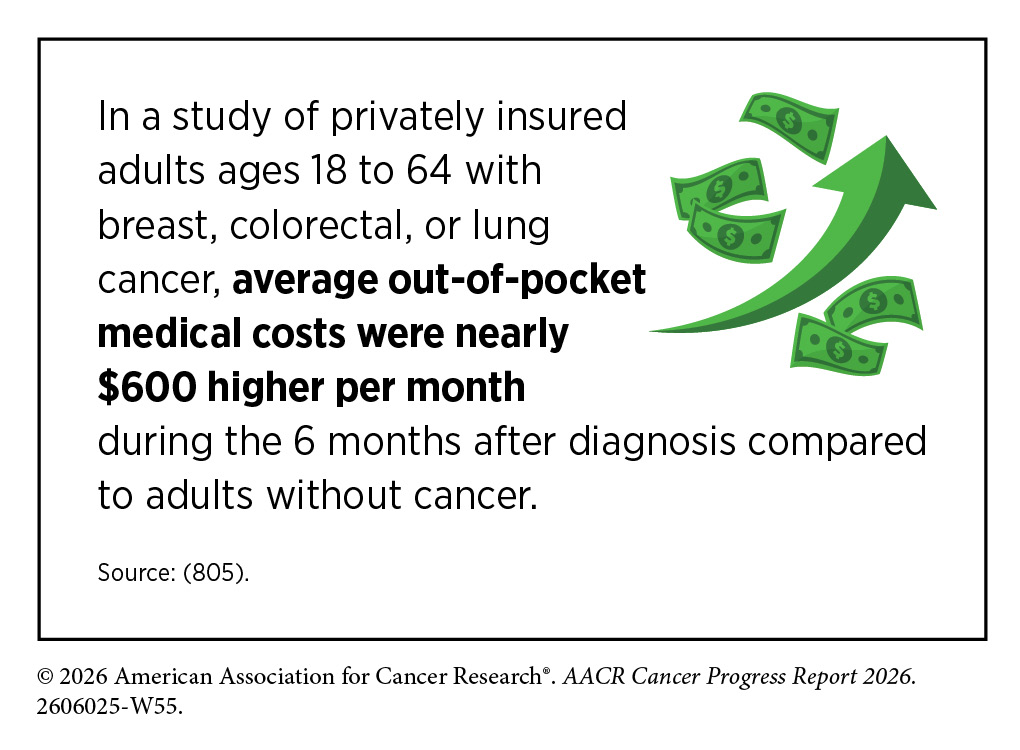
Financial toxicity refers to the financial burden and distress experienced by patients and their families as a result of cancer diagnosis and treatment, as highlighted in the personal story of Shauna McLaughlin and her daughter Madison (Maddie) Bergstrom. Evidence suggests that nearly half of cancer survivors experience some degree of financial hardship, driven in part by the out-of-pocket costs associated with cancer care (804)Wang S, et al. (2024) Eur J Oncol Nurs, 68: 102489.. These costs can begin immediately after diagnosis and may be especially high during the initial treatment period, even among patients with private insurance. For example, a recent study of privately insured adults (aged 18 to 64 years) found that a new diagnosis of breast, colorectal, or lung cancer was associated with nearly $4,150 in additional out-of-pocket costs during the month of diagnosis and the subsequent 6 months (805)Rose L, et al. (2025) JAMA Netw Open, 8: e2521575.. Patients diagnosed with more advanced-stage disease experienced the highest out-of-pocket costs.
The financial burden of cancer is not experienced equally, with certain groups disproportionately affected. Cancer survivors with lower household incomes, those living in disadvantaged neighborhoods or communities, those who are uninsured or publicly insured, and individuals enrolled in high-deductible or high cost-sharing health plans are at especially high risk for financial hardship (806)Barnes JM, et al. (2026) JAMA Netw Open, 9: e2556451.(807)Dhir A, et al. (2024) JAMA Netw Open, 7: e2429286.(808)Yabroff KR, et al. (2024) CA Cancer J Clin, 74: 341.. Working-age adults may face additional challenges because cancer diagnosis and treatment can disrupt employment, leading to lost income and potential loss of employer-based health insurance (808)Yabroff KR, et al. (2024) CA Cancer J Clin, 74: 341..
Financial toxicity can have serious consequences for cancer survivors and their families. High costs of cancer care may lead patients to delay or forgo needed care because of cost, borrow money, accumulate debt, or file for bankruptcy to pay for care (809)Han X, et al. (2020) Cancer Epidemiol Biomarkers Prev, 29: 308.(810)Mollica MA, et al. (2024) Support Care Cancer, 32: 137.(811)Uppal N, et al. (2025) JAMA Oncol, 11: 1321.(812)Yabroff KR, et al. (2016) J Clin Oncol, 34: 259.. Financial hardship is also associated with worse health outcomes, including increased depression, anxiety, pain, and higher mortality risk (813)Chen M, et al. (2026) J Cancer Surviv.(814)Williams CP, et al. (2026) JCO Oncol Pract: OP2500683.(815)Zheng Z, et al. (2024) Cancer, 130: 2938.. These financial pressures can also affect patients’ ability to meet basic needs. Evidence suggests that cancer survivors who experience medical financial hardship are more likely to report health-related social needs, including food insecurity, housing insecurity, and transportation barriers (816)Angez M, et al. (2026) J Cancer Surviv.(817)Mengesha SZ, et al. (2026) Cancer Res Commun, 6: 803.(818)Xing J, et al. (2026) JCO Oncol Pract, 22: 159.. In a recent study, adults currently undergoing cancer treatment had nearly twice the odds of housing insecurity, defined as being unable to pay rent, mortgage, or utility bills in the past year, compared to adults without a cancer history (819)Nguyen TD, et al. (2025) Cancer Med, 14: e71436..
Mitigating financial toxicity will require coordinated action across health care systems, employers, policymakers, and community organizations. In oncology settings, routine screening for health-related social needs and financial hardship can help identify patients at risk and connect them with financial navigation, insurance and cost-related assistance, transportation and housing resources, and other support services (820)Banegas MP, et al. (2025) JCO Oncol Pract, 21: 1512.(821)De Moor JS, et al. (2026) J Natl Cancer Inst.. At the same time, broader policy and social support, including paid sick leave, employment protections, affordable health insurance, and housing assistance, may help patients maintain income, health insurance coverage, and financial stability during and after treatment (821)De Moor JS, et al. (2026) J Natl Cancer Inst.(822)Chen KL, et al. (2025) JAMA Netw Open, 8: e2528976.(823)Kohut-Jackson A, et al. (2026) JCO Oncol Pract: OP2600261.. Together, these strategies can help reduce the financial burden of cancer and support continuity of care without compromising patients’ financial security or basic needs.
Unique Challenges Faced by Vulnerable Populations
Although many cancer survivors face physical, psychosocial, and financial challenges, certain populations have unique survivorship needs that require specialized approaches to care. Factors such as age at diagnosis, developmental stage, treatment exposures, comorbid health conditions, and social determinants of health can shape survivorship outcomes and influence the type of care and support that survivors require. The following sections highlight key survivorship challenges and emerging approaches to care for childhood, adolescent and young adult, and older adult cancer survivors.
Childhood Cancer Survivors
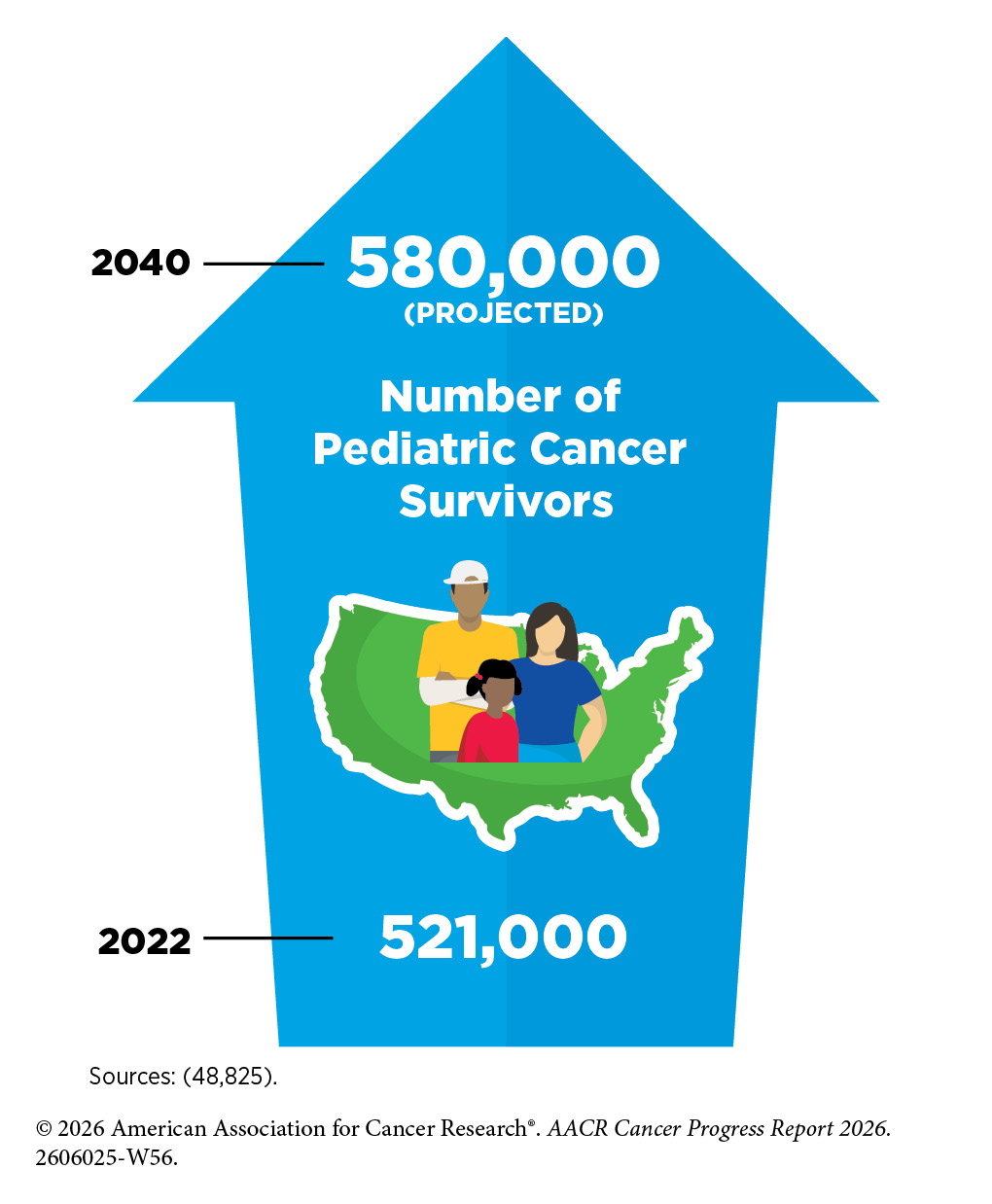
Childhood cancer survivors include individuals of any age who were diagnosed with cancer during childhood (ages 0–14 years). In 2026, an estimated 9,680 children will be diagnosed with cancer, and over 700 will die from the disease (5)Siegel RL, et al. (2026) JAMA. 335: 632. doi:10.1001/jama.2025.25467. Thanks to advances in cancer treatment, the overall 5-year relative survival rate for childhood cancer has improved markedly over the past several decades, from just 58 percent in the mid-1970s to more than 85 percent today (48)NCI Childhood Cancer Data Initiative. NCI NCCR*Explorer. Accessed: June 30, 2026.(824)Siegel RL, et al. (2025) CA Cancer J Clin, 75: 10.. While advances in oncology have markedly improved survival rates, childhood cancer survivors face a substantial burden of long-term and late effects because cancer and its treatment occur during critical periods of growth and development. The type and severity of these late effects depend on several factors, including the cancer type and stage at diagnosis, the specific type of treatment and doses received, as well as the survivor’s age and overall health at the time of treatment.
Children treated with cisplatin chemotherapy are at increased risk of developing hearing loss, also called ototoxicity. One study found that 75 percent of children 5 years of age or younger and 48 percent of children older than 5 years experienced cisplatin-related hearing loss within 3 years of starting therapy (826)Meijer AJM, et al. (2022) Cancer, 128: 169.. In September 2022, FDA approved sodium thiosulfate to reduce the risk of hearing loss associated with the chemotherapeutic cisplatin in pediatric patients. Sodium thiosulfate reduced the risk of cisplatin-associated hearing loss by nearly 50 percent compared to those who did not receive the drug (827)Brock PR, et al. (2018) N Engl J Med, 378: 2376.. More recent analyses suggest that sodium thiosulfate may provide substantial protection among children at highest risk for hearing loss, including those younger than 5 years and those treated for hepatoblastoma, neuroblastoma, or medulloblastoma, reducing their risk by up to 80 percent to 90 percent (828)Ohlsen TJD, et al. (2025) Pediatr Blood Cancer, 72: e31479..
Childhood cancer survivors are also at increased risk for treatment-related cardiotoxicity, which is a major contributor to long-term morbidity and premature mortality. Anthracycline chemotherapy and radiation are well-established contributors to late cardiovascular disease, including cardiomyopathy, heart failure, coronary artery disease, valvular disease, and other cardiovascular complications (829)Bhatia S, et al. (2023) JAMA, 330: 1175.(830)Ryan TD, et al. (2025) Circulation, 151: e926.. Emerging therapies, including immunotherapies and targeted agents, may introduce new cardiovascular risks that are not yet fully understood in pediatric survivor populations (831)Lim HM, et al. (2025) Curr Treat Options Oncol, 27: 1.. Despite these risks, some long-term complications may be mitigated through protective strategies. For example, dexrazoxane, a cardioprotective agent given with anthracycline chemotherapy, has been associated with better heart function nearly 20 years after treatment among young adult survivors of childhood cancer (553)Chow EJ, et al. (2023) J Clin Oncol, 41: 2248..
SPCs are another major concern for survivors of childhood cancer and are among the most serious late effects in this population. Studies consistently show that survivors of childhood cancer have an increased risk of SPCs compared to the general population (832)Bowers DC, et al. (2025) JAMA Netw Open, 8: e2548715.(833)Galvin RT, et al. (2025) J Natl Cancer Inst, 117: 1036.(834)Owens CA, et al. (2025) J Clin Oncol, 43: 3403.(835)Shah R, et al. (2026) Cancer Imaging, 26.. Common SPCs among childhood cancer survivors include breast and thyroid cancers, central nervous system tumors, sarcomas, leukemia, and certain skin cancers (829)Bhatia S, et al. (2023) JAMA, 330: 1175.(835)Shah R, et al. (2026) Cancer Imaging, 26.. Prior radiation therapy is a well-established risk factor, particularly for cancers that arise in or near areas exposed to radiation, and certain chemotherapy agents have also been linked to elevated SPC risk. Emerging research also suggests that inherited genetic susceptibility and treatment-related epigenetic changes may help explain why some survivors are especially vulnerable to certain late effects, including SPCs and treatment-related cardiotoxicity (835)Shah R, et al. (2026) Cancer Imaging, 26.(836)Neupane A, et al. (2025) JAMA Netw Open, 8: e2515793.(837)Wang Z, et al. (2025) Nat Rev Cancer, 25: 129..
The elevated risks of SPCs, cardiovascular disease, and other chronic conditions reflect a broader pattern of accelerated aging among survivors of childhood cancer. Accelerated aging refers to the earlier onset of chronic, age-related health conditions that typically occur later in adulthood, including cardiovascular disease, stroke, and SPCs. Among survivors of childhood cancer, accelerated aging may arise, in part, from damage caused by cancer treatments, which can damage DNA, shorten telomeres, alter epigenetic patterns, trigger chronic inflammation, and accelerate the deterioration of organs and tissues (837)Wang Z, et al. (2025) Nat Rev Cancer, 25: 129.. Reports indicate that 60 percent to more than 90 percent of childhood survivors develop one or more chronic health conditions following their cancer diagnosis (838)Bhakta N, et al. (2017) Lancet, 390: 2569.(839)Phillips SM, et al. (2015) Cancer Epidemiol Biomarkers Prev, 24: 653.. A recent study estimated that, compared to the general population, childhood cancer survivors are nearly three times more likely to develop a serious age-related chronic health condition before age 65 (840)Yeh JM, et al. (2025) JAMA Oncol, 11: 535.. These risks persist into older adulthood. Among childhood cancer survivors who were alive at age 50, researchers found that the risk of SPCs, cardiovascular disease, and other severe, life-threatening, or fatal chronic health conditions remained substantially elevated as survivors aged (841)Bhandari R, et al. (2025) J Clin Oncol, 43: 2998..
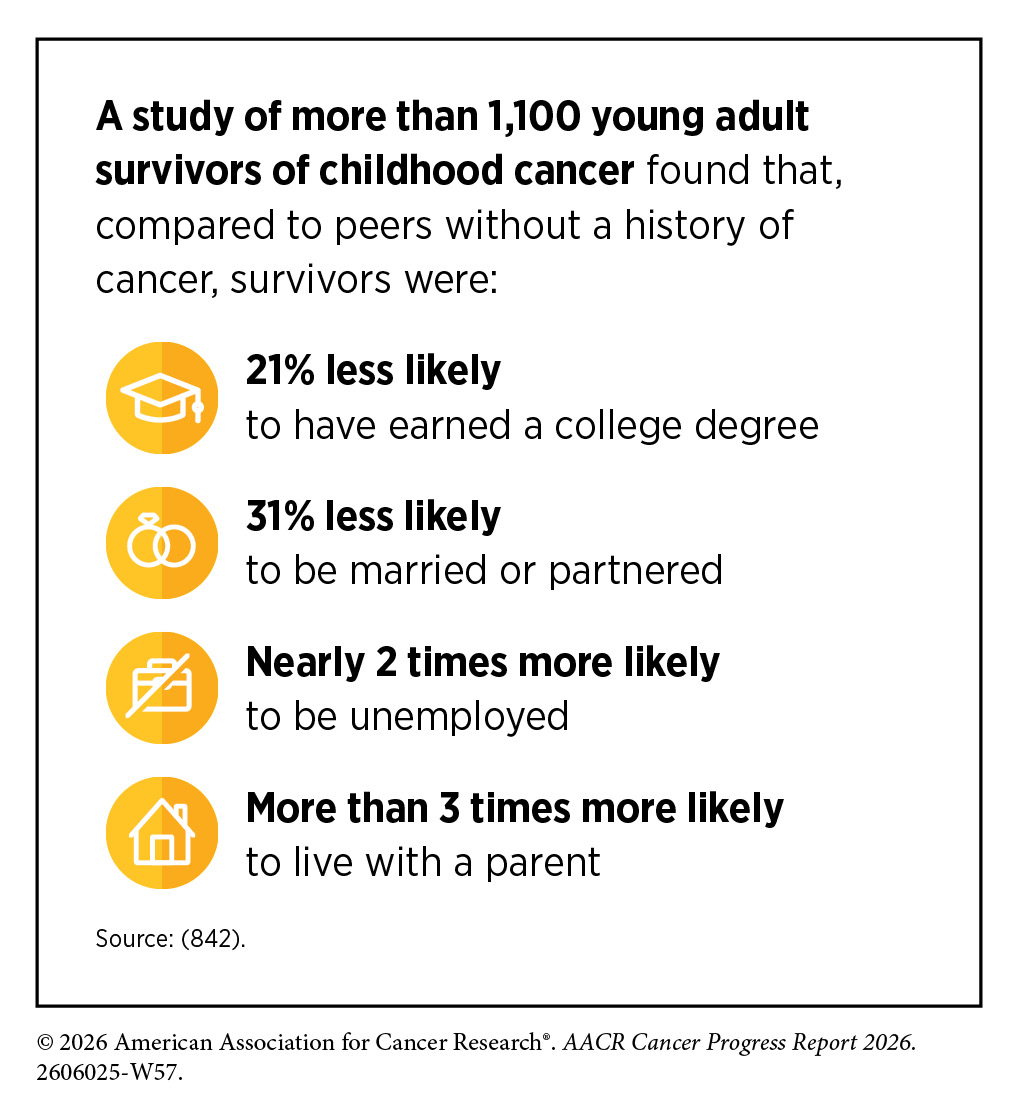
Neurocognitive late effects are also a major concern for survivors of childhood cancer. Those diagnosed or treated as young children are especially vulnerable because cancer and its treatment can coincide with periods of rapid brain development. Neurocognitive late effects may include difficulties with attention, memory, processing speed, executive function, learning, and emotional regulation (843)Patel T, et al. (2025) Front Neurosci, 19: 1587059.(844)Jacola LM, et al. (2025) J Clin Exp Neuropsychol, 47: 788.. These challenges can have lasting consequences for educational attainment, employment, independent living, social integration, and financial well-being (843)Patel T, et al. (2025) Front Neurosci, 19: 1587059.(845)Zheng DJ, et al. (2026) J Natl Cancer Inst.. Emerging research also suggests that some survivors may experience accelerated brain aging, which may contribute to cognitive difficulties later in life (846)Williams AM, et al. (2025) Nat Commun, 16: 10655.(847)Phillips NS, et al. (2025) JAMA Netw Open, 8: e2551865..
The challenges faced by survivors of childhood cancer also extend to psychosocial well-being, family functioning, and quality of life. Survivors of childhood cancer may experience anxiety, depression, post-traumatic stress symptoms, fear of recurrence, and concerns about late effects, infertility, or future health (848)Yardeni M, et al. (2025) Pediatr Res.(849)Maas A, et al. (2025) Psychooncology, 34: e70101.. These concerns can also affect parents and caregivers, who often play a central role during treatment and survivorship. In one recent study, post-traumatic stress, depression, and anxiety symptoms were reported among both childhood cancer survivors and their parents, underscoring the importance of ongoing psychosocial screening and family-centered survivorship support (848)Yardeni M, et al. (2025) Pediatr Res..
Adolescent and Young Adult Cancer Survivors
AYA cancer survivors are individuals who were diagnosed with cancer between the ages of 15 and 39. In 2026, an estimated 88,120 AYAs will be diagnosed with cancer in the United States, and more than 8,900 will die from the disease (850)The Surveillance, Epidemiology, and End Results (SEER) Program. Cancer Among Adolescents and Young Adults (AYAs) – Cancer Stat Facts. Accessed: June 30, 2026.. Advances in cancer care have markedly improved outcomes for AYAs with cancer, with 86 percent now expected to live 5 years or more after diagnosis (12)SEER*Stat Database: Incidence – SEER Research Plus Limited-Field Data, 21 Registries (excl IL), Nov 2025 Sub (2000-2023) – Linked To County Attributes – Total U.S., 1969-2024 Counties, National Cancer Institute, DCCPS, Surveillance Research Program, released April 2026, based on the November 2025 submission. Accessed: June 30, 2026..
A diagnosis of AYA cancer often occurs during a formative period when individuals are completing education, entering or advancing in the workforce, establishing financial independence, forming long-term relationships, and making decisions about fertility and family-building. Cancer and its treatment can disrupt these milestones and create lasting health, psychosocial, and financial challenges that persist into long-term survivorship (851)Bergerot C, et al. (2026) Am Soc Clin Oncol Educ Book, 46: e520636.(852)Berkman AM, et al. (2024) J Natl Cancer Inst, 116: 1417..
Like survivors of childhood cancer, survivors of AYA cancer are at risk for long-term and late effects. In a recent study of long-term survivors of young adult cancer, more than 70 percent reported at least one clinically significant symptom, and nearly one-third reported four or more symptoms (853)Freyer DR, et al. (2026) J Cancer Surviv.. The most commonly reported symptoms included fatigue, changes in physical appearance, cognitive problems, pain, and neuropathy. AYA survivors are also at risk for developing serious chronic health conditions earlier in life. In one analysis, nearly 40 percent of AYA survivors developed at least one chronic health condition within 10 years of diagnosis, compared to 26 percent of AYAs without cancer. Compared to those without cancer, survivors of AYA cancer also had a two- to three-fold increased risk of cardiomyopathy, stroke, chronic liver disease, and renal failure, and more than a 10-fold higher risk of hypothyroidism and avascular necrosis, a serious bone condition (854)Keegan THM, et al. (2025) Cancer, 131: e70125..
AYA cancer survivors also have an elevated risk of SPCs, which may be driven in part by treatment-induced accelerated aging (851)Bergerot C, et al. (2026) Am Soc Clin Oncol Educ Book, 46: e520636.(855)van der Meer DJ, et al. (2024) Oncologist, 29: e526.. In one study, 5-year survivors of AYA cancer had a 25 percent higher risk of developing SPCs and a nearly two-fold higher risk of dying from SPCs compared to the general population (856)Sung H, et al. (2022) J Natl Cancer Inst, 114: 1095..
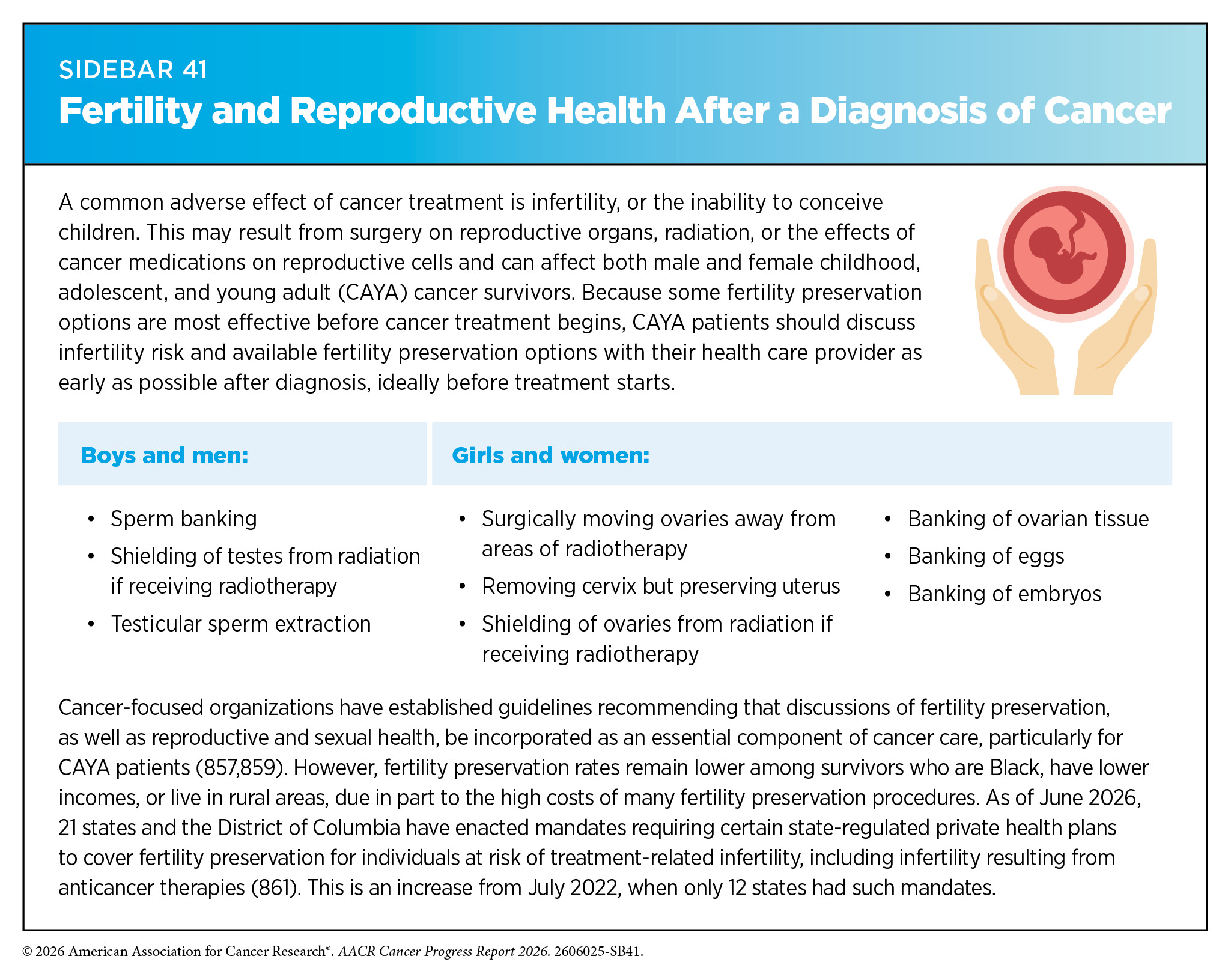
Fertility remains a significant concern for AYA survivors, who often face lasting reproductive health challenges as a result of their treatment (see Sidebar 41). Certain therapies can damage ovaries or testes, leading to early menopause, premature ovarian failure, reduced sperm production, or other changes that can affect fertility (857)Su HI, et al. (2025) J Clin Oncol, 43: 1488.(858)Talbot L, et al. (2025) Pediatr Blood Cancer, 72 Suppl 2: e31277.. As a result, timely counseling about fertility risks and options for fertility preservation is an important component of age-appropriate survivorship care. Current guidelines recommend that people with cancer be evaluated and counseled about reproductive risks at diagnosis and that fertility preservation options be discussed before cancer-directed therapy begins and revisited throughout survivorship (857)Su HI, et al. (2025) J Clin Oncol, 43: 1488.(859)Castillo J, et al. (2026) JAMA, 335: 1169.. However, access to fertility preservation for AYA patients remains suboptimal. According to a recent analysis, nearly one-third of AYA-treating community oncology practices had no male or female fertility preservation services available, and those with available services often relied on off-site referrals, potentially creating additional barriers to completing fertility preservation before treatment begins (860)Mobley EM, et al. (2026) JCO Oncol Pract, 22: 112..
Psychosocial and mental health challenges are also common among AYA survivors. Because AYA cancer occurs during a formative period of social, emotional, and physical development, survivors may experience distress related not only to the diagnosis itself but also to disruptions in relationships, fertility, reproductive health, and future plans (851)Bergerot C, et al. (2026) Am Soc Clin Oncol Educ Book, 46: e520636.(862)McGrady ME, et al. (2024) J Clin Oncol, 42: 707.. Studies have found that AYA survivors are at elevated risk for emotional distress, mood and anxiety disorders, suicide, social isolation, fear of cancer recurrence, and body image concerns (851,862-864). These challenges can persist well beyond treatment. In one recent study, adult survivors of AYA cancer had the highest prevalence of lifetime psychiatric issues, use of prescription medication for anxiety or depression, and major depression, compared to adults diagnosed with cancer later in life and individuals without cancer (865)Zhang A, et al. (2025) JAMA Netw Open, 8: e2511430.. These findings underscore the importance of routine psychosocial screening and developmentally tailored mental health support throughout survivorship (851)Bergerot C, et al. (2026) Am Soc Clin Oncol Educ Book, 46: e520636.(862)McGrady ME, et al. (2024) J Clin Oncol, 42: 707..
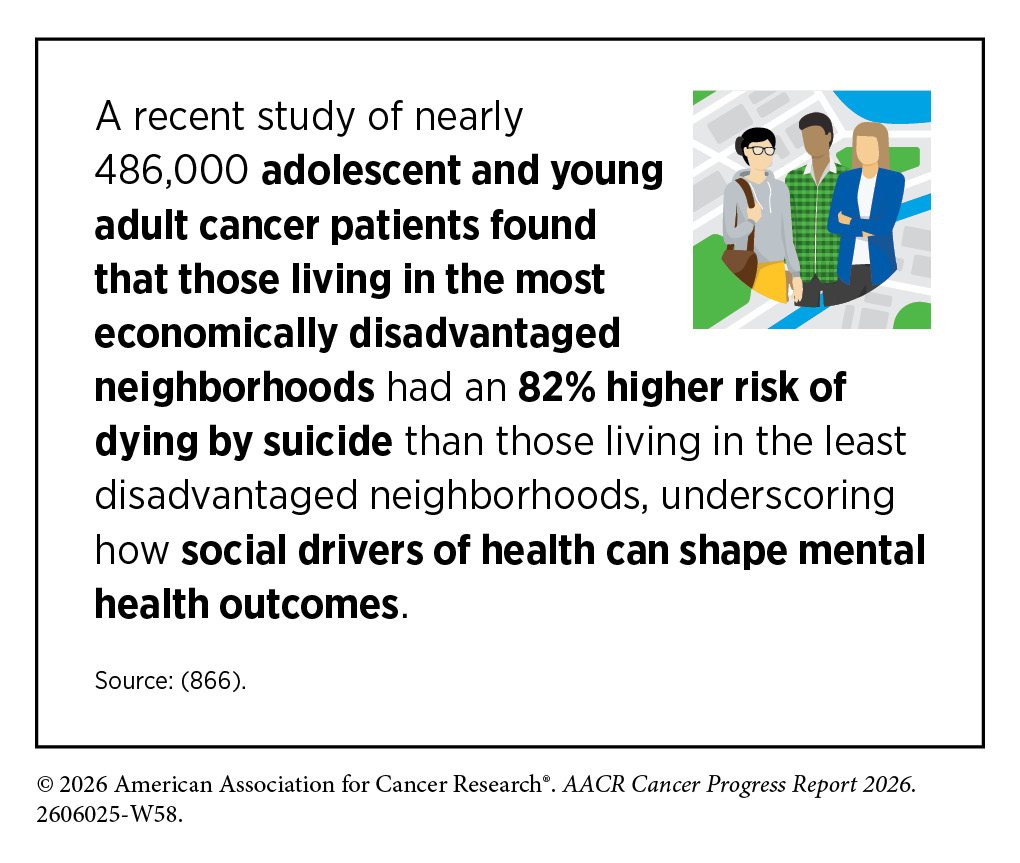
Financial hardship is also common among AYA cancer survivors, who are more likely to be uninsured or underinsured and may experience disruptions in education, employment, and early career development due to ongoing health needs or treatment-related late effects (852)Berkman AM, et al. (2024) J Natl Cancer Inst, 116: 1417.(867)Ghazal LV, et al. (2026) J Cancer Surviv.(868)Kirchhoff AC, et al. (2024) J Clin Oncol, 42: 642.. These disruptions can contribute to financial strain, reduced earning potential, and long-term economic vulnerability throughout adulthood. Evidence suggests that these financial challenges can persist for years after diagnosis and affect survivors’ ability to access care. In one study of long-term AYA survivors, greater financial distress was associated with higher odds of skipping or delaying survivorship care and mental health care, not filling prescriptions, and being unable to afford basic necessities (869)Thom B, et al. (2023) J Cancer Surviv, 17: 1813.. These findings highlight the need for routine screening for financial hardship and timely connection to financial navigation, insurance support, medication cost assistance, and other resources that can help AYA survivors maintain access to care and meet basic needs (870)Bhurosy T, et al. (2026) BMC Cancer, 26.(871)Robles JM, et al. (2025) JCO Oncol Pract: OP2500389.. Despite growing recognition of financial hardship among AYA survivors, access to financial navigation services remains limited. In a recent analysis of community oncology practices that treat AYA patients, most practices reported screening for financial distress, but only about half offered cancer-specific financial navigation (871)Robles JM, et al. (2025) JCO Oncol Pract: OP2500389..
Because of these complex and long-term health needs, survivorship care for childhood and AYA cancer survivors requires lifelong, risk-based follow-up and coordinated care to monitor late effects, support transitions from pediatric to adult health systems, and address psychosocial needs (852)Berkman AM, et al. (2024) J Natl Cancer Inst, 116: 1417.(872)Ehrhardt MJ, et al. (2024) J Clin Oncol, 42: 743.(873)Wong CL, et al. (2024) BMJ Open, 14: e087343.. In recognition of these challenges, the Children’s Oncology Group Long-Term Follow-Up Guidelines for Survivors of Childhood, Adolescent, and Young Adult Cancers provide a standardized, evidence-based framework for survivorship care for children, adolescents, and young adults with cancer (874)DeVine A, et al. (2025) JAMA Oncol, 11: 544.(875)Hudson MM, et al. (2021) Pediatrics, 148..
Although long-term follow-up guidelines exist for survivors of childhood, adolescent, and young adult cancers, many survivors do not receive recommended survivorship care because of barriers such as limited knowledge about late effects, financial and logistical challenges, fragmented transitions from pediatric to adult care, and gaps in survivorship care infrastructure (851)Bergerot C, et al. (2026) Am Soc Clin Oncol Educ Book, 46: e520636.(876)de Beijer IAE, et al. (2025) BMC Health Serv Res, 25: 1331.(877)Milam J, et al. (2024) Pediatr Blood Cancer, 71: e31328.. These challenges may be further compounded for survivors from medically underserved populations, underscoring the importance of equitable access to survivorship care and support services to optimize long-term health and well-being. Addressing these barriers is essential to improving survivorship care and improving long-term health and well-being of childhood and AYA cancer survivors.
Older Adult Cancer Survivors
Older adults, defined as individuals age 65 and older, represent the fastest-growing segment of the cancer survivor population. In 2022, older adults accounted for 67 percent of all cancer survivors in the United States, and this proportion is projected to rise to 73 percent by 2040 (878)Bluethmann SM, et al. (2016) Cancer Epidemiol Biomarkers Prev, 25: 1029.(879)Miller KD, et al. (2022) CA Cancer J Clin, 72: 409.. As the population of older cancer survivors continues to grow, so too does the need to understand and address the unique challenges they face throughout survivorship.
For older adults, cancer and its treatments occur in the context of normal aging processes and a higher burden of chronic health conditions. It is estimated that more than 90 percent of older adults with cancer have at least one chronic condition—such as cardiovascular disease, diabetes, arthritis, or obesity—and over 30 percent live with three or more comorbidities (880)Williams GR, et al. (2018) Oncologist, 23: 433.. Cancer and its treatments can also increase vulnerability to geriatric conditions that may compromise independence and quality of life. Frailty—an age-related condition that can make it harder for the body to recover from illness, injury, or other health stressors—is associated with increased risk of disability, poor quality of life, and mortality among older cancer survivors (881)Duchesneau ED, et al. (2025) JAMA Netw Open, 8: e250614.(882)Han CJ, et al. (2024) Qual Life Res, 33: 583.. Cancer treatment can further accelerate frailty and functional decline and may contribute to the accumulation or worsening of chronic health conditions (881)Duchesneau ED, et al. (2025) JAMA Netw Open, 8: e250614.(883)Sedrak MS, et al. (2024) J Cancer Surviv, 18: 1131..
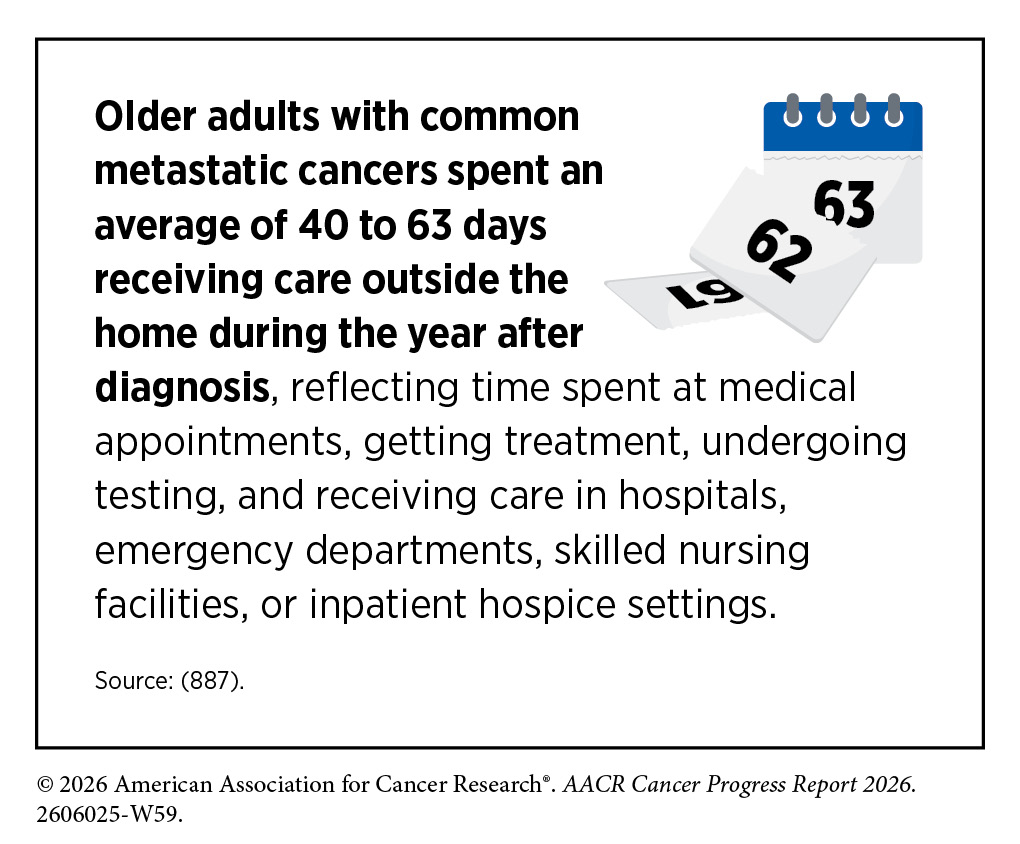
Polypharmacy, defined as the routine use of five or more medications, is common among older adults with cancer. Complex medication regimens used to manage both cancer-related symptoms and chronic conditions can increase the risk of adverse drug interactions, medication-related complications, and declines in physical functioning (884)La J, et al. (2025) J Natl Compr Canc Netw, 23: 363.(885)Mohamed MR, et al. (2024) Support Care Cancer, 32: 674.(886)Taher ASM, et al. (2026) Curr Oncol Rep, 28.. These challenges can impair treatment management and increase the overall burden of survivorship care for older adults.
In addition to physical health challenges, older cancer survivors frequently experience psychosocial and financial burdens that can affect quality of life. Mental health conditions, such as anxiety and depression, are common among older cancer survivors and may persist or emerge years after diagnosis (888)Pu J, et al. (2025) J Cancer Surviv, 19: 1255.(889)Taylor M, et al. (2025) JAMA Netw Open, 8: e2544812.. Social isolation and loneliness are also prevalent among older cancer survivors and have been linked to poorer health outcomes and increased risk of death (890)Pilleron S, et al. (2023) J Geriatr Oncol, 14: 101519.(891)Zhao J, et al. (2024) J Natl Compr Canc Netw, 22: 244.. Older cancer survivors are also vulnerable to financial toxicity despite having health insurance through Medicare (892)Kadambi S, et al. (2025) JCO Oncol Pract, 21: 92.(893)Myers S, et al. (2025) Support Care Cancer, 33: 339.(894)Owsley KM, et al. (2025) J Cancer Surviv.. Studies show that cancer-related costs, including treatment expenses, transportation, and other out-of-pocket costs, can contribute to financial hardship, food insecurity, and difficulties meeting basic needs among older adults living with and beyond cancer (893)Myers S, et al. (2025) Support Care Cancer, 33: 339.(894)Owsley KM, et al. (2025) J Cancer Surviv.(895)Pak TY (2025) Health Econ Rev, 15: 22..
Comprehensive geriatric assessment has emerged as a valuable tool for improving the care of older adults with cancer. Geriatric assessment provides a multidimensional evaluation of health status that can identify vulnerabilities not captured by routine oncology assessments, including functional limitations, comorbidities, cognitive impairment, medication use, and social support needs (896)Bergerot CD, et al. (2025) JCO Glob Oncol, 11: e2500276.(897)Magnuson A, et al. (2024) CA Cancer J Clin, 74: 496.. Integrating geriatric assessment with structured evaluation of health-related social needs can help identify clinical and social risks that influence treatment tolerance and access to care, supporting a more personalized and equitable approach to survivorship care in this population.
Improving Quality of Life and Health Outcomes
Maintaining a healthy lifestyle through regular physical activity, a healthy diet, and avoiding alcohol and tobacco use is one of the most effective strategies for reducing the risk of developing cancer and other chronic diseases (see Reducing the Risk of Cancer Development). Healthy lifestyle behaviors are also an important component of cancer survivorship care. A growing body of evidence shows that adopting healthy behaviors after a diagnosis of cancer can support long-term health, improve quality of life, and reduce the risk of cancer recurrence and other adverse health outcomes (898)Ginex PK, et al. (2026) Support Care Cancer, 34: 125.(899)Hundal J, et al. (2026) Am Soc Clin Oncol Educ Book, 46: e517396..
Participating in Physical Activity
Participating in physical activity is strongly associated with improved outcomes for cancer patients and survivors. According to a recent study, survivors who engaged in higher levels of leisure-time moderate to vigorous physical activity after diagnosis had a lower risk of cancer mortality across several cancer types, including bladder, endometrial, lung, and ovarian cancers (900)Rees-Punia E, et al. (2026) JAMA Netw Open, 9: e2556971.. Notably, lung and rectal cancer survivors who did not meet physical activity guidelines (approximately 150 to 300 minutes of moderate activity per week) before diagnosis but met guidelines after diagnosis also had a lower risk of cancer mortality than those who remained inactive, suggesting that engaging in physical activity after a cancer diagnosis may still provide meaningful survival benefits. Evidence suggests that even modest levels of physical activity may be beneficial. For example, one analysis found that as little as 1 hour of aerobic exercise per week was associated with a 25 percent reduction in all-cause mortality among breast cancer survivors, while the greatest benefits were observed among those who met physical activity guidelines (901)Wilson OWA, et al. (2025) Cancer Epidemiol Biomarkers Prev, 34: 1252..
Structured physical activity during or after cancer treatment has been shown to improve physical function, reduce complications, shorten hospital stays, and enhance quality of life (902)Chen X, et al. (2025) Int J Surg, 111: 3373.. In a recent clinical trial of nearly 900 colon cancer survivors who had completed adjuvant chemotherapy, those assigned to a 3-year structured exercise program that combined behavioral support with supervised aerobic exercise experienced a 28 percent lower risk of disease recurrence, SPC, or death, compared to survivors who received health education alone (903)Courneya KS, et al. (2025) N Engl J Med, 393: 13..
Physical activity may also improve the immune system’s ability to detect and eliminate cancer cells (902)Chen X, et al. (2025) Int J Surg, 111: 3373.. For example, a recent study of patients with esophageal cancer found that those who exercised while receiving chemotherapy had higher levels of immune cells within their tumors, consistent with a stronger antitumor immune response (904)Rayner CJ, et al. (2025) J Sport Health Sci, 14: 101063.. These findings suggest that engaging in physical activity during treatment may enhance the body’s ability to fight cancer, although more research is needed to determine whether these immune changes translate into improved treatment response or long-term outcomes.
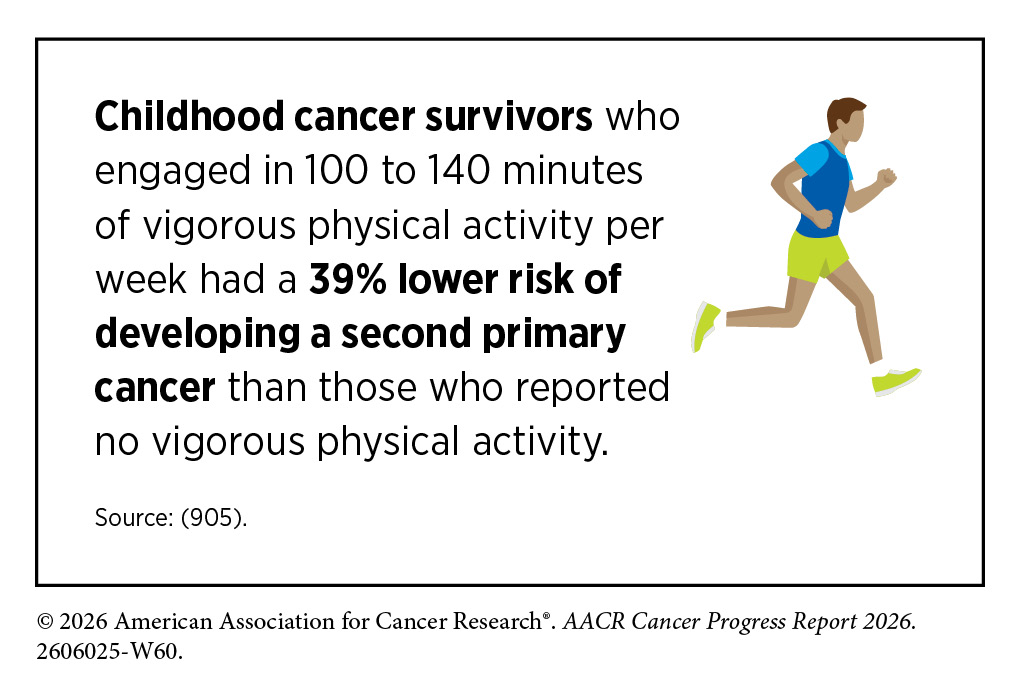
Physical activity may also help reduce the burden of long-term treatment-related adverse effects. In an analysis of more than 22,000 childhood cancer survivors, lower physical activity was associated with a higher risk of SPCs, while higher physical activity was associated with reduced risk of SPCs (905)Joffe L, et al. (2025) JAMA Oncol, 11: 835.. In a separate study of long-term childhood cancer survivors, nearly all participants had at least one adverse health outcome (such as osteoporosis, pain, heart problems, or depression), and higher physical fitness was associated with fewer adverse health outcomes (906)Mayr AK, et al. (2025) Cancer, 131: e70051..
Evidence also suggests that tailored exercise programs can support recovery and help manage treatment-related adverse effects among adult cancer survivors. In a recent study, a personalized, remotely monitored exercise intervention improved physical function and reduced fatigue among individuals undergoing surgery for lung cancer (907)Ulrich CM, et al. (2025) JAMA Surg, 160: 495.. Similarly, prostate cancer survivors who participated in a supervised aerobic and resistance training program experienced significant improvements in both sexual function and muscle strength (908)Galvao DA, et al. (2025) JAMA Netw Open, 8: e250413..
Engaging in regular exercise may also support mental health and quality of life, particularly among older survivors. A recent analysis of randomized clinical trials found that exercise programs were associated with reduced symptoms of depression and anxiety and improved health-related quality of life among older adults with cancer (909)Soong RY, et al. (2025) JAMA Netw Open, 8: e2457859.. Activities that combine movement with breathing, balance, or mindfulness, such as tai chi, yoga, and qigong, appeared especially beneficial for managing depression and anxiety in this population.
Eating a Healthy Diet and Maintaining a Healthy Weight
Maintaining a healthy diet and body weight is an important component of survivorship care. Evidence suggests that survivors who more closely follow nutrition and physical activity guidelines after diagnosis have better long-term outcomes. In a recent study of survivors of obesity-related cancers, those with the highest adherence to recommended nutrition and physical activity guidelines had a 24 percent lower risk of death from any cause, a 21 percent lower risk of death from cancer, and a 33 percent lower risk of death from cardiovascular disease—a leading cause of death among cancer survivors (910)Wang Y, et al. (2025) J Natl Cancer Inst, 117: 1260.(911)Lee CT, et al. (2026) Cancer Epidemiol Biomarkers Prev, 35: 379.. Survivors who improved their adherence to nutrition and physical activity guidelines after diagnosis also had a lower risk of death from any cause, suggesting that adopting healthier behaviors after cancer diagnosis may still provide meaningful survival benefits.
A healthy diet may be especially important for survivors at increased risk of long-term health problems, including those treated for cancer during childhood. Adult survivors of childhood cancer are at increased risk of premature aging and chronic health conditions, and recent evidence suggests that healthier dietary patterns may help reduce this risk. In a study of more than 3,300 adult survivors of childhood cancer, greater adherence to healthy dietary patterns was associated with a lower risk of premature aging (912)Lan T, et al. (2026) Cancer, 132: e70246.. These findings suggest that dietary interventions may offer a modifiable strategy for promoting healthier aging among this vulnerable population.
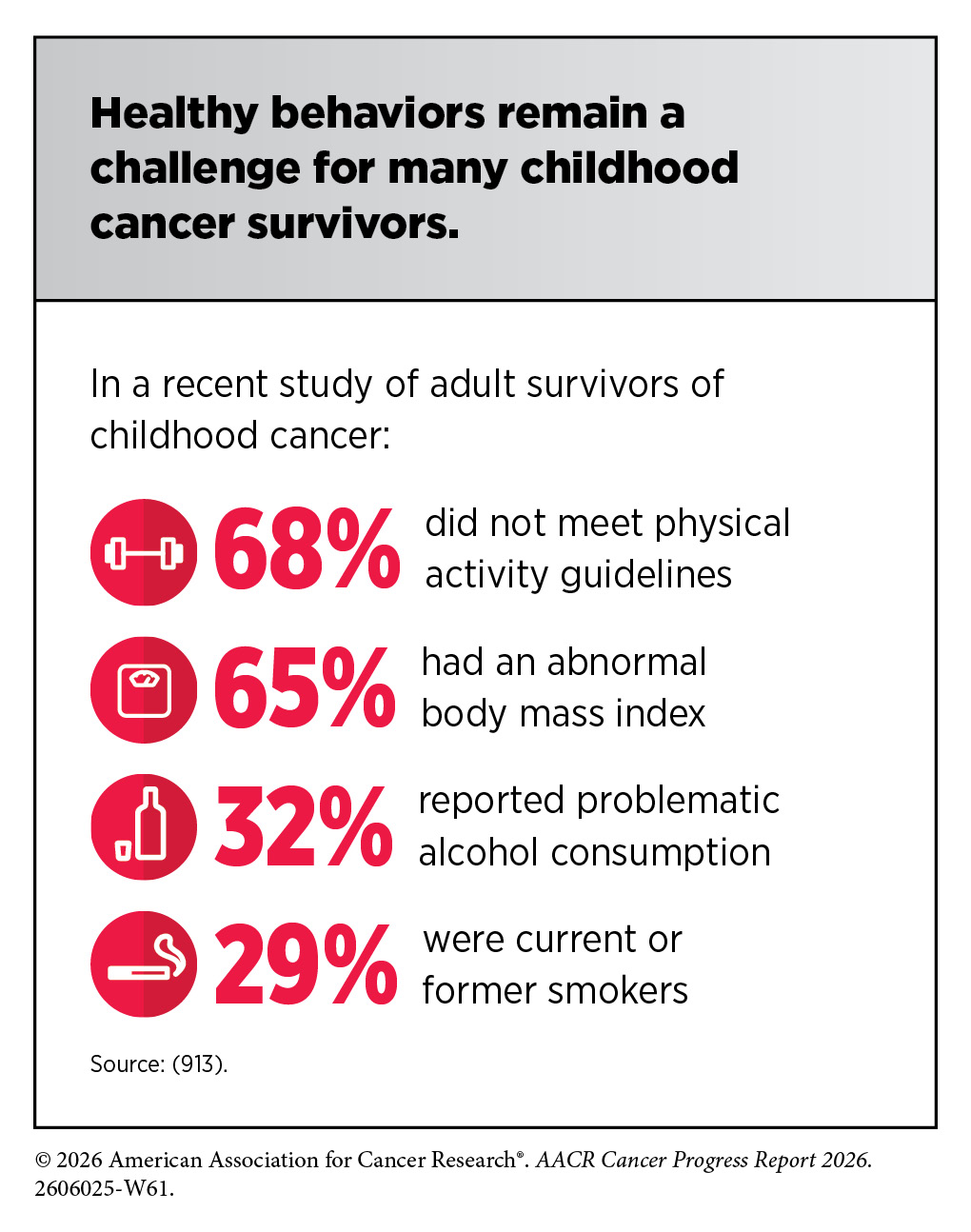
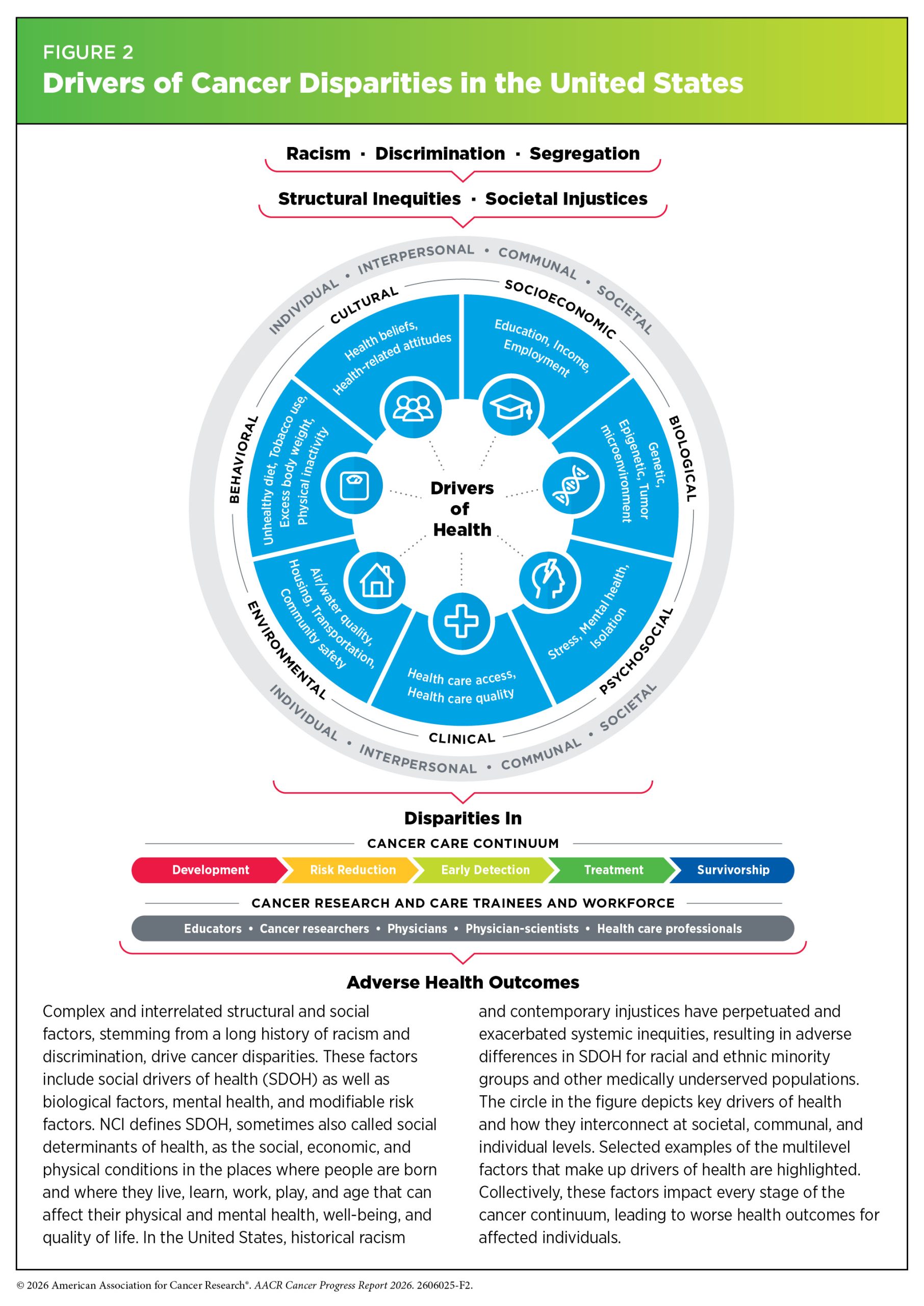
Despite these benefits, many cancer survivors face challenges maintaining a healthy diet. A recent analysis of survivors of obesity-related cancers found that overall diet quality was suboptimal, with especially low intake of fruits, vegetables, dairy products, and protein-rich foods (914)Kaur H, et al. (2025) J Natl Compr Canc Netw, 23.. Diet quality was lower among survivors with obesity, lower educational attainment, and those living in lower-income communities, highlighting how social and economic conditions can shape survivors’ ability to maintain healthy eating patterns (see Figure 2).
Food insecurity, characterized by limited or uncertain access to adequate food, is a widespread issue that affects millions of Americans, including patients with cancer. A recent study found that approximately 10 percent of cancer survivors report food insecurity (915)Lin JC, et al. (2025) JAMA Health Forum, 6: e251381.. Moreover, survivors with food insecurity have an increased risk of death from any cause compared to their food-secure counterparts. Food and nutrition insecurity may be particularly concerning for childhood cancer survivors, who already face elevated risks of cardiovascular disease and other late effects. In one study of childhood cancer survivors, more than one in four lived in food-insecure households, and one in three experienced nutrition insecurity, defined as limited access to, availability of, or affordability of healthy foods (916)Aziz-Bose R, et al. (2026) Support Care Cancer, 34.. These children also had suboptimal dietary quality and high rates of cardiovascular risk factors, such as excess body weight or obesity and elevated blood pressure. These findings underscore the need to integrate screening for food and nutrition insecurity into survivorship care and connect families with resources that support healthy eating and long-term health.
Maintaining a healthy weight is another important focus of survivorship care, particularly because obesity is associated with increased risk of cancer recurrence, mortality, comorbidities, treatment-related adverse effects, and poorer quality of life among individuals with cancer. Recent evidence suggests that a remotely delivered weight management program can help survivors achieve meaningful weight loss. In a clinical trial of more than 3,100 women with breast cancer, participants were randomly assigned to receive either health education alone or health education plus a telephone-based weight loss program focused on reducing calorie intake and increasing physical activity (917)Ligibel JA, et al. (2025) JAMA Oncol, 11: 1194.. After 1 year, participants assigned to the weight loss program lost an average of nearly 5 percent of their baseline body weight, while those in the education-only control group gained an average of 1 percent of their baseline body weight. These findings highlight the potential of scalable lifestyle interventions to support healthy weight management during survivorship.
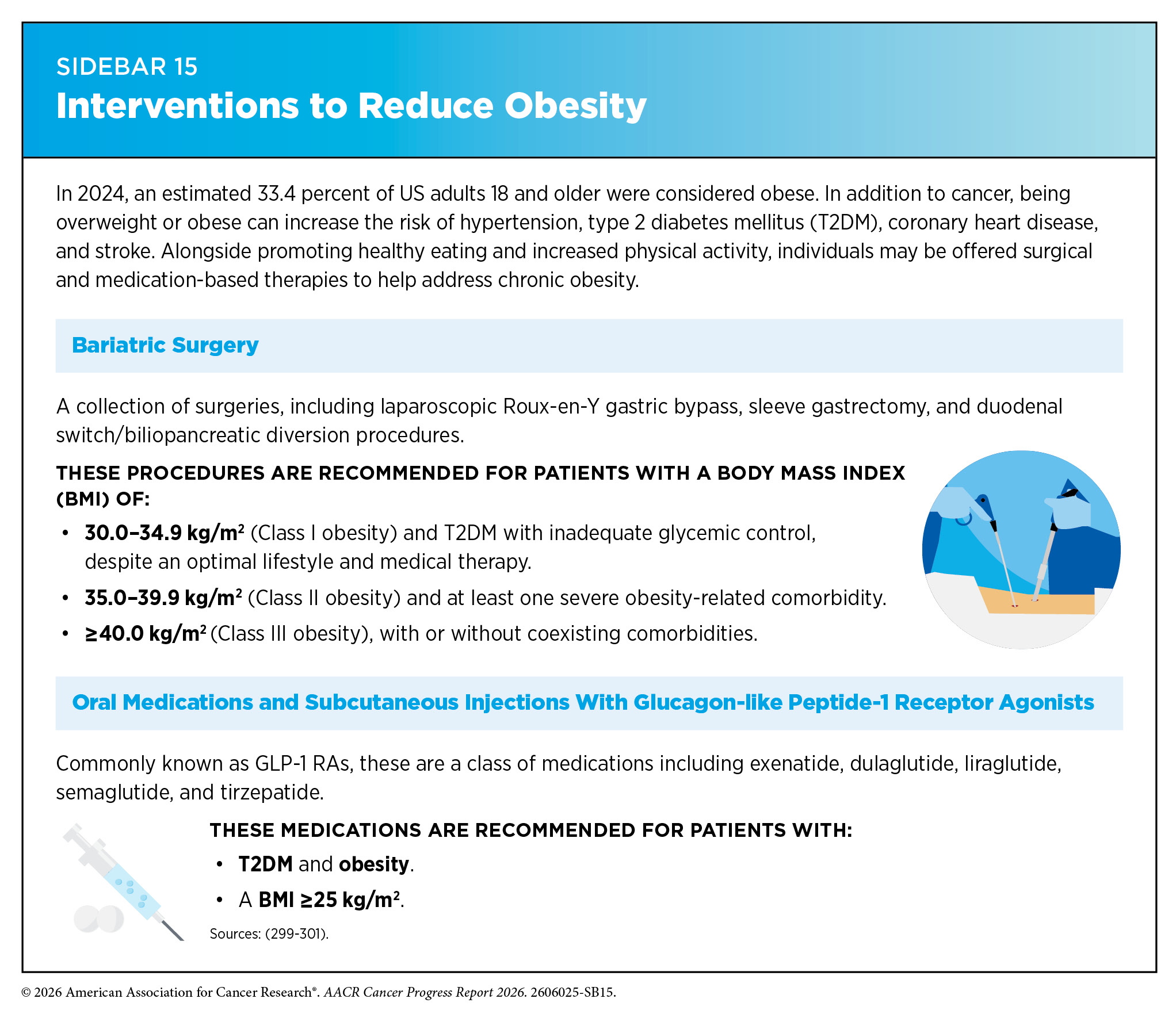
Glucagon-like peptide-1 receptor agonists (GLP-1 RAs), a class of medications used to treat type 2 diabetes mellitus and obesity, are also emerging as an important area of research in cancer survivorship (see Sidebar 15). Recent studies suggest that GLP-1 RAs not only are associated with clinically meaningful weight loss but may also be linked to reduced mortality in some patient populations (294)Temperley HC, et al. (2026) Journal of Clinical Oncology, 0: JCO.(918)Sukumar JS, et al. (2026) Cancer Res Commun, 6: 447.. In a large study of women with breast cancer, GLP-1 RA use was associated with lower risk of overall mortality and reduced risk of recurrence among patients with obesity or type 2 diabetes mellitus (919)Tatum KL, et al. (2026) JAMA Netw Open, 9: e2612133.. GLP-1 RAs may also have cardiovascular benefits for some cancer patients. In a recent analysis, use of GLP-1 RA medications was associated with a lower risk of cancer therapy–related cardiac dysfunction and cardiovascular events (e.g., heart failure, heart attack, and atrial fibrillation) among patients receiving cardiotoxic cancer therapies (920)Javaid SS, et al. (2026) Am J Cardiol, 273: 59.. However, because much of the evidence in cancer populations comes from observational studies, clinical trials are needed to determine whether GLP-1 RAs can improve long-term outcomes in cancer survivors.
Eliminating Alcohol and Tobacco Use
Cigarette smoking and other tobacco or nicotine product use remain important issues in cancer survivorship. In 2023, 15 percent of US cancer patients were current smokers at the time of diagnosis, and nearly half had a history of smoking (921)Caturegli G, et al. (2025) JAMA Oncol, 11: 564.. Furthermore, the use of electronic cigarettes (e-cigarettes) has increased in recent years, particularly among AYAs (see Eliminate Tobacco Use). In an analysis of nearly 1,500 young adults with a history of cancer, nearly 47 percent reported ever using e-cigarettes, and among those who had ever used e-cigarettes, more than 30 percent were current users (922)Parsons HM, et al. (2020) JAMA Oncol, 6: 923.. Another analysis found that among cancer survivors who currently smoked traditional cigarettes, more than 60 percent also used e-cigarettes (923)Lopez-Olivo MA, et al. (2024) J Cancer Surviv, 18: 1059..
Continued smoking among cancer survivors is associated with a range of adverse health outcomes, including increased risks of recurrence and SPCs, greater treatment-related complications, reduced quality of life, and higher mortality (61)Sung H, et al. (2026) CA: A Cancer Journal for Clinicians, 76: e70090.(924)Wong C, et al. (2025) JAMA Netw Open, 8: e250295.(925)Lorona NC, et al. (2024) Cancer Epidemiol Biomarkers Prev, 33: 288.(926)Borgert B, et al. (2026) Cancer, 132: e70336.. In a recent analysis, patients who smoked within 4 weeks before cancer surgery had higher odds of postoperative complications compared to those who had stopped smoking for at least 4 weeks prior to surgery (924)Wong C, et al. (2025) JAMA Netw Open, 8: e250295.. Among working-age cancer survivors, current smoking has also been associated with greater health-related work limitations and more missed workdays (927)An Z, et al. (2025) J Cancer Surviv..
Given these risks, promoting smoking cessation is critical. For individuals with cancer, quitting smoking can have immediate and long-term benefits. In a recent analysis of 36 studies including more than 17,000 patients with cancer who smoked, quitting after diagnosis was associated with a 29 percent lower risk of death and reduced risk of recurrence (928)Caini S, et al. (2025) Tob Control.. In another study, cancer survivors who quit smoking within 3 years of diagnosis had significantly improved survival, living a median of 4 years longer than those who continued smoking (929)Li L, et al. (2026) Cancer Causes Control, 37.. Other studies have found similar survival benefits of quitting after diagnosis, including among patients with advanced-stage cancer (930)Tohmasi S, et al. (2025) J Natl Compr Canc Netw, 23.. These findings suggest that smoking cessation support should be provided to all cancer survivors who smoke, regardless of cancer type or stage. Evidence also suggests that tailored cessation programs can be cost-effective, supporting broader implementation of smoking cessation interventions in oncology and survivorship care (931)Liu X, et al. (2026) JAMA Netw Open, 9: e261543.. Recognizing smoking cessation as an essential component of cancer care, the Commission on Cancer (CoC) recently implemented a new standard requiring accredited cancer centers to screen all patients newly diagnosed with cancer for current smoking and provide referrals for evidence-based smoking cessation treatment.
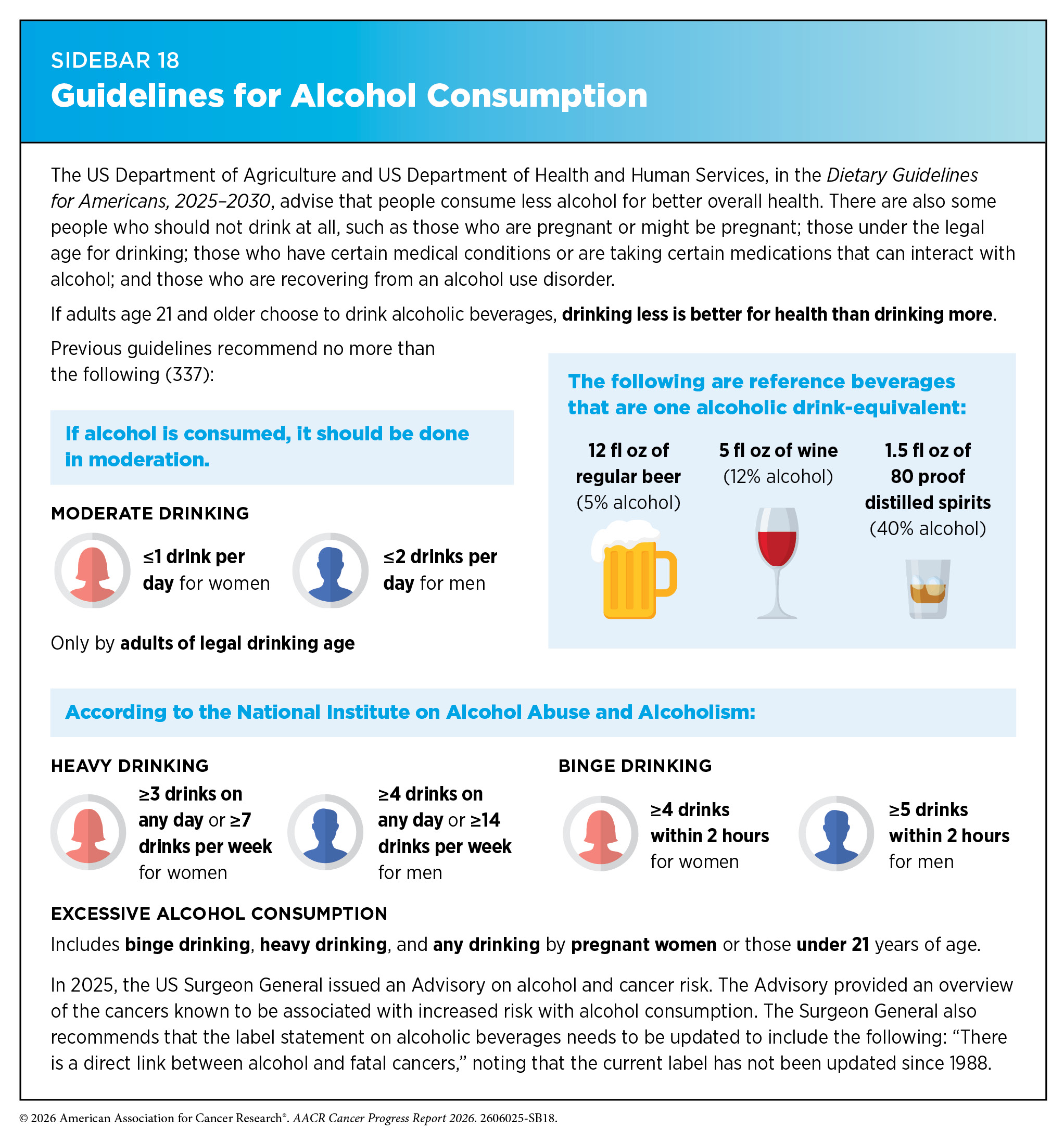
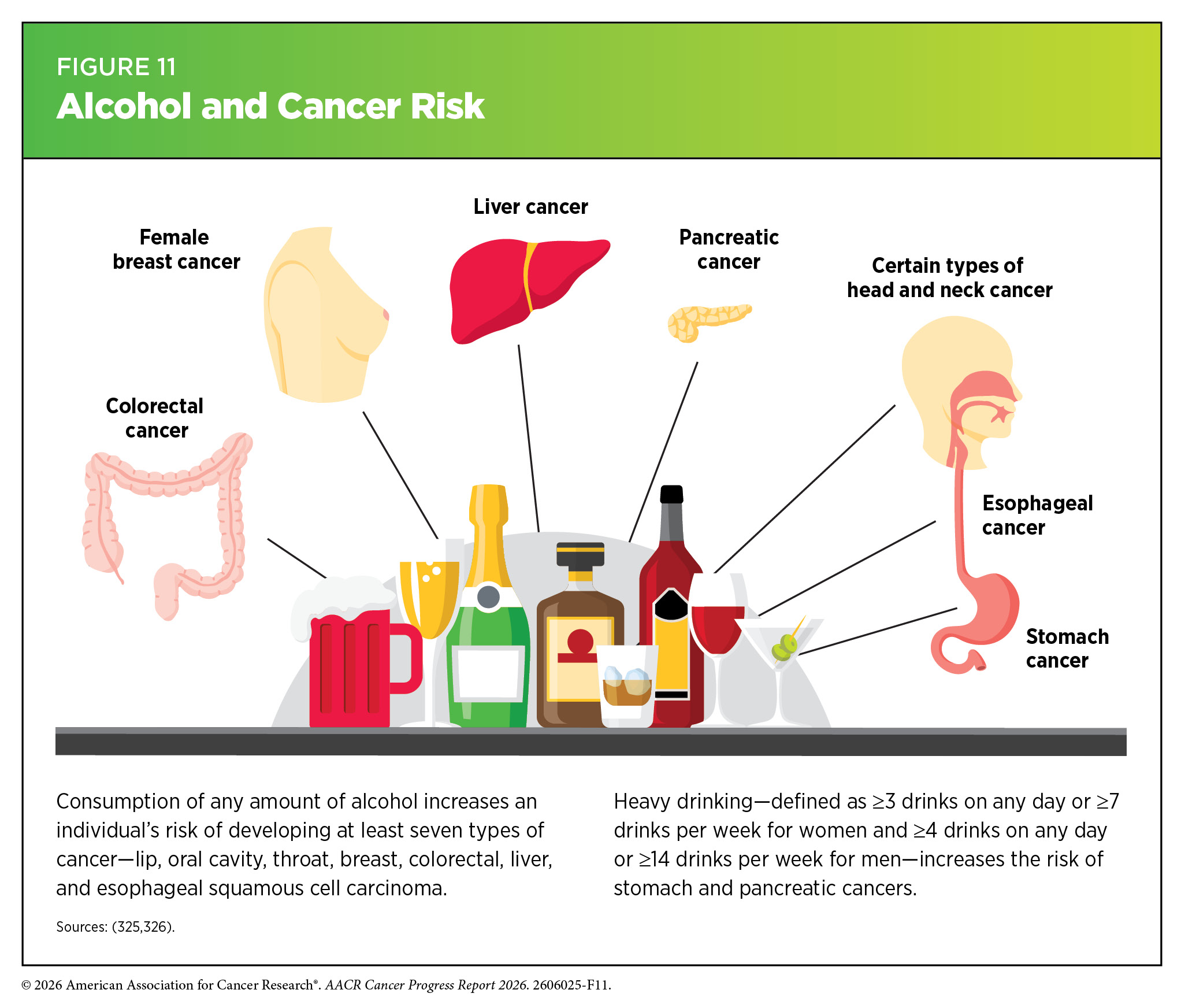
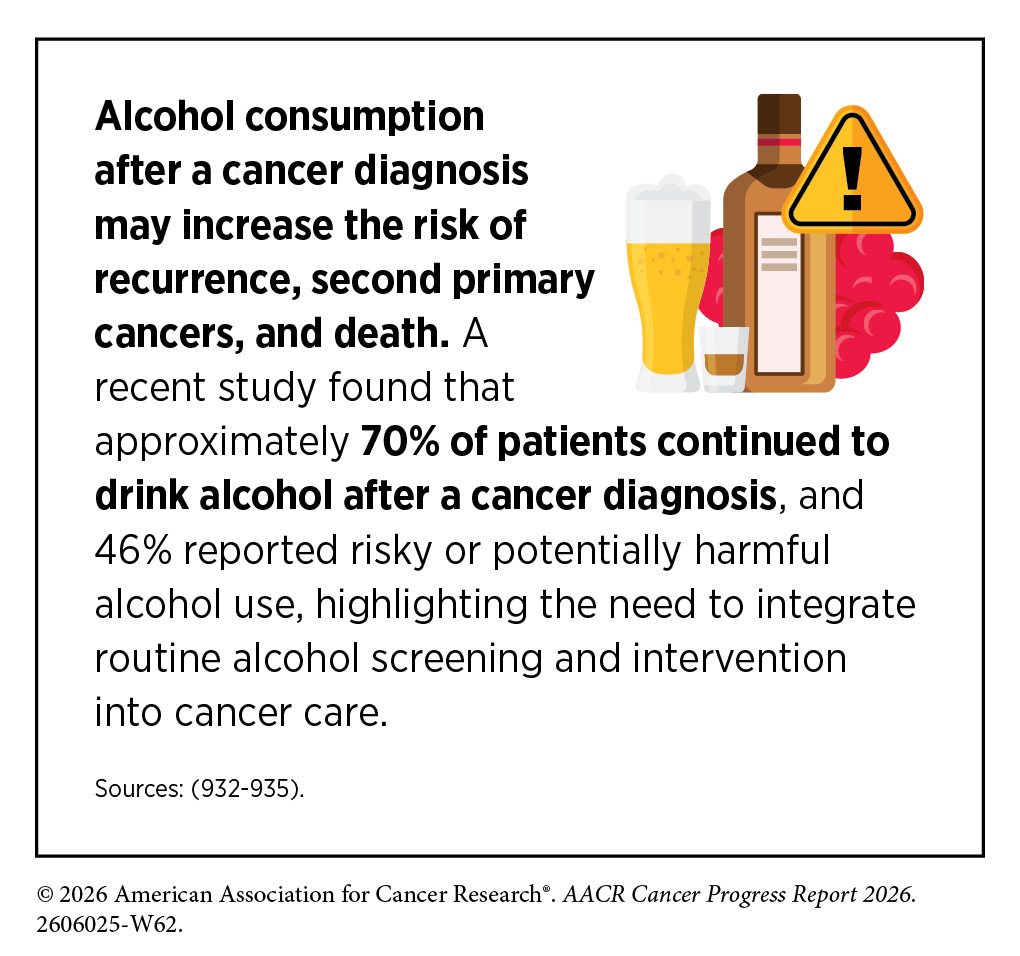
Alcohol use is an important and under-addressed issue in cancer survivorship. Alcohol is a known carcinogen (see Figure 11), and excessive alcohol use among cancer survivors has been associated with depression and anxiety symptoms, poorer quality of life, higher hospital readmission rates, increased health care costs, and increased risks of cancer recurrence, SPCs, and mortality (933)Lai JH, et al. (2025) J Intern Med, 298: 670.(934)Gapstur SM, et al. (2022) Cancer Epidemiol Biomarkers Prev, 31: 5.(935)Avancena ALV, et al. (2025) J Natl Compr Canc Netw, 23: 156.. Despite these risks, alcohol use remains common after a cancer diagnosis. According to one study, more than 70 percent of cancer survivors continued drinking alcohol after their diagnosis. Alarmingly, nearly half of survivors reported drinking at levels that exceeded recommended cancer prevention guidelines (see Sidebar 18), and nearly one-third engaged in hazardous drinking (i.e., alcohol consumption that increases a person’s risk of harm) (936)Heffner JL, et al. (2024) Cancer Epidemiol Biomarkers Prev, 33: 600.. Recent evidence also suggests that alcohol use disorder (AUD), a condition marked by difficulty stopping or controlling alcohol use, is increasing among cancer survivors. In one study of nearly 6 million privately insured adult cancer survivors, the prevalence of AUD diagnoses increased by 83 percent between 2012 and 2021 (935)Avancena ALV, et al. (2025) J Natl Compr Canc Netw, 23: 156..
Although few alcohol interventions have been developed specifically for cancer survivors, care providers should refer patients with AUD to evidence-based treatments, such as behavioral counseling and/or medication. Despite the availability of effective treatments, AUD treatment remains underutilized. Among cancer survivors newly diagnosed with AUD, only 14 percent initiated any form of treatment within 1 year, and fewer than 3 percent received FDA-approved AUD medications (933)Lai JH, et al. (2025) J Intern Med, 298: 670.(935)Avancena ALV, et al. (2025) J Natl Compr Canc Netw, 23: 156.. These findings highlight the need for a more systematic approach to addressing alcohol use in survivorship care, including routine screening, risk counseling, and timely referral to treatment for survivors with excessive alcohol use or AUD.
Improving Mental Health
Given the substantial psychological burden experienced by many cancer survivors, strategies to support mental well-being are an essential component of survivorship care. Several approaches—including psychotherapy, mind–body interventions, support groups, physical activity programs, and routine screening for mental health concerns—have been shown to improve psychological outcomes and quality of life among cancer survivors (937)Bai XL, et al. (2025) Br J Sports Med, 59: 1010.(938)Fu W, et al. (2025) Transl Psychiatry, 15: 327..
Despite the availability of effective mental health interventions, many cancer survivors do not receive timely support because of barriers such as stigma, limited awareness of available resources, shortages of trained mental health professionals, geographic barriers, and limited integration of psychosocial services into cancer care (939)Bergerot C, et al. (2024) EClinicalMedicine, 78: 102942.. To address these challenges, researchers and clinicians are increasingly testing models that integrate psychosocial care more directly into oncology practice. One such approach is collaborative care, a team-based model that embeds mental health support within routine cancer care through coordinated collaboration among oncology teams, behavioral health specialists, social workers, and case managers (940)Cheville AL, et al. (2026) Lancet Oncol, 27: 125.(941)Li M, et al. (2017) Psychooncology, 26: 573.. By strengthening communication across providers and linking symptom monitoring with follow-up support, collaborative care models are designed to reduce fragmentation between oncology and mental health systems.
Stepped-care models are also increasingly being used in oncology settings to deliver personalized psychosocial care that is matched to each survivor’s level of need (942)Abdalla T, et al. (2026) J Natl Cancer Inst, 118: 26.(943)Smith A, et al. (2026) J Cancer Surviv, 20: 766.. In these models, survivors may begin with less intensive forms of support, such as education, self-management tools, or brief counseling, and receive more specialized or intensive care if symptoms persist or worsen. Within oncology, stepped-care models have been recommended for the management of depression, anxiety, and fear of cancer recurrence in cancer patients and survivors (942)Abdalla T, et al. (2026) J Natl Cancer Inst, 118: 26.. Research has also shown that stepped-care approaches can improve patient outcomes and quality of life while using health care resources more efficiently.
Recent evidence also suggests that EHR data can be used to help identify patients with mental health needs and guide follow-up care. In a recent pilot study, patients with elevated depressive symptoms were identified using EHR data and offered a flexible, self-guided digital mental health intervention; patients who received the intervention had greater improvements in depressive symptoms and quality of life than those who received usual care (944)Graboyes EM, et al. (2025) Psychooncology, 34: e70309.. In another study, EHRs were used to collect patient-reported symptoms and guide follow-up care through symptom surveillance and collaborative care (940)Cheville AL, et al. (2026) Lancet Oncol, 27: 125.. Compared to symptom surveillance alone, the combined model reduced overall symptom burden among oncology patients, with the most consistent benefits observed for anxiety and depression, and was associated with fewer hospital stays, emergency department visits, and intensive care unit admissions.
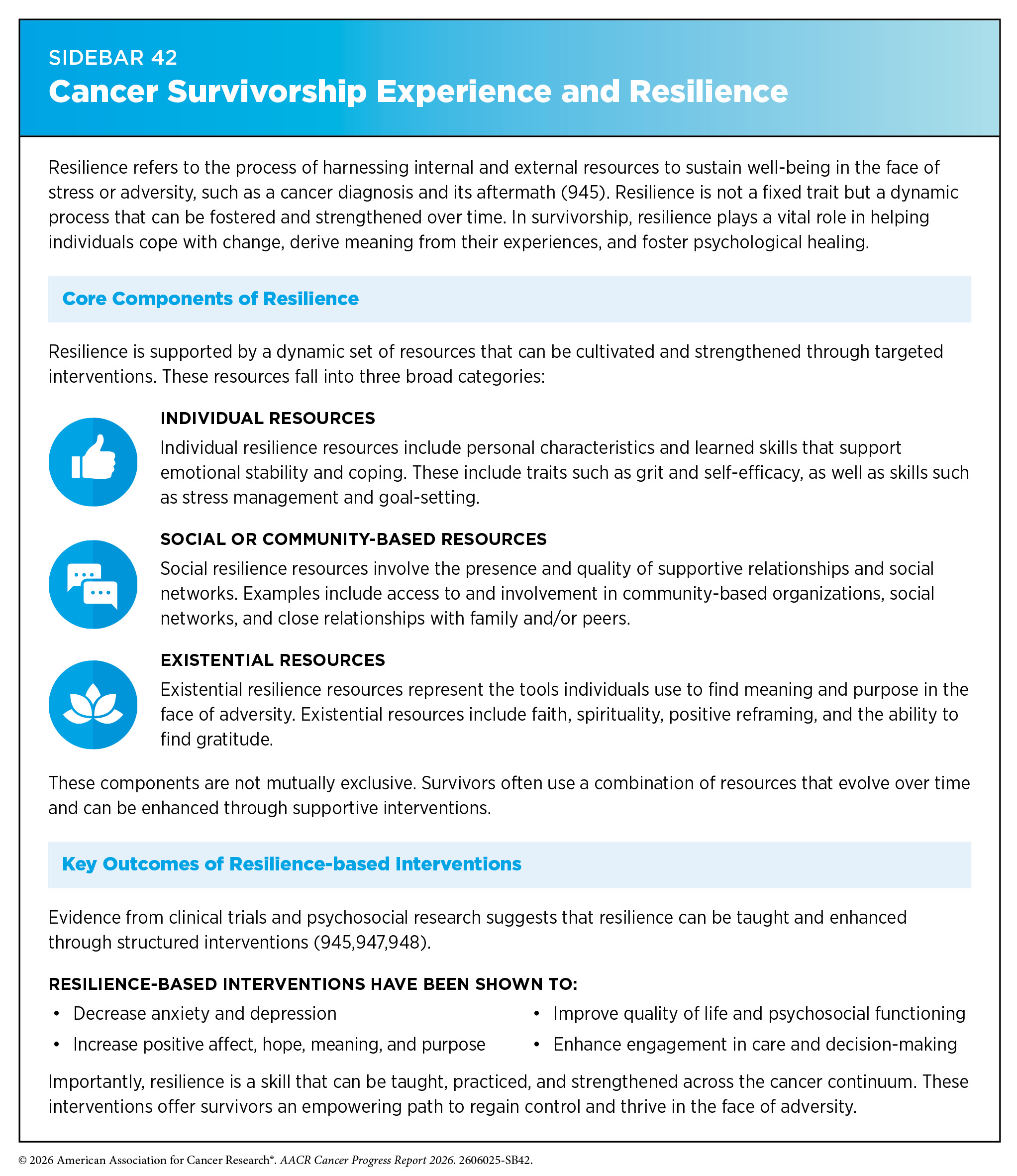
Despite the substantial emotional distress associated with cancer diagnosis and treatment, many survivors also report personal growth, a greater sense of meaning, or positive psychological change after diagnosis. Resilience, defined as the capacity to adapt and recover in the face of adversity, has emerged as a key protective factor for individuals facing cancer (see Sidebar 42) (945)Salsman JM, et al. (2024) Cancer, 130: 1031.. Research suggests that resilience can help buffer the effects of depression and other psychological challenges and may play an important role in supporting quality of life among people with cancer (946)Caldiroli CL, et al. (2025) Sci Rep, 15: 8599..
Psychosocial interventions that focus on enhancing resilience by teaching certain skills, such as mindfulness, gratitude, goal-setting, and cognitive reframing, have shown promise in reducing distress and promoting long-term psychological well-being among individuals with cancer. In a recent clinical trial, a structured problem-solving skills intervention for young adults newly diagnosed with cancer reduced depression and anxiety and improved health-related quality of life (949)Devine KA, et al. (2026) JAMA Netw Open, 9: e267997.. Other resilience-focused interventions have been associated with increased hope and greater engagement in goals-of-care discussions among AYAs with advanced cancer (948)Rosenberg AR, et al. (2026) JCO Oncol Pract, 22: 243..
Together, these advances highlight the importance of moving beyond simply identifying mental health concerns toward ensuring that survivors are connected to the right level of support at the right time. Improving mental health among cancer survivors will require routine and proactive identification of symptoms, evidence-based psychosocial interventions, stepped and collaborative care models that match support to survivor needs, and scalable approaches that can be integrated into routine oncology care.
Integrating Supportive Care
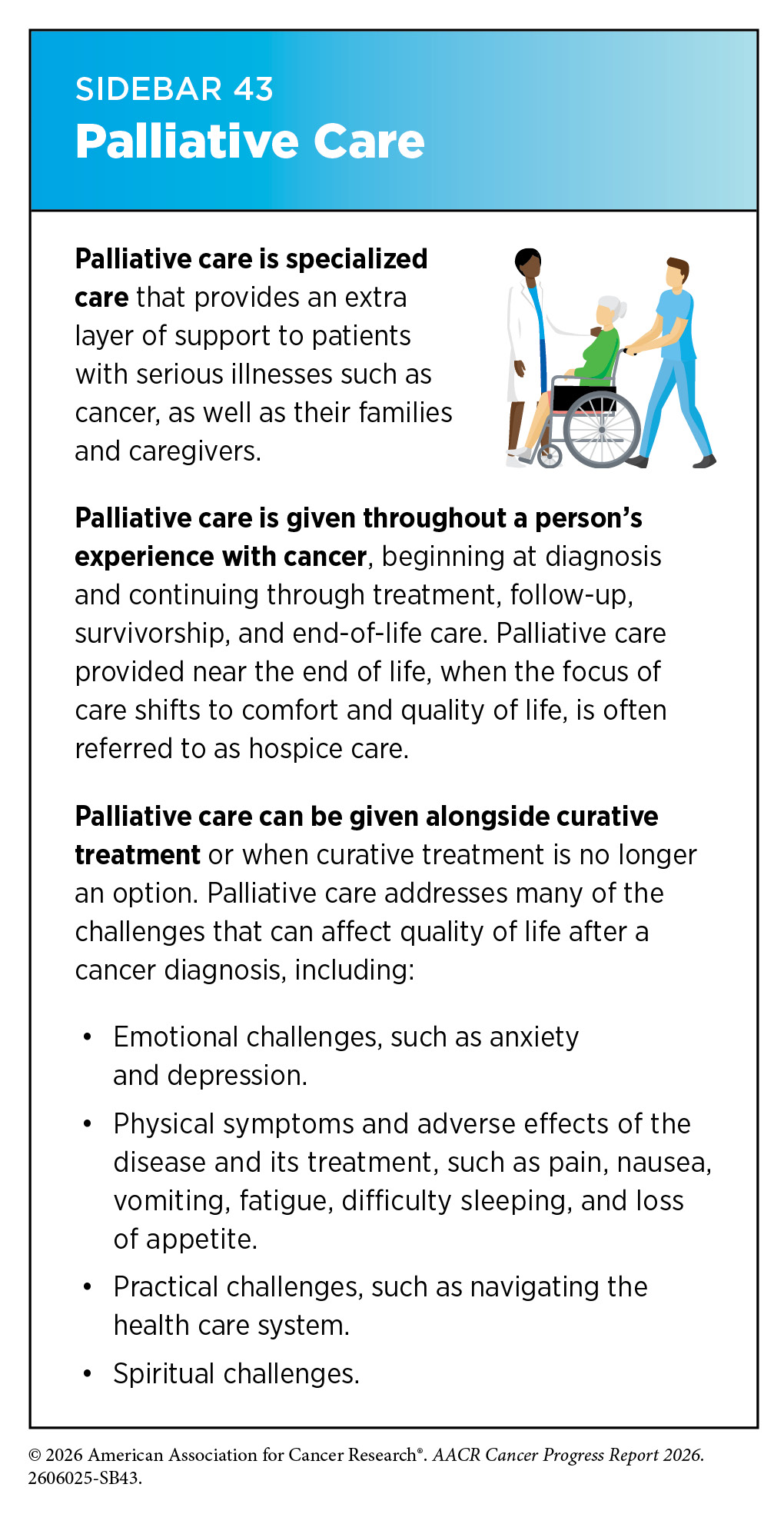
Supportive care aims to prevent and manage the adverse effects of cancer and its treatment across the entire cancer care continuum, from diagnosis through survivorship and end-of-life care (950)Wardill HR, et al. (2026) JCO Glob Oncol, 12: e2600087.. Palliative care is a component of supportive care that focuses on improving quality of life for individuals with cancer and their families (see Sidebar 43). The goal of palliative care is to prevent or treat symptoms of disease and side effects of treatment as early as possible, while also addressing related psychological, social, and spiritual challenges. Importantly, palliative care is appropriate at any stage of disease and can be provided alongside curative treatment. Supportive care also includes hospice services. In contrast to palliative care, hospice refers to care provided near the end of life, when treatment is no longer aimed at cure and the focus shifts to comfort, symptom management, caregiver support, and alignment of care with patients’ end-of-life priorities (951)Currow DC, et al. (2020) J Clin Oncol, 38: 937.(952)Taylor A, et al. (2025) Clin Med (Lond), 25: 100487.. Research suggests that supportive care is most effective when delivered by multidisciplinary teams comprising physicians, nurses, psychologists, nutritionists, pharmacists, social workers, chaplains, and other health care professionals.
A growing body of evidence supports the early integration of palliative care into oncology care. Recent analyses have found that early palliative care is associated with improved quality of life, reduced symptom burden, and improved psychological well-being among patients with cancer (953)Creanga-Murariu I, et al. (2025) Cancers (Basel), 17.(954)Haroen H, et al. (2025) BMC Palliat Care, 24: 120.. Early palliative care can also help patients and caregivers navigate the uncertainty of modern cancer treatment, improve understanding of prognosis, and support care planning that aligns with patients’ goals, values, and preferences (955)Petrillo LA, et al. (2024) Am Soc Clin Oncol Educ Book, 44: e100038..
The early integration of palliative care is particularly relevant for individuals living with advanced or metastatic cancer, who may experience prolonged treatment, persistent symptoms, prognostic uncertainty, and complex care decisions. As therapeutic advances extend survival for some patients with advanced and metastatic cancers, there is an increasing need for integrated care models that reflect the reality of living longer with an incurable disease and address quality of life throughout the illness trajectory (956)Hart NH, et al. (2024) JCO Oncol Pract, 20: 1160.(957)Jefford M, et al. (2025) Am Soc Clin Oncol Educ Book, 45: e471752.(958)Mollica MA, et al. (2026) Cancer Epidemiol Biomarkers Prev, 35: 692.. Early referral to specialized palliative care is recommended for patients with advanced cancer and has been shown to enhance quality of life, improve symptom management, and increase communication about goals of care and end-of-life preferences (959)Sanders JJ, et al. (2024) J Clin Oncol, 42: 2336..
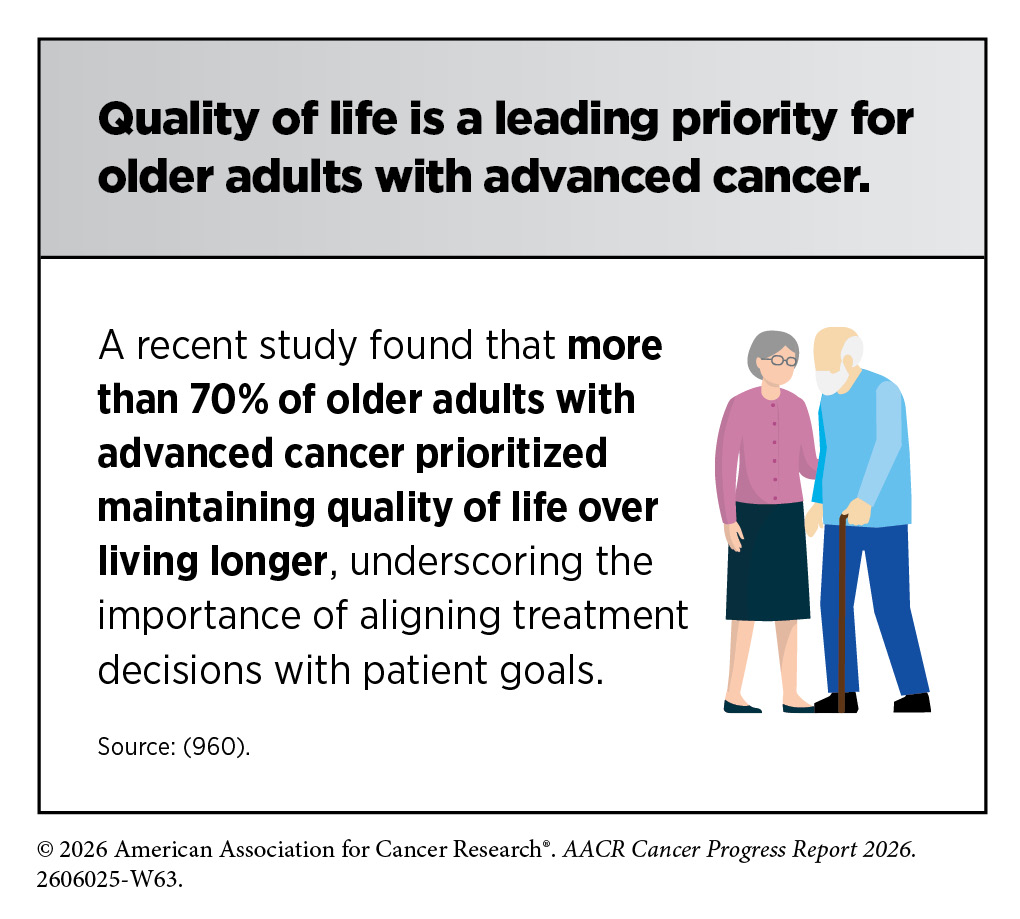
Recent studies also underscore the importance of aligning care with patients’ goals and preferences. In one recent study of older adults with advanced cancer, most participants prioritized maintaining quality of life over extending survival, yet treatment patterns and outcomes did not appear to differ by patient preference, suggesting that oncology care may not always be fully responsive to what matters most to patients (960)Richardson DR, et al. (2026) JAMA Oncol, 12: 517.. Another study found that among patients with advanced cancer who said they preferred care focused on comfort and symptom relief rather than extending life, more than one-third reported receiving treatment that did not align with their stated goals (961)Shah MP, et al. (2025) Cancer, 131: e35976..
This disconnect can be especially consequential near the end of life, when care that does not reflect patient preferences can compromise quality of life and increase distress for patients and families. In a recent study of Medicare beneficiaries with advanced cancer, nearly 50 percent experienced at least one indicator of potentially aggressive care in the last 30 days of life, while uptake of supportive care services, including palliative care, hospice, and advance care planning, remained low (962)Kwon Y, et al. (2025) JAMA Health Forum, 6: e245436.. These findings underscore the importance of ongoing communication, advance care planning, and care models that help ensure treatment decisions reflect patients’ values.
Stepped-care models are increasingly being used in oncology settings to deliver scalable, personalized care tailored to each survivor’s level of need. Research has shown that a stepped-care model for delivering palliative care to patients with advanced lung cancer can effectively improve patient outcomes and quality of life, while using fewer health care resources (963)Temel JS, et al. (2024) JAMA, 332: 471.. Telehealth-based palliative care has also shown promise as an effective strategy for expanding access among patients who face geographic, transportation, or other barriers to in-person specialty care (964)Kawashima A, et al. (2026) Palliat Med, 40: 588..
Integrating supportive care into standard oncology care represents a meaningful step toward more patient-centered, responsive, and effective cancer care. As the population of people living with and beyond advanced cancer continues to grow, supportive and palliative care models must be introduced earlier, delivered equitably, and designed to align care with patients’ symptoms, goals, values, and quality-of-life priorities.
Delivering Care to Cancer Survivors
As the number of cancer survivors continues to grow, ensuring access to high-quality survivorship care has become an increasingly important priority. Effective survivorship care extends beyond monitoring for recurrence and late effects and requires coordinated, patient-centered approaches that address survivors’ physical, psychosocial, and practical care needs throughout the cancer continuum. The following sections describe strategies to improve care delivery, enhance continuity of care, and incorporate patient perspectives into survivorship research and clinical practice.
Coordinating Care
The multifaceted approach to treating cancer necessitates providing survivors with appropriate care to address their many needs, including transitioning from active treatment, coordinating follow-up appointments, addressing financial and psychosocial challenges, and gaining access to other survivorship resources. While many of these services exist, survivors often face difficulties navigating the health care system to find and utilize them. Effective coordination of care is essential to help survivors identify and access the resources they need to maintain their health and well-being.
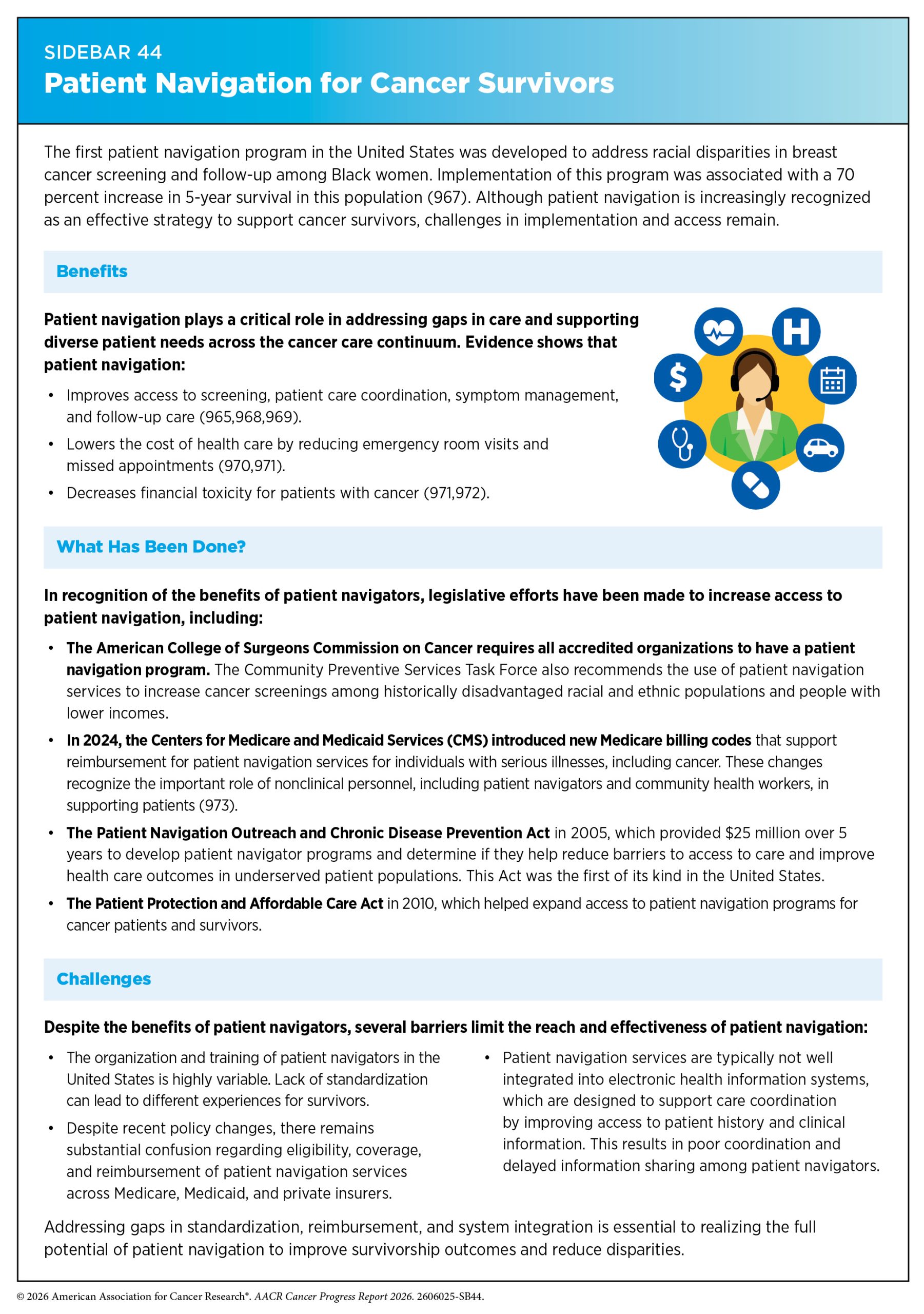
Patient navigators and clinical care coordinators are individuals who help cancer patients and survivors access resources more effectively (see Sidebar 44). Evidence from a recent study found that community-focused patient navigation programs helped increase trust in health care providers, reduced system-level barriers, and improved continuity of care, particularly among medically underserved populations (965)Ver Hoeve ES, et al. (2024) BMC Health Serv Res, 24: 550.. One such program, the Integrated Cancer Care Access Network (ICCAN), is a multidisciplinary initiative that provides one-on-one, culturally and linguistically tailored navigation and assistance with essential needs, such as food, housing, and financial support, for underserved cancer patients (966)Gany F, et al. (2025) J Natl Compr Canc Netw: 1.. Research on ICCAN demonstrated that patients who received these services experienced significantly higher treatment completion rates and greater improvements in quality of life compared to those receiving standard care.
Survivorship care plans (SCPs) are another important tool for improving care coordination. These plans typically include a summary of the patient’s diagnosis and treatment, along with guidance for follow-up care, including recommended health screenings, surveillance for recurrence and second cancers, and management of long-term and late effects. By facilitating communication among patients, primary care providers (PCPs), and oncologists, SCPs help ensure coordinated, continuous care as patients transition from active treatment to long-term survivorship.
SCPs have been shown to improve several aspects of survivorship care delivery and patient outcomes. Survivors who receive SCPs are more likely to adhere to recommended surveillance and screening for second primary cancers and other late effects (974)Yan AP, et al. (2020) J Clin Oncol, 38: 1711.(975)Tsai MH, et al. (2024) J Cancer Surviv, 18: 781.(976)Santos-Teles M, et al. (2024) Support Care Cancer, 32: 798.. SCPs have also been shown to improve survivors’ knowledge of their cancer history and follow-up care needs and enhance self-efficacy and confidence in managing survivorship care (977)Tarver WL, et al. (2025) J Cancer Surviv, 19: 1956.. These improvements in care delivery and patient engagement are increasingly recognized as important mechanisms through which SCPs may influence longer-term outcomes. A recent study found that SCP receipt was associated with a 38 percent lower risk of death among childhood cancer survivors (978)Ji X, et al. (2026) J Natl Cancer Inst, 118: 85..
Incorporating SCPs into EHRs can further improve care continuity by making survivorship information accessible across clinical teams. Several studies recommend integrating SCP templates into EHR systems to foster care coordination among oncologists, PCPs, and patients (979)Singh AP, et al. (2025) JCO Oncol Pract, 21: 128.(980)Atlas SJ, et al. (2025) JCO Oncol Pract, 21: 123.. Recent work highlights the need for dynamic, EHR-enabled care plans that can be updated over time, shared across oncology and primary care teams, and used to track key aspects of survivorship care, including follow-up, prevention, chronic disease management, and patient reported outcomes (980)Atlas SJ, et al. (2025) JCO Oncol Pract, 21: 123..
PCPs are increasingly recognized as essential partners in cancer survivorship because they are well positioned to manage comorbidities, deliver preventive care, and support survivors’ long-term health and well-being. However, a recent study found that only 43 percent of cancer survivors maintained regular PCP visits 5 to 7 years after diagnosis (981)Birken SA, et al. (2025) JCO Oncol Pract, 21: 766.. Younger survivors and those diagnosed with advanced-stage cancers were less likely to maintain PCP engagement compared to older survivors and those diagnosed at earlier stages, suggesting that these groups may be especially vulnerable to gaps in survivorship care and unmet health needs. Notably, survivors who remained engaged with an oncologist during this period were more than twice as likely to maintain regular PCP visits as those without ongoing oncology care, suggesting that stronger integration between oncology and primary care may help close critical gaps in long-term survivorship care (981)Birken SA, et al. (2025) JCO Oncol Pract, 21: 766..
Recent studies have identified several promising strategies for strengthening coordination between oncology and primary care. In one safety-net health system, EHR data helped identify cancer survivors with chronic conditions who could benefit from primary care follow-up, and an oncology nurse coordinator helped connect these patients to primary care during active treatment, improving patient-reported care coordination (982)Balasubramanian BA, et al. (2026) JCO Oncol Pract: OP2501275.. Another emerging approach is to integrate primary care into oncology settings. For example, one tertiary cancer center established an oncology primary care clinic that provided ongoing, survivorship-informed primary care for patients with active cancer or a history of cancer, helping to improve continuity of care and strengthen coordination between oncology and primary care teams (983)Topalian AG, et al. (2026) Fam Med Community Health, 14..
Despite growing recognition of survivorship as a distinct phase of cancer care, survivorship care delivery remains fragmented and variable across health systems. To address these gaps, NCI, in collaboration with the US Department of Veterans Affairs and other stakeholders, recently established national standards for cancer survivorship care (984)Mollica MA, et al. (2024) J Cancer Surviv, 18: 1190.. These standards provide a framework for developing comprehensive survivorship programs, organizing services, evaluating their impact, and ensuring that survivors have access to high-quality, coordinated care across diverse settings.
However, meeting these standards will require addressing key workforce challenges. In addition to persistent shortages of oncologists and PCPs, there are currently no accredited training programs in cancer survivorship, limiting efforts to standardize care and train the next generation of providers (985)Manne S, et al. (2024) J Cancer Surviv, 18: 1.. Expanding access to survivorship services will require greater investment in training and supporting multidisciplinary care teams, including clinicians, patient navigators, primary care clinicians, social workers, behavioral health providers, and other professionals who are essential to delivering high-quality survivorship care.
Leveraging Patient Reported Outcomes
Patient reported outcomes (PROs), which are reports provided directly by patients about their health, symptoms, and daily functioning, are increasingly recognized as essential tools in clinical trials as well as routine practice (see Sidebar 45). PROs provide critical insights into patient symptoms, functional status, and quality of life, enabling a more comprehensive understanding of treatment tolerability and overall well-being (986)Howell D, et al. (2015) Ann Oncol, 26: 1846..
PROs are collected through questionnaires, which alert clinicians to the status of the patient regarding quality of life, symptoms, and health-related behaviors (e.g., smoking, diet, and physical activity). When paired with automated alerts in clinical care, these systems can prompt timely interventions by health care providers. Evidence from large-scale trials shows that patients who participate in regular symptom monitoring experience better clinical outcomes, including improved symptom control, better quality of life, and fewer emergency department visits and hospitalizations (987)Xia Y, et al. (2025) NPJ Digit Med, 8: 399.(988)Rocque GB, et al. (2025) JAMA Netw Open, 8: e259852.(989)Dupuis LL, et al. (2024) JAMA, 332: 1981.(990)Basch E, et al. (2025) Nat Med, 31: 1225.. In a recent study of children with advanced cancer, integrating weekly electronic PRO reports into pediatric palliative care helped clinicians identify and respond to symptoms, leading to improvements in overall and physical quality of life (991)Dussel V, et al. (2026) J Clin Oncol, 44: 685..
Emerging evidence also suggests that PROs can provide important insights into a patient’s overall prognosis. A recent systematic review and meta-analysis found that patients’ self-reported quality of life, physical functioning, and symptom burden were associated with overall survival, even after accounting for clinical factors (992)Huang RS, et al. (2025) JAMA Oncol, 11: 1303.. These findings suggest that PROs may help clinicians better understand a patient’s overall health and identify those who may need additional support.
The integration of PROs with EHRs and real-time alert systems has proven both feasible and effective across diverse clinical settings. In a recent clinical trial, EHR-integrated PRO systems not only supported more responsive care but also improved communication between patients and providers (990)Basch E, et al. (2025) Nat Med, 31: 1225..
Despite the clear benefits, barriers to widespread adoption of PROs remain, including clinician skepticism, technological limitations, workflow integration challenges, and disparities in digital access and literacy (993)Colbert JA, et al. (2025) JAMA Oncol, 11: 233.. Overcoming these barriers will require coordinated efforts to invest in user-friendly technology, provide training for clinicians and patients, streamline integration into clinical workflows, and ensure equitable access to digital tools across diverse patient populations.
Incorporating PROs into standard cancer care represents a meaningful step toward more patient-centered, responsive, and effective cancer care. By systematically capturing patients’ experiences and symptoms, PROs can inform clinical decision-making, facilitate timely interventions, and help ensure that care remains aligned with patients’ needs, priorities, and goals.
Supporting Caregivers
Caregivers comprise family members and/or friends who help patients with long-term chronic illness and manage any and all aspects of their care. In 2025, an estimated 63 million US adults provided care for another person, representing nearly one-quarter of all adults in the United States (994)AARP. Caregiving in the US. Accessed: June 30, 2026. . It is further estimated that more than four million of these caregivers were supporting an adult with cancer.
Cancer caregivers play a critical role across the cancer care continuum, helping patients manage medications, coordinate appointments, monitor symptoms, communicate with health care teams, and advocate for additional care when needed (994)AARP. Caregiving in the US. Accessed: June 30, 2026. (995)Odom JN, et al. (2026) Support Care Cancer, 34.. Although these responsibilities are essential to patient care, they can place considerable strain on caregivers, resulting in emotional, physical, and financial burdens that negatively affect their quality of life.
The demands of caregiving may also contribute to adverse health outcomes among caregivers. One study found that first-degree relatives and spouses of patients with genitourinary cancers had a 10 percent increased risk of developing a psychological illness and a 28 percent increased risk of cardiovascular disease (996)Choudry MM, et al. (2024) Cancer, 130: 4061.. Other studies indicate that up to 40 percent of cancer caregivers meet criteria for clinically significant traumatic stress or depression (997)Klekovkina E, et al. (2025) Archives of Gerontology and Geriatrics Plus, 2: 100141.. Recent evidence also suggests that family caregivers of patients with cancer have an elevated risk of suicidality, particularly when caring for patients with aggressive cancers and during the years following a cancer diagnosis (998)Zhu XY, et al. (2026) Ann Med, 58: 2624214.. These findings highlight the need to integrate caregiver distress screening, psychosocial support, and referral pathways into routine oncology care.
Emerging research highlights the interdependence of patient and caregiver experiences. In a study of cancer survivors and their caregivers, caregiver anxiety and depressive symptoms predicted subsequent psychological distress among survivors, underscoring the extent to which caregiver well-being may shape patients’ emotional health during treatment (999)Segrin C, et al. (2025) J Psychosoc Oncol, 43: 574.. The relationship between patient and caregiver distress was especially pronounced when survivors had high symptom burden or limited social support and when caregivers experienced social isolation or limited social support, highlighting the importance of addressing psychosocial needs among both patients and caregivers rather than focusing on either group in isolation.
Moreover, caregivers often face substantial social and financial challenges. These include transportation barriers, job and/or academic disruptions, and unmet psychosocial needs. For example, employment disruptions, such as unpaid leave, job loss, or reduced hours, are common among caregivers, often resulting in loss of income and health insurance (1000)Anant S, et al. (2025) JCO Oncol Pract, 21: 41.. Recognizing the reciprocal nature of the patient–caregiver relationship is essential for delivering equitable, comprehensive, and person-centered oncology services. Addressing caregiver needs through proactive screening for unmet needs, tailored psychosocial interventions, and financial support is critical to improving outcomes for both caregivers and the patients they support.
Cancer survivors who provide care to others represent a particularly vulnerable population, with substantial health and psychosocial support needs. A national analysis found that nearly one in five cancer survivors reported caregiving responsibilities and that these survivors were more than twice as likely to experience moderate to severe psychological distress as survivors without caregiving responsibilities (1001)Wang Q, et al. (2024) J Cancer Surviv, 18: 553.(1002)Mahmood A, et al. (2025) Support Care Cancer, 33: 75.. These individuals are also more likely to report unmet social needs, including food, housing, or transportation insecurity, compared to survivors who were not caregivers, suggesting that caregiving responsibilities may compound the social and economic burdens already faced by cancer survivors (1003)Wang Q, et al. (2026) JCO Oncol Pract, 22: 1096.. Despite reporting higher levels of unmet social needs, many survivors with caregiving responsibilities report that they do not feel comfortable discussing these challenges with health care providers, highlighting the need for more proactive screening for unmet social needs and targeted support for this vulnerable population (1003)Wang Q, et al. (2026) JCO Oncol Pract, 22: 1096..
Enacted in more than 40 states, the Caregiver Advise, Record, and Enable (CARE) Act of 2016 requires hospitals to identify a caregiver for every patient and provide them with resources and training prior to releasing the loved one from the hospital. In 2022, the US Department of Health and Human Services released the National Strategy to Support Family Caregivers. Developed through a multi-agency collaboration with private-sector partners, the strategy outlines more than 500 actions to strengthen caregiver support across five key areas: recognition and inclusion, access to services, financial and workplace protections, caregiver engagement, and data-driven policy development (1004)Administration for Community Living. 2022 National Strategy to Support Family Caregivers. Accessed: June 30, 2026. . Despite growing recognition of caregiver needs, nearly a quarter of CoC-accredited US cancer centers do not have a family caregiver program, underscoring the need to strengthen caregiver support in oncology settings (1005)Odom JN, et al. (2023) JAMA Netw Open, 6: e2337250..
Next Section: Envisioning the Future of Cancer Research Previous Section: Progress Across the Clinical Cancer Care Continuum