Cancer Screening for Early Detection
In this section, you will learn:
- Cancer screening refers to checking for cancer, or abnormal cells that may become cancer, in people who do not have symptoms of the disease.
- Routine cancer screening helps save and improve lives by detecting cancer at an early stage when treatment may be curative.
- The United States Preventive Services Task Force, a panel of experts in evidence-based medicine, recommends routine screening for cancers of the breast, cervix, colon and rectum, lung, and prostate.
- Cancer screening uptake among eligible individuals in the United States is suboptimal.
- Disparities in routine screening and follow-up testing have been documented based on race, ethnicity, sexual orientation, gender identity, geography, education, and socioeconomic status.
- Evidence-based interventions are improving access and adherence to routine cancer screening and follow-up care for all eligible individuals.
- Artificial intelligence–assisted approaches, minimally invasive tests for simultaneous detection of multiple cancers, and personalized recommendations based on genomics and other risk factors are exciting new frontiers in cancer screening for early detection.
Contents
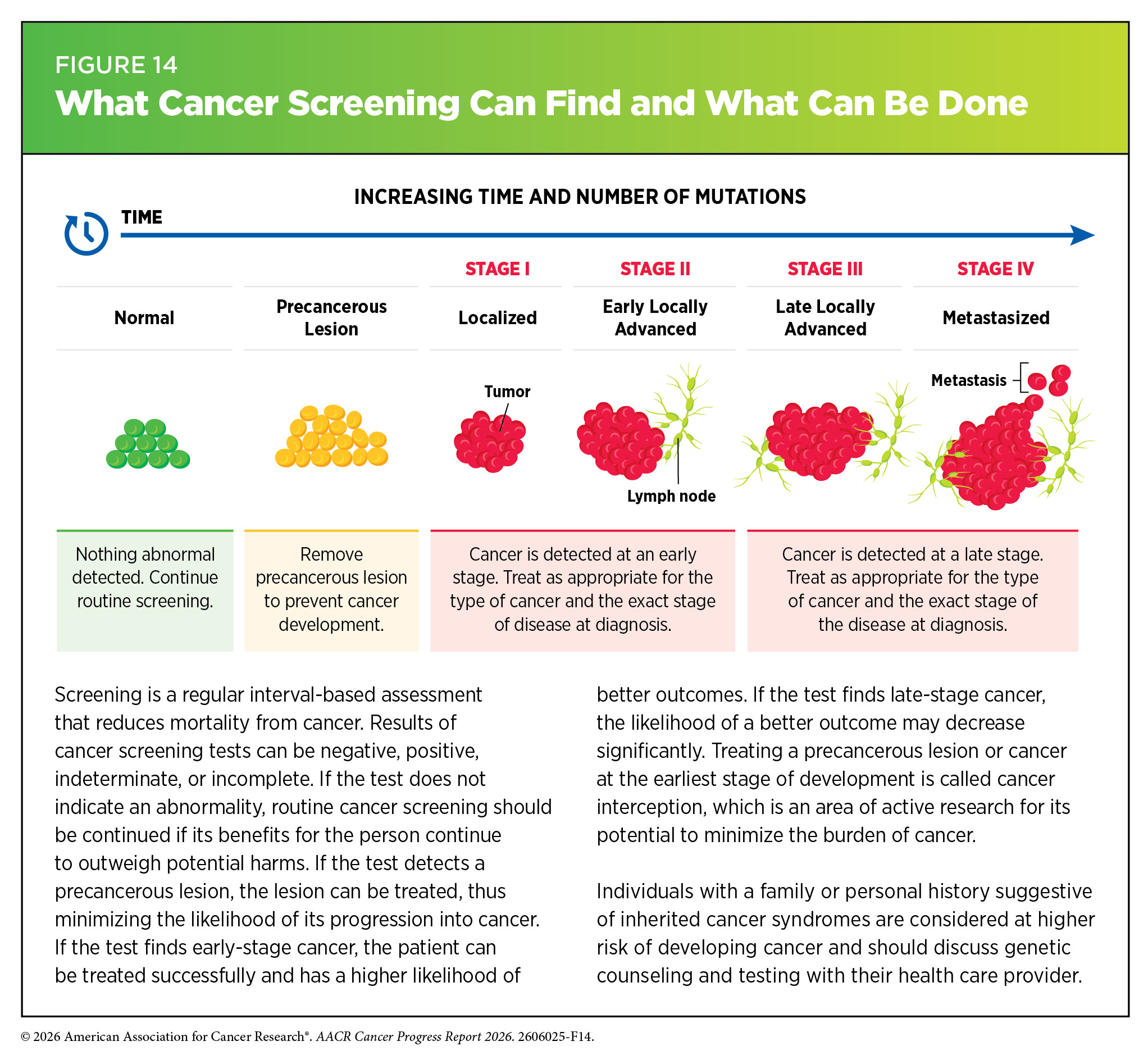
According to the National Cancer Institute (NCI), cancer screening means checking for cancer, or for abnormal cells that may become cancer, in people who have no symptoms of the disease. Large, population-based studies and randomized clinical trials have shown that routine screening reduces cancer deaths. The key aims of cancer screening are to identify precancerous lesions that can be removed or treated, or to detect cancer at an early stage when treatment is more likely to be less intensive and possibly curative (see Figure 14) (439)Duffy SW, et al. (2026) Nat Rev Clin Oncol, 23: 201..
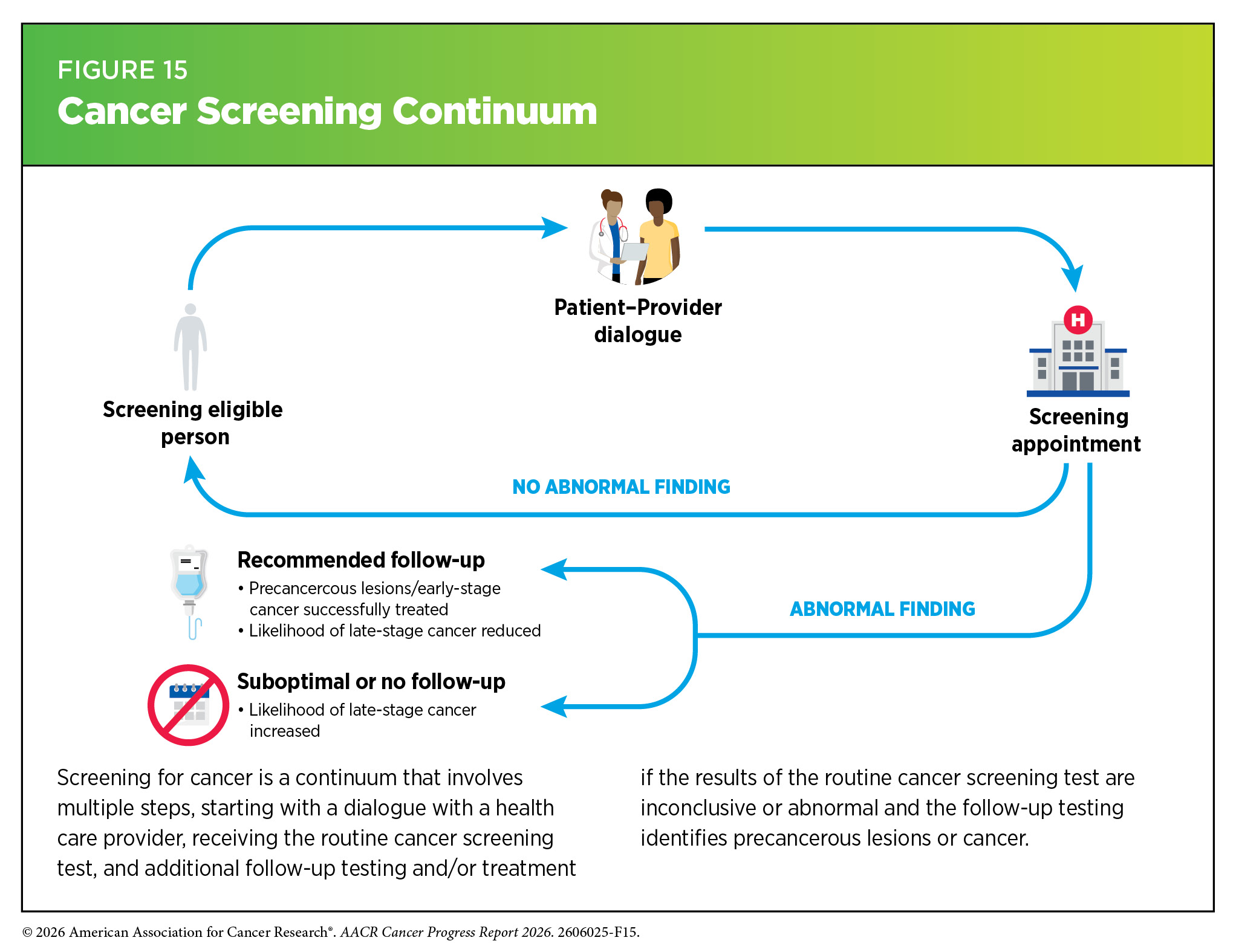
Cancer screening involves several steps, starting with a conversation between individuals and their health care provider about the benefits and risks of screening based on age, biological sex, and personal factors, such as family history. If the screening test shows no concerns, no further action is needed until the next scheduled screening. However, if the test finds possible signs of cancer or unclear results, follow-up care may be needed, including additional testing to confirm a diagnosis and, if necessary, starting treatment (see Figure 15).
Routine Cancer Screening Saves Lives
Evidence from large, randomized trials and population-based studies has established routine cancer screening as a key to saving lives from cancer. Some of the strongest data have come from colorectal cancer (CRC) screening. One study analyzed data from nine large, randomized clinical trials, covering nearly 830,000 individuals with up to a 10-year follow-up. When comparing no screening to the four United States Preventive Services Task Force (USPSTF)–recommended CRC screening approaches, researchers found that flexible sigmoidoscopy reduced CRC deaths by 26 percent, while guaiac fecal occult blood test reduced CRC deaths by 13 percent (440)Kaneko M, et al. (2026) Ther Adv Gastroenterol, 19: 17562848261454186.. The benefit of flexible sigmoidoscopy screening in reducing CRC mortality is reinforced by a 23-year follow-up of nearly 99,000 individuals in a Norwegian randomized trial. Findings from the trial show that the relative risk of death from CRC is reduced by more than a third among screened men, though the benefit was weaker in women (441)Botteri E, et al. (2026) Ann Intern Med, 179: 804..
A key purpose of routine cancer screening is to find cancer or precancerous lesions at the earliest stage when the treatment can be curative (see Figure 14). One of the ways researchers assess the impact of routine screening is by examining the incidence of early-stage cancers at the population level: An increase in early-stage cancer diagnoses following issuance of screening guidelines indicates that screening is reaching the target population and is detecting cancers at an earlier, more treatable stage. For example, the 2021 USPSTF recommendation lowering the CRC screening start age to 45 increased screening uptake in adults ages 45 to 49 from about 20 percent to 34 percent between 2019 and 2023 (443)Star J, et al. (2025) JAMA, 334: 827.. Furthermore, early-stage CRC diagnoses in this age group also increased 50 percent between 2021 and 2022 (444)Schafer EJ, et al. (2025) JAMA, 334: 824., indicating that the revised screening guidelines are finding CRC earlier in this age group, reducing the likelihood of advanced-stage diagnosis and CRC-related mortality.
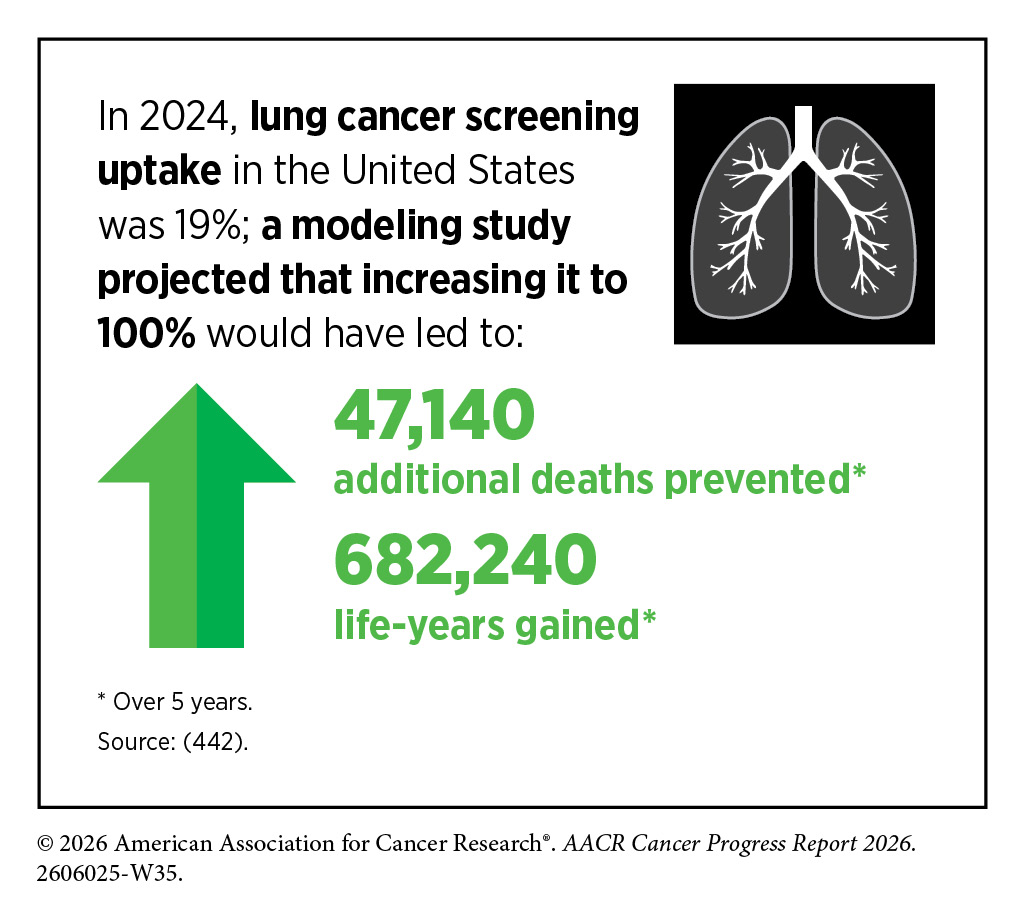
The impact of routine screening on reducing cancer mortality accumulates over time as more early-stage cancers and precancerous lesions are found and treated. This means that studies require decades-long follow-up to capture the full impact of routine cancer screening, necessitating the need for sustained and predictable funding for public health research.
Evidence Guides Cancer Screening Recommendations
Panels of subject matter experts, convened by government agencies and professional public health organizations, translate findings from screening trials into population-level guidance for routine cancer screening. The multistep process typically includes a comprehensive review in which experts weigh the evidence for benefits and potential harms of recommending screening, including at what age to start and stop routine screening and which tests to use. This report focuses on the recommendations issued by USPSTF, a congressionally mandated independent panel convened by the US Department of Health and Human Services. USPSTF issues screening recommendations based on individuals’ lifetime risk of developing cancer.
People at average risk are those without a significant personal or family history of cancer or a known inherited genetic condition. For these individuals, screening recommendations are generally based on age and biological sex. People exposed to cancer risk factors, such as smoking tobacco or environmental carcinogens, have a higher likelihood of developing cancer (see Reducing the Risk of Cancer Development). Other groups of individuals with increased risk include those diagnosed with cancer (see Advancing Cancer Survivorship Care), those with multiple immediate family members diagnosed with cancer, and those with hereditary cancer syndromes. The composition of specific tissues can also influence the risk of developing cancer. For example, women with dense breast tissue have a higher risk of developing breast cancer. Identifying approaches that can supplement routine mammography, such as magnetic resonance imaging (MRI), for detecting breast cancer early in women with dense breasts is an area of active investigation (445)Harper L, et al. (2026) Maturitas, 208: 108916.(446)Tosteson ANA, et al. (2026) Ann Intern Med, 179: 486..
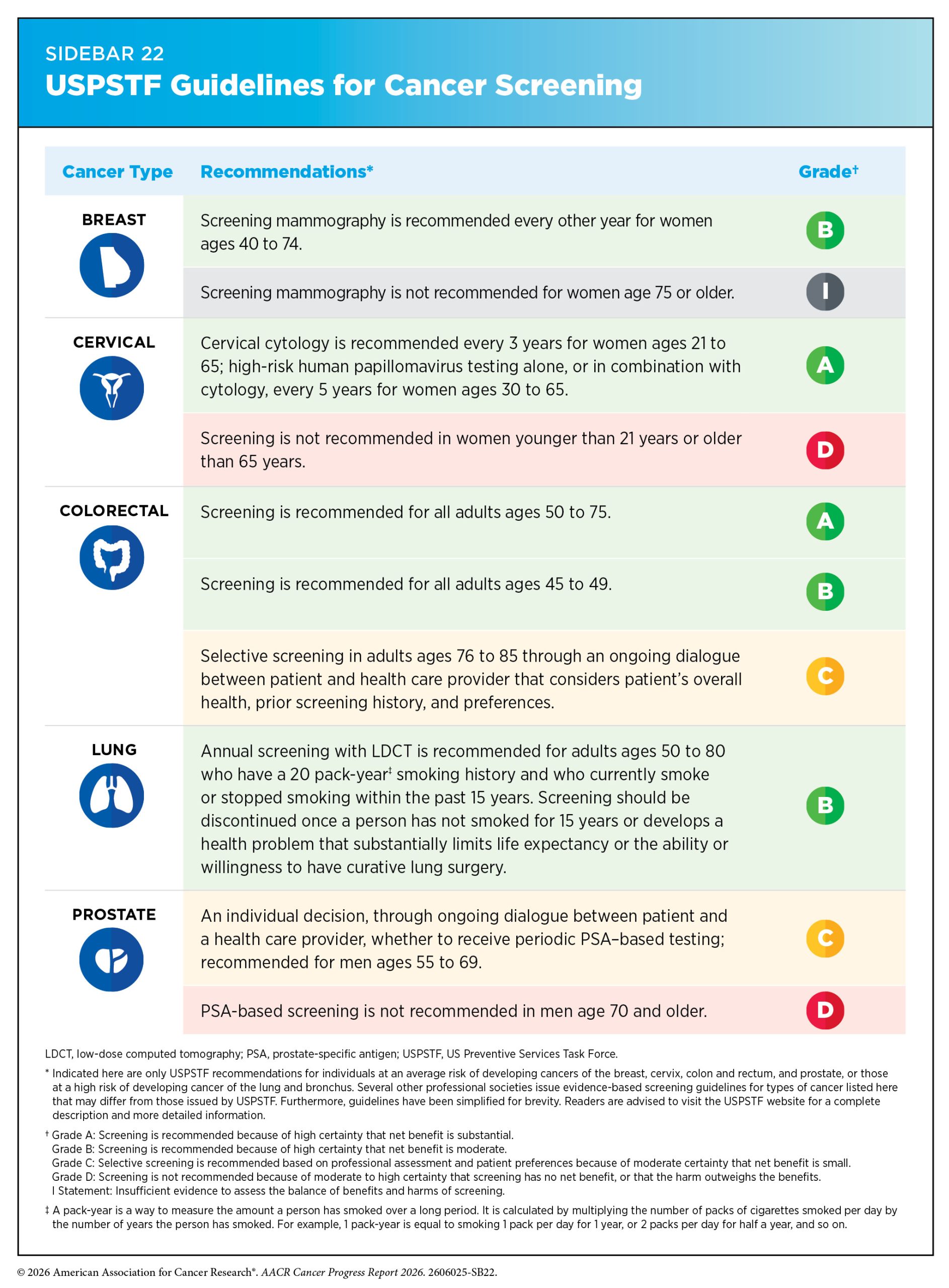
Based on the strength of evidence, USPSTF assigns a letter grade to its recommendations that indicates whether the benefits of routine screening outweigh the potential harm (see Sidebar 22). Sometimes, USPSTF gives different grades for different groups of people for the same type of cancer. In some cases, USPSTF recommends against screening if the harm is likely to be greater than the benefits. When evidence is lacking to make a clear recommendation, USPSTF issues an Insufficient Evidence Statement.
The USPSTF grade determines whether a screening test is covered without out-of-pocket costs under the Patient Protection and Affordable Care Act (ACA). Although USPSTF is officially scheduled to meet three times per year, the panel has not met since March 2025, delaying potential revisions to screening guidelines for cervical and prostate cancers (see Advancing Policies to Strengthen Cancer Prevention and Screening Programs).
In addition to USPSTF, many professional organizations focused on public health also issue screening recommendations through similarly rigorous processes. These screening recommendations are widely used in the clinic, although not all are covered by insurance plans. Because new evidence for better screening approaches is constantly emerging, it is important for screening-eligible individuals to have a continued dialogue with their providers to stay up to date with the latest evidence guiding cancer screening and revise their screening plans accordingly.
Tests for Cancer Screening
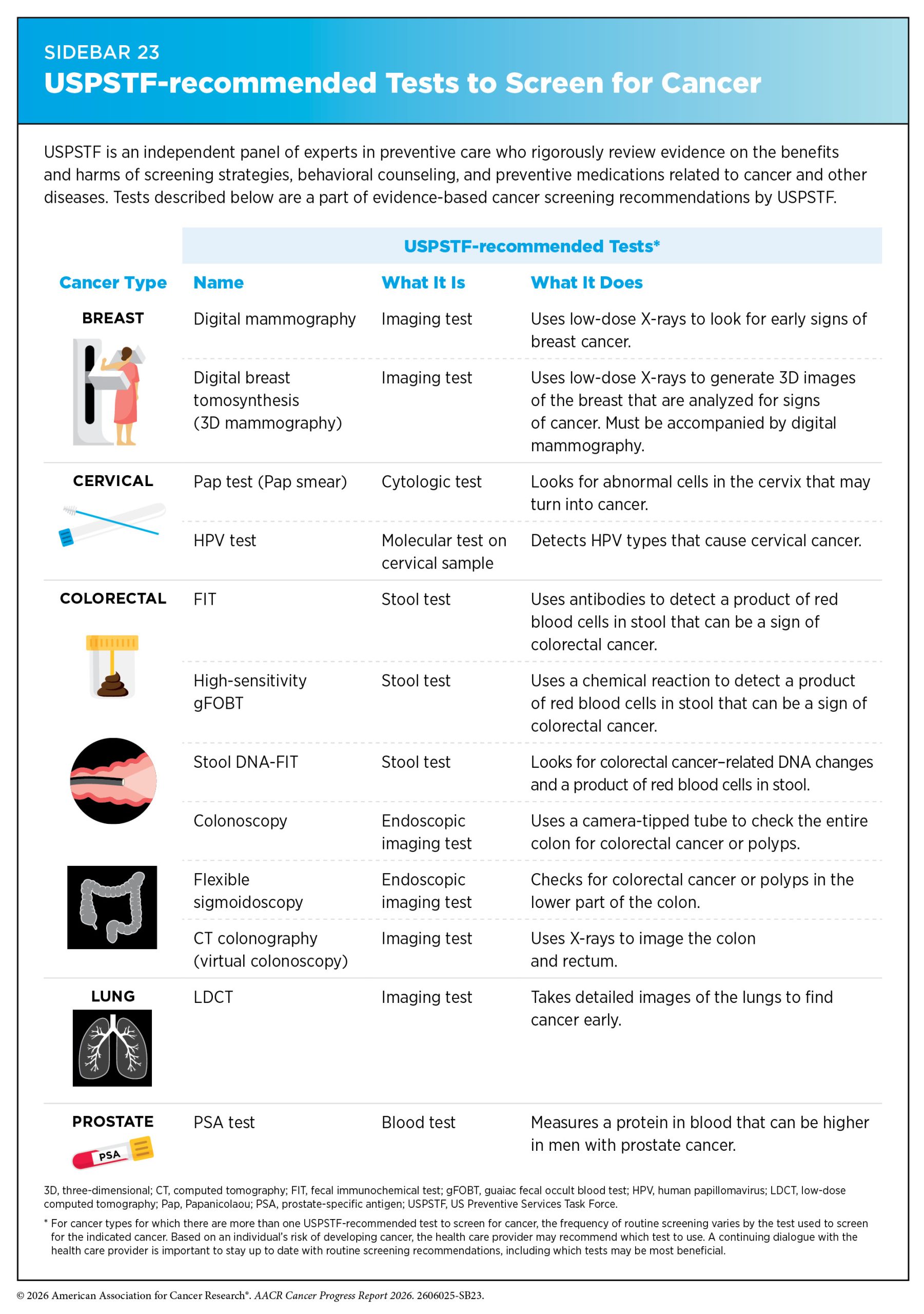
Cancer screening tests are medical procedures that detect signs of cancer or precancerous lesions directly (e.g., by imaging the tissue) or indirectly (e.g., by analyzing blood or other biospecimens for cellular or molecular signs of cancer) (see Sidebar 23). Most screening tests are noninvasive, but some (e.g., colonoscopy) are invasive medical procedures that can in rare cases cause complications, such as bleeding. Like any other medical procedure, screening tests can yield false-positive results, causing unnecessary follow-up testing, concern, and anxiety. Sometimes, screening tests can miss signs of cancer, delaying diagnosis. In some cases, screening tests can detect slow-growing cancers or unrelated medical conditions that would not have caused harm in a person’s lifetime; these findings can lead to medical procedures that may not have been necessary.
Because of the potential harms associated with screening tests, USPSTF and other organizations carefully weigh the benefits of tests against any potential risks, with the goal of minimizing overdiagnosis, missed diagnoses, and unnecessary follow-up testing and treatments, while reducing cancer burden at the population level. As new tests are approved by regulatory bodies, organizations revise screening guidelines to incorporate improved screening approaches. In recent years, the US Food and Drug Administration (FDA) approvals of at-home self-collection kits for human papillomavirus (HPV) testing and new blood- and stool-based tests for CRC screening prompted the American Cancer Society to update its screening guidelines for cervical and colorectal cancers and include these tests into its recommendation (447)Perkins RB, et al. (2026) CA Cancer J Clin, 76: e70041.. It is important to note that the CRC guidelines explicitly recommend using blood-based tests only for individuals who decline or have not completed a preferred test. This caution is issued because blood-based tests have lower sensitivity for detecting advanced precancerous lesions and stage I cancer.
Research Improves the Science of Cancer Screening
An important area of cancer research is understanding how screening guidelines, when implemented at the population level, impact the burden of cancer. Researchers use real-world data to improve screening guidelines; some studies reinforce existing guidelines, while others inform better approaches to screening. For example, findings from a recent study of more than 91,000 US veterans show that colonoscopy screening after age 75 may offer limited benefits, even in individuals who were previously diagnosed with adenoma—non-cancerous growths in the colon (449)Gupta S, et al. (2026) JAMA, 335: 1499.. Researchers found that adults who reached age 75 with a prior diagnosis of adenoma had a very low 10-year risk of developing CRC or dying from it (1.1 percent and 0.5 percent, respectively). By comparison, nearly half died from unrelated causes within the same period (449)Gupta S, et al. (2026) JAMA, 335: 1499.. These findings further corroborate the current USPSTF recommendation that CRC screening in adults older than 75 years should only be done through a dialogue between the individual and health care provider that considers individual preferences, overall health status (e.g., life expectancy and comorbidities), and prior screening history (e.g., those who have never been screened are more likely to benefit than those routinely screened until age 75) (see Sidebar 22).
Evidence is accumulating that precancerous lesions are detected at substantially lower rates in women with a long history of negative cervical cancer screening, supporting the use of longer intervals between screenings. A recent study of approximately 1.7 million women undergoing HPV and cytology co-testing every 3 years found that cervical cancer diagnosis fell eight-fold by the fifth screening round compared to the first (450)Castle PE, et al. (2026) J Natl Cancer Inst, 118: 325.. Another recent study of 8,078 women with a follow-up of up to 10 years found that a negative HPV result alone conferred precancer risk similar to a negative co-test, suggesting that adding cytology to primary HPV screening provides limited additional benefit (451)Gottschlich A, et al. (2026) JAMA Netw Open, 9: e261304.. Taken together, these findings support both extending screening intervals and streamlining screening protocols for women with established negative HPV histories.
Screening guidelines can sometimes contribute to disparities. USPSTF eligibility criteria for lung cancer screening, issued in 2021, is partly based on smoking history. Research has shown that Black individuals develop lung cancer at lower levels of tobacco exposure than White individuals, and thus often are not screening-eligible (452)Potter AL, et al. (2024) J Clin Oncol, 42: 2026.. A large study compared the 2021 USPSTF lung cancer screening guidelines with the 2023 American Cancer Society guidelines that removed the requirement for time since smoking cessation. Researchers found that removing smoking history as a criterion increased eligibility across population groups, although the magnitude of screening eligibility was higher for White individuals. Compared to the 2021 USPSTF guidelines, the change also widened disparities in lung cancer screening between White and Black individuals by 5 percentage points and between White and Hispanic individuals by 10 percentage points (453)Manful A, et al. (2026) Chest, 169: 1750.. These findings emphasize how eligibility criteria designed around population averages can exacerbate disparities in routine cancer screening (see Advancing Policies to Strengthen Cancer Prevention and Screening Programs).
Effective Strategies Increase Screening Uptake
Despite strong evidence showing that routine screening saves lives, receipt of cancer screenings in the United States varies widely across different cancer types and among different segments of the US population (see Table 3). Screening rates are especially low among medically underserved individuals, including those belonging to racial and ethnic minority populations, residents of sovereign Native Nations, and people with limited access to health care.
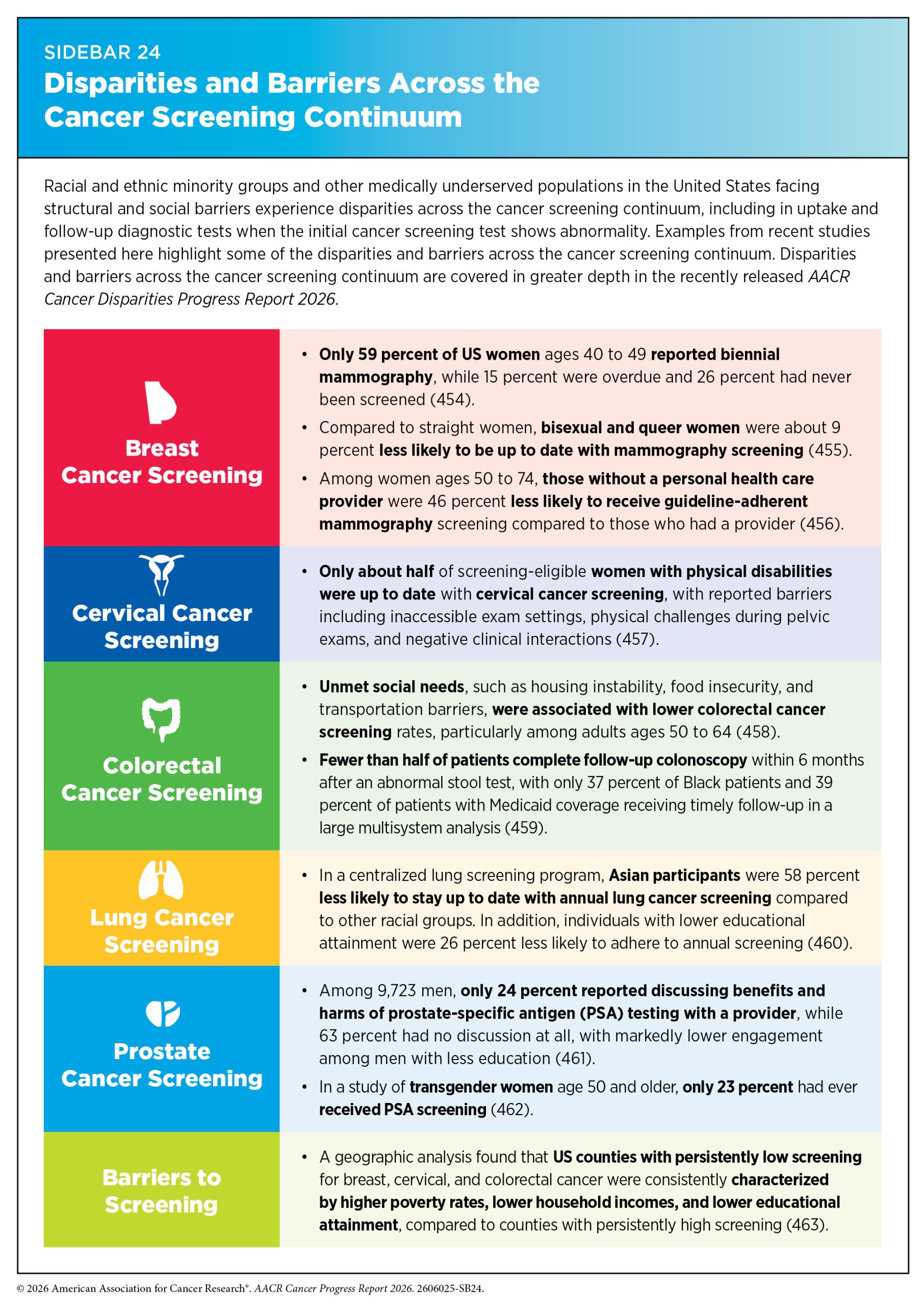
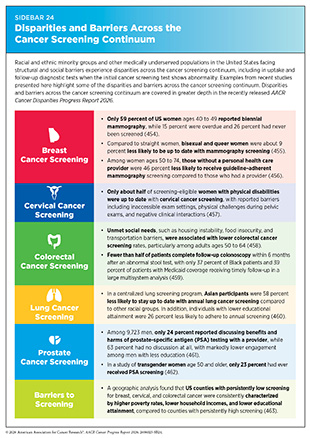
In addition to routine cancer screening uptake, considerable gaps also exist along the cancer screening continuum (see Figure 15). Because of a multitude of structural and socioeconomic barriers, many individuals whose screening test indicates a suspicious finding often do not follow up to confirm or rule out the initial observation (see Sidebar 24).
Evidence-based strategies, such as patient navigation, have proven effective at increasing screening uptake and follow-up care. In this section, we highlight key evidence-based strategies, with examples from recent studies, that have proven successful in increasing routine screening uptake and ensuring follow-up after abnormal results.
Reducing Structural Barriers
Disparities across the cancer screening continuum are primarily driven by structural and systemic barriers that particularly affect individuals belonging to racial and ethnic minority groups and other medically underserved populations. Research has shown that removing or reducing these barriers can meaningfully improve screening uptake and follow-up diagnostic testing across all population groups in the United States.
Several studies have established that mailing a fecal immunochemical test (FIT) kit directly to screening-eligible individuals is the most effective intervention for increasing CRC screening. In a recent study of more than 20,500 adults ages 45 to 49 years, the rate of completing CRC screening within 6 months was 26.2 percent among individuals who received an FIT kit by mail without needing to opt-in, outperforming individuals who had to actively choose whether to receive FIT-only screening (16.4 percent), colonoscopy-only screening (14.5 percent), or both (17.4 percent) (464)Galoosian A, et al. (2025) JAMA, 334: 778..
Safety-net hospitals, often the primary point of care for underserved populations, show some of the starkest disparities in screening. In these low-resource settings, interventions that remove structural barriers have been shown to be highly effective. In a recent study, 1,275 adults with new FIT orders across eight Federally Qualified Health Centers were sent three behaviorally informed automated text reminders—which incorporated a specific return-by date, an indication that the provider is waiting to receive the test, and a message that the test can save their life—on days 2, 5, and 8 after the FIT order. The text-based intervention achieved 59 percent FIT completion within 21 days, compared to 49 percent FIT completion with the standard nurse-led single call on day 8 (465)Korostoff-Larsson O, et al. (2026) JAMA Netw Open, 9: e267122.. Importantly, the text-based approach was cost-effective compared to the telephone outreach in reaching individuals from diverse racial and ethnic backgrounds and with different insurance statuses.
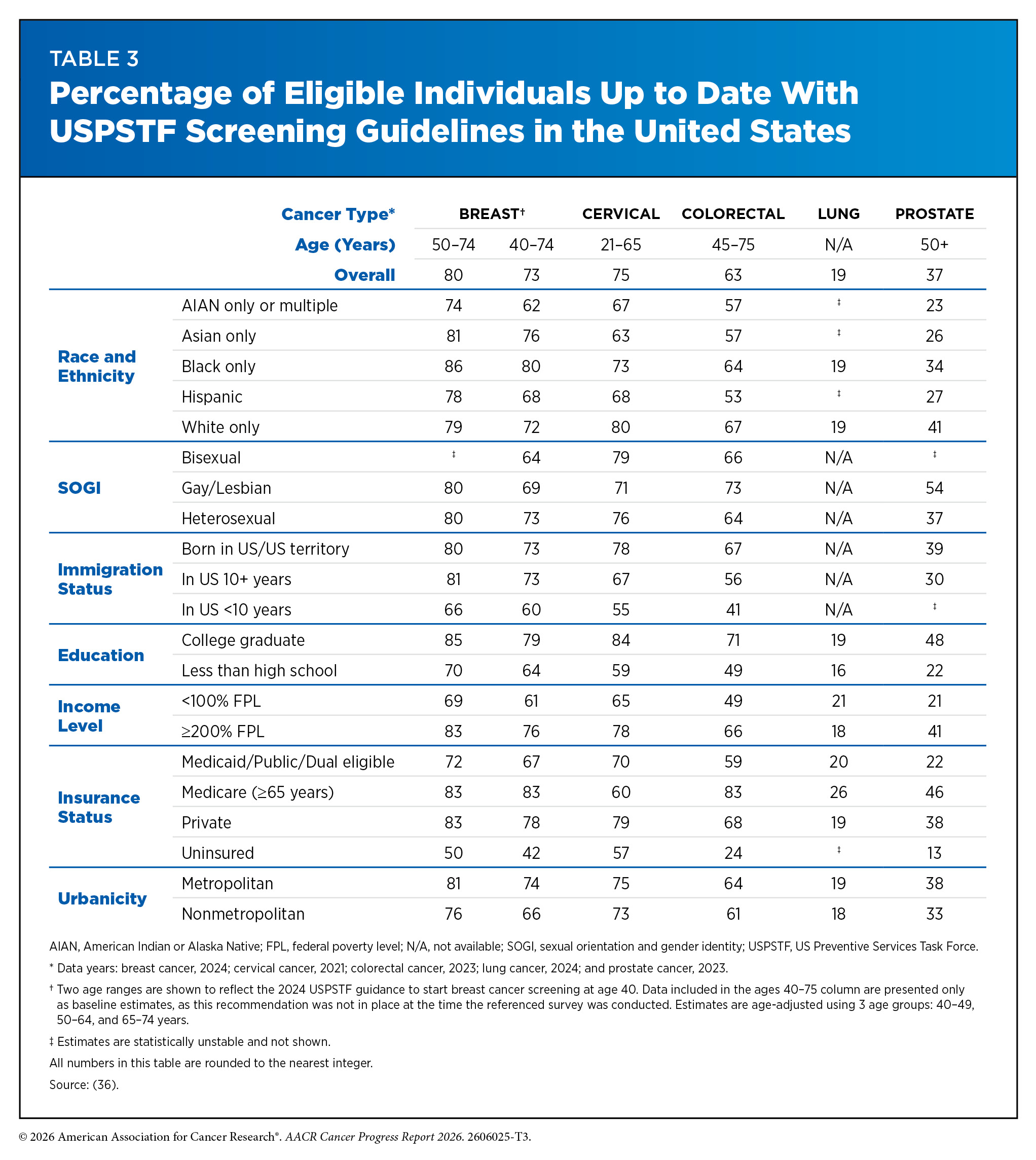
Evidence is accruing that direct-to-patient digital tools can extend access to lung cancer screening, which has the lowest uptake among USPSTF-recommended cancer screening tests (see Table 3). In a recent study of more than 1,300 adults meeting eligibility criteria, researchers at two academic health care systems compared the effectiveness of a digital health program that assessed eligibility, reviewed benefits and harms of screening, and allowed patients to directly request a screening appointment with enhanced usual care that involved individuals receiving a notification of their eligibility and advice to discuss screening with their primary care physician. Findings show that the digital health program increased low-dose computed tomography (LDCT) completion across all population groups within 16 weeks, compared to enhanced usual care (24.5 percent vs. 17.0 percent, respectively) (466)Miller DP, et al. (2025) JAMA, 334: 1807..
Integrating Patient Navigation
Patient navigation is one of the most effective strategies for reducing disparities across the cancer care continuum, including routine screening (467)Freeman HP, et al. (2011) Cancer, 117: 3539.. Navigation programs address logistical and structural barriers disproportionately affecting underserved populations by providing help with medical appointments, transportation, and insurance questions, among other needs.
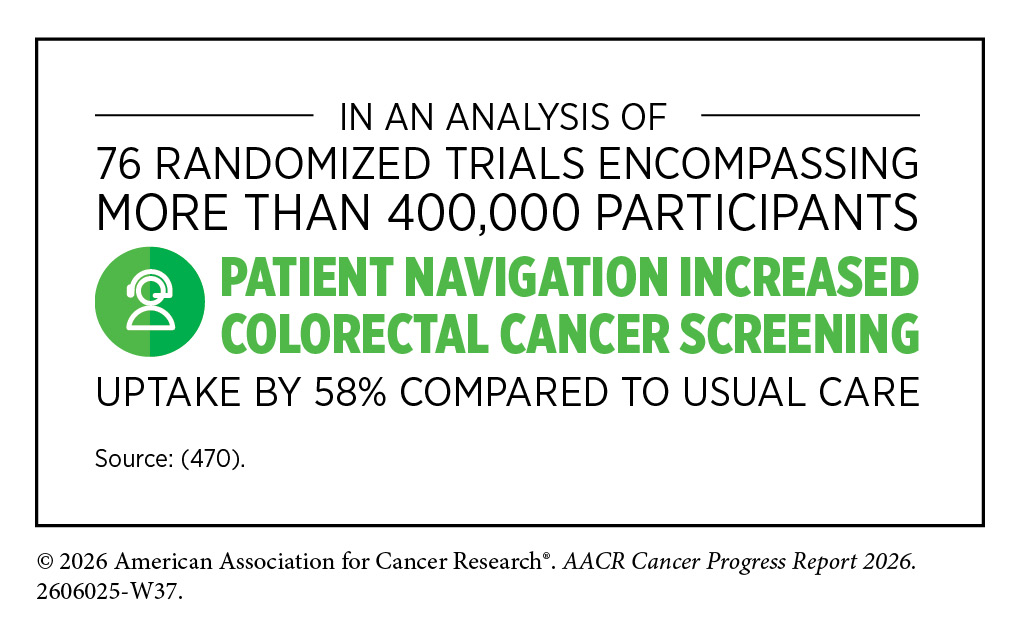
A recent analysis of 42 randomized clinical trials with more than 39,000 participants reported that navigation increased breast cancer screening rates by 13.8 percentage points and cervical cancer screening rates by 15.6 percentage points at 1 year. These benefits were consistent across different sociodemographic groups (468)Nelson HD, et al. (2025) JAMA Intern Med, 185: 976.. A randomized clinical trial of more than 5,600 Medicaid enrollees across 28 rural clinics in Oregon showed that a combined mailed FIT outreach and patient navigation program increased CRC screening by 7.3 percentage points over usual care. Navigation to colonoscopy after an abnormal FIT result increased the follow-up completion from 15.4 percent to 43.3 percent (469)Coronado GD, et al. (2025) JAMA Netw Open, 8: e250928..
Findings of a randomized trial in a safety-net health system setting showed that cervical cancer screening participation increased from 17 percent with telephone reminders alone to 41 percent with mailed self-collection kits and 47 percent when self-collection was combined with patient navigation (471)Montealegre JR, et al. (2025) JAMA Intern Med, 185: 1119.. In addition to being effective in increasing screening uptake, patient navigation is also cost-effective. As one example, a patient navigation program, funded by the Centers for Disease Control and Prevention (CDC), at a large Federally Qualified Health Center increased the FIT return rates from 36.6 percent to 51.0 percent over 3 years, while the cost per person completing FIT screening decreased from $32 to $25 (472)Tangka FKL, et al. (2025) Cancer, 131: e70031..
In 2024, CDC’s Community Preventive Services Task Force formally recommended patient navigation to increase cancer screening and advance health equity (see Advancing Policies to Strengthen Cancer Prevention and Screening Programs).
Engaging Communities
Community engagement brings screening to patients rather than waiting for patients to seek care. Faith-based organizations and other trusted local institutions represent important platforms for community engagement. In one study, researchers developed a community-based program with input from members of Black churches to improve awareness and engagement with lung cancer screening. The program used culturally tailored messaging and trained lay health advisors. Pilot testing of the program showed strong participant satisfaction and increased knowledge about lung cancer screening (473)Carter-Bawa L, et al. (2025) BMC Public Health, 25: 379..
Culturally tailored education tools extend community engagement beyond outreach alone, particularly in populations in which health literacy and structural barriers limit routine screening. A recent study involving 167 participants, nearly 70 percent of whom were Hispanic, evaluated a 12-minute bilingual video on breast cancer screening (474)Dadha P, et al. (2026) PEC Innovation, 8: 100470.. Participants showed significant improvements in breast cancer knowledge and intention to undergo mammography. Long-term follow-up studies will be important to determine whether an increase in knowledge about breast cancer screening leads to increased uptake in routine screening.
A randomized clinical trial of 797 low-income Hispanic women tested whether group education and telephone navigation delivered by community health workers impact cancer screening uptake in this group. Findings showed that the intervention more than doubled cervical cancer screening completion compared to a control group (55.8 percent vs. 27.4 percent, respectively) and nearly doubled mammography completion (39.9 percent vs. 20.3 percent, respectively) (475)Savas LS, et al. (2026) Front Oncol, 16: 1687113..
Community engagement is an effective intervention because it addresses multiple barriers simultaneously, such as cultural stigma, logistical challenges, and mistrust of health systems. Such interventions also help normalize screening within broader social networks, which can influence behaviors at the individual and group levels.
Technological Innovations Advance the Science of Cancer Early Detection
Transformative advances in genomics, artificial intelligence (AI), and minimally invasive tests that can simultaneously detect multiple cancers are rapidly changing the landscape of cancer screening for early detection. In this section, we discuss some of the most promising technological innovations that are poised to revolutionize the field in coming years.
Advances in AI-assisted Screening Approaches
The use of AI in cancer screening has increased rapidly, in part because of its potential to bridge existing gaps in the screening continuum, including missed cancers, false-positive findings, and radiologists’ workload. For example, current workflows for routine cancer screenings that use imaging rely on image analyses by multiple radiologists, the clinicians who specialize in interpreting radiologic images for diagnosis and treatment of disease. Studies have shown that the demand for imaging is outpacing the growth in the number of radiologists entering the US workforce and is causing an ongoing and severe shortage (476)Afshari Mirak S, et al. (2025) Radiology, 314: e232625.. This trend is worsened by the finding that the proportion of radiologists leaving the workforce more than doubled from 1.1 percent in 2014 to 2.5 percent in 2022 (477)Christensen EW, et al. (2026) AJR Am J Roentgenol, 226: e2533587..
Rapid advances in AI-assisted screening tools have emerged partly in response to existing clinical challenges (e.g., missed cancers) and partly to mitigate a critical radiologist shortage. The use of AI-assisted tools in breast cancer screening is a prime example, as reflected by recent findings from major clinical studies. In the first large randomized controlled trial of AI in breast cancer screening, involving more than 105,000 women, AI-supported mammography showed consistently favorable outcomes compared to standard double reading, while also reducing the radiologists’ workload (478)Gommers J, et al. (2026) Lancet, 407: 505.. AI-supported mammography detected early-stage breast cancer with greater sensitivity than the standard screening yet was just as specific. Importantly, AI-supported screening resulted in 12 percent fewer interval cancers—cancers diagnosed during the time between a regular screening mammogram that appears normal and the next screening mammogram—and 16 percent fewer interval cancers that were invasive. Equally important, prior findings from the study reported a 44 percent decrease in screen reading workload (479)Lang K, et al. (2023) Lancet Oncol, 24: 936..
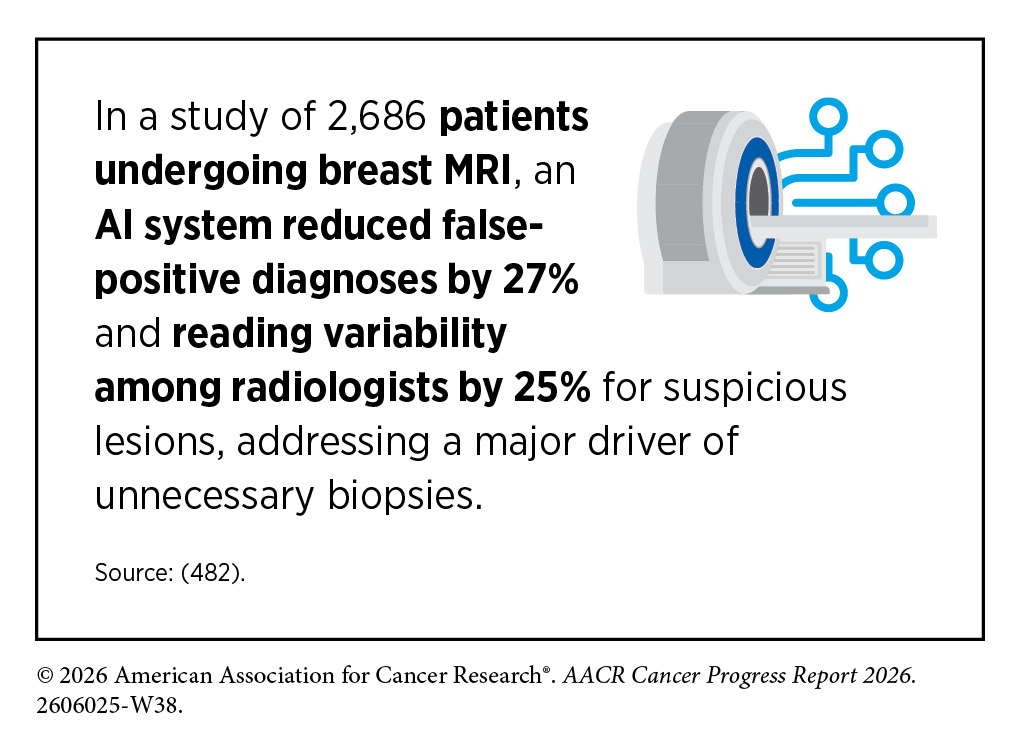
Findings from another clinical trial of more than 31,000 women demonstrated that an AI-based triage strategy could significantly reduce radiologist workload by safely excluding low-risk mammograms from radiologist readings without a significant difference in cancer detection rate (480)Elias-Cabot E, et al. (2026) Nat Med, 32: 1296.. Similarly, a multicenter study of more than 115,000 mammograms found that AI-supported evaluation of images not only was more sensitive but also detected cancer at a higher rate compared to human first readers, while also detecting 25 percent of interval cancers that standard screening missed (481)Kelly CJ, et al. (2026) Nat Cancer, 7: 494..
Regulatory approvals of AI-assisted cancer screening tools further underscore the emerging role of AI in early detection of cancer. In early 2026, FDA cleared two AI-powered lung cancer screening tools. One of them, RevealAI-Lung, analyzes incidental lung nodules from computed tomography (CT) scans and assigns a score based on the risk of malignancy (483)Adams SJ, et al. (2023) J Am Coll Radiol, 20: 232.(484)US Food and Drug Administration. Radiological Computer-Assisted Diagnostic Software For Lesions Suspicious Of Cancer: RevealAI-Lung. Accessed: June 30, 2026.. The second, called eyonis LCS, is designed to analyze imaging data generated from LDCT scans and assist radiologists in detecting and characterizing lung nodules, supporting clinical decision-making and patient follow-ups (485)US Food and Drug Administration. Radiological Computer Assisted Detection And Diagnosis Software: eyonis® LCS 1.1. Accessed: June 30, 2026..
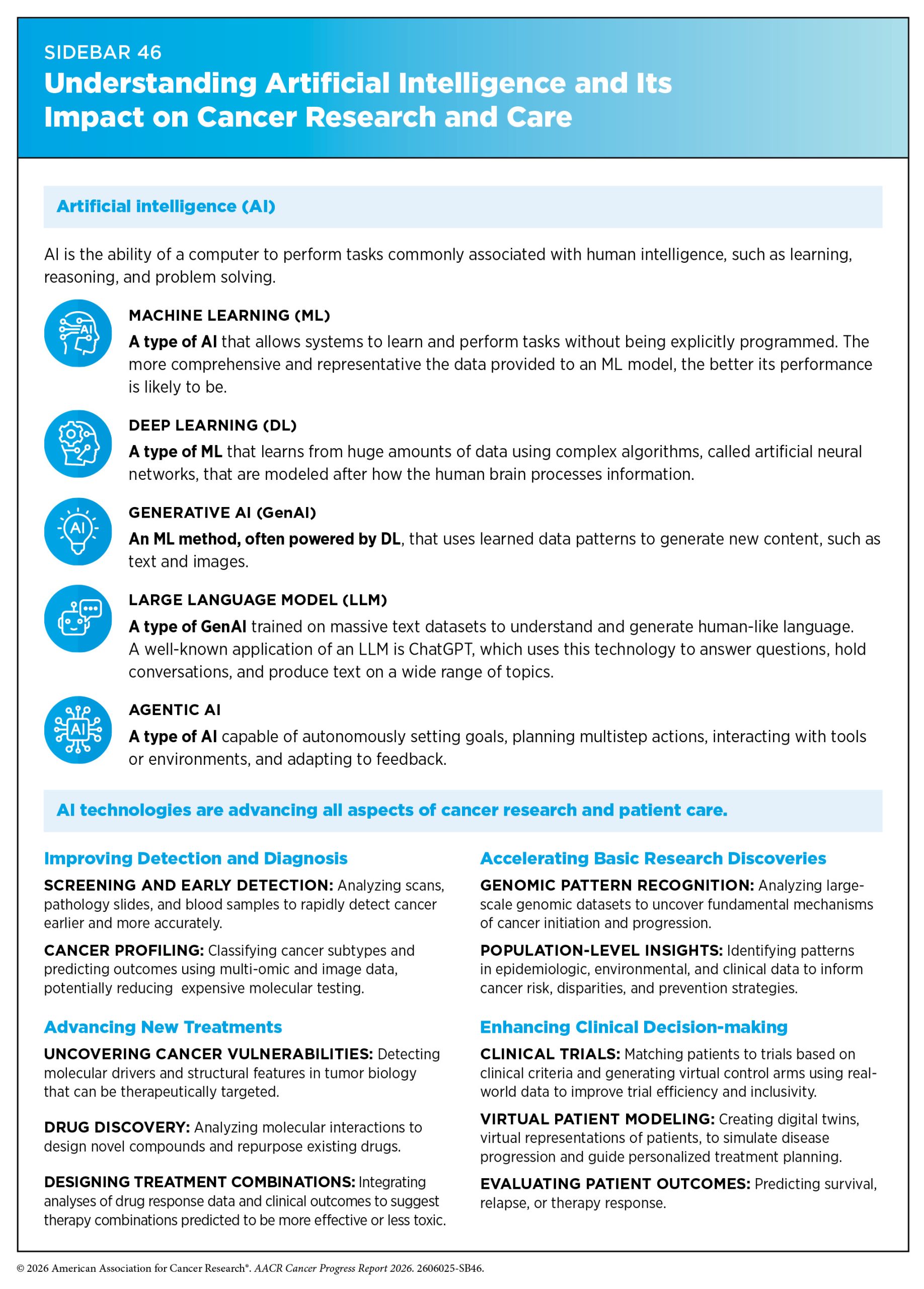
Despite demonstrated advantages, AI screening tools perform inconsistently across demographic groups. This is because these tools have been trained predominantly on datasets that lack the diversity of the US patient population. A systematic review of 41 studies evaluating mammography-based AI models for future breast cancer risk prediction found that White women were most represented across nearly every study, and fewer than one-third of the studies validated their findings using datasets other than those used to train AI models, limiting generalizability of findings (486)Lowry KP, et al. (2026) J Natl Cancer Inst, 118: 392.. Similarly, researchers are finding substantial variability in accuracy and consistency in large language models—a type of AI trained on large text datasets to understand and generate human-like language (see Sidebar 46)—for clinical decision-making, further underscoring the need for rigorous validation before use in the clinic (487)Duan Z, et al. (2025) Cell Rep Med, 6: 102465..
Studies have shown that patients’ views on the use of AI in screening diverge significantly between demographically diverse populations. As one example, safety-net hospital patients—who are more likely to be from racial and ethnic minority groups and have lower income and education—were more likely to express lower trust in AI-assisted interpretation of screening mammograms than academic hospital patients (488)Ogu JC, et al. (2025) Breast Cancer Res Treat, 215: 25.. Experts emphasize the pivotal need for all stakeholders to work together in building safeguards, including the use of training data from diverse populations and rigorous validation, that will increase trust in AI-assisted screening tools and prevent these tools from further widening existing screening disparities (489)Kuperberg SJ, et al. (2025) Cancer Innov, 4: e70019..
Advances in Minimally Invasive Screening Approaches
Cancer screening tests are medical procedures that carry potential harm (see Tests for Cancer Screening). Some, such as colonoscopy, also carry cultural stigma in certain population groups. These clinical and social factors can discourage eligible individuals from receiving the recommended cancer screening. Researchers are actively developing screening tests that are minimally invasive and have comparable sensitivity and specificity in detecting cancers early.
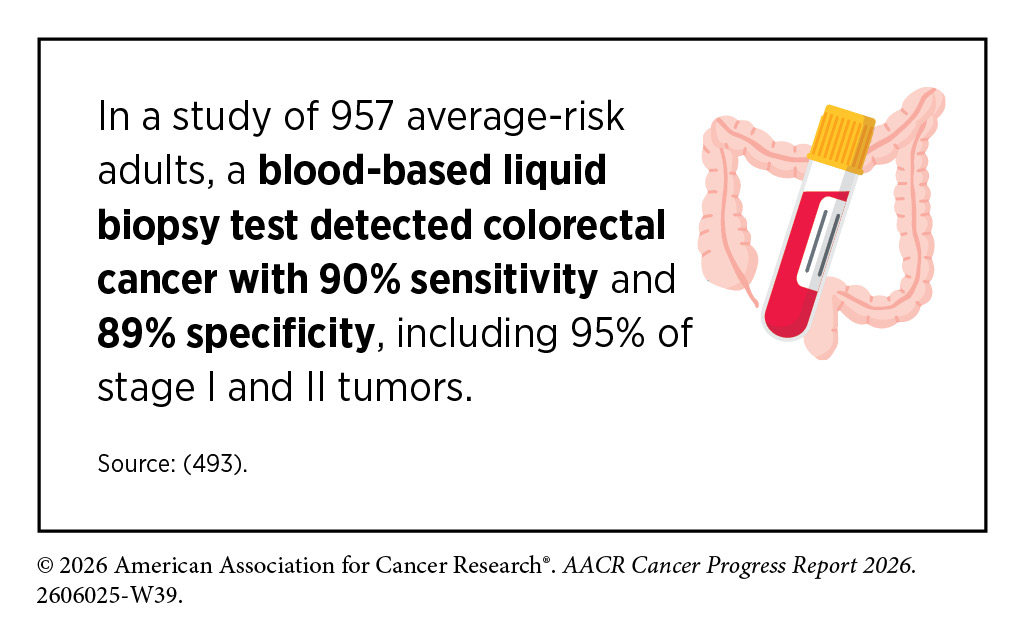
Minimally invasive tests analyze materials shed by tumors, such as DNA, RNA, or proteins, from blood, urine, or other body fluids, without requiring tissue biopsy or other invasive approaches. Liquid biopsy is one such minimally invasive test with growing application in early cancer detection, particularly cancers without reliable screening tests. Researchers have recently developed a liquid biopsy assay that looks for tumor HPV DNA in the blood using whole-genome sequencing (490)Bryan ME, et al. (2025) Clin Cancer Res, 31: 3483.. In a study of 56 participants, this assay was used to examine plasma samples collected up to 10.8 years before diagnosis in patients who later developed HPV-associated oropharyngeal cancer, a cancer type for which no screening test is currently available. The assay detected tumor HPV DNA in blood up to 7.8 years before clinical diagnosis with 100 percent specificity (491)Das D, et al. (2026) J Natl Cancer Inst, 118: 58.. These findings show the feasibility of using circulating HPV DNA for early detection of HPV-associated oropharyngeal cancer and support the broader potential of liquid biopsy approaches for cancers that currently lack a screening test.
The incidence of early-onset CRC, defined as CRC diagnosed in individuals ages 18 to 49, is on the rise (see Cancer in 2026). Although stool- and blood-based screening tests are available for CRC (see Sidebar 23), these tests are not validated for detecting early-onset CRC, indicating a growing need for a reliable screening strategy for this cancer type. An international study developed and validated a panel of six circulating biomarkers for detection of early-onset CRC in 542 participants (492)Mannucci A, et al. (2026) Gastroenterology, 170: 330.. The test detected early-onset CRC with 97.3 percent sensitivity for early-stage disease and maintained 87.5 percent specificity across all age groups under 50.
Another application of liquid biopsy tests is the simultaneous detection of multiple cancer types. These tests, called multi-cancer early detection (MCED) tests, are being developed and validated to evaluate their sensitivity and specificity in detecting multiple cancers. A review of 20 studies, involving nearly 110,000 participants and 19 different MCED tests, found that accuracy varied widely by test and study design. Most studies used confirmed cancer cases instead of screening-eligible individuals and thus should be confirmed through randomized clinical trials and real-world data. Furthermore, no studies reported a benefit for cancer early detection, mortality, or quality of life (494)Kahwati LC, et al. (2025) Ann Intern Med, 178: 1591.. The first randomized controlled trial of an MCED test enrolled more than 140,000 adults ages 50 to 77 across England who had no symptoms or history of cancer. Researchers evaluated annual screening over 3 years and, compared to standard screening, found a 16 percent increase in stages I and II diagnoses, including ovarian, esophageal, pancreatic, and liver cancers. Although the trial reported at least 20 percent fewer stage IV diagnoses in screening rounds two and three, it did not meet the primary goal of reducing combined stages III and IV cancer diagnoses (495)National Health Service (UK). NHS-Galleri trial reports fewer diagnoses of the most advanced cancers. Accessed: June 30, 2026..
The NCI Vanguard study has established the infrastructure needed to rigorously assess MCED tests against current standards. NCI evaluated 23 technologically diverse MCED assays and has selected two MCED tests for inclusion in the Vanguard study, with the goal of informing the design of a randomized controlled trial for MCED testing (496)LeeVan E, et al. (2025) Cancer Epidemiol Biomarkers Prev, 34: 1787.. Researchers are also using modeling studies to project population-level benefit from MCED testing. One such study of 14 solid tumor cancer types, accounting for approximately 80 percent of US cancer incidence and mortality, projected that adding annual MCED testing to standard of care would lead to a 45 percent decrease in stage IV diagnoses compared to standard of care alone, with corresponding increases in stages I through III diagnoses (497)Chhatwal J, et al. (2025) Cancer, 131: e70075.. Another modeling analysis evaluating benefits and potential harms of blood-based CRC screening tests found that annual and biennial cell-free DNA strategies could be cost-efficient options for average-risk adults ages 45 to 75 (498)Meester RGS, et al. (2026) J Natl Cancer Inst, 118: 113.. Together, these projections suggest that MCED testing, if validated in randomized controlled trials of screening-eligible individuals, could substantially change the landscape of cancer burden by detecting cancers at earlier, potentially curative stages (see Advancing Policies to Strengthen Cancer Prevention and Screening Programs).
Advances in Genomics-based and Risk-stratified Precision Approaches
Population-level cancer screening recommendations are primarily based on age and biological sex, with specific recommendations for individuals who are at higher risk of developing cancer, such as those with a family history of cancer, as was the case with Carolyn Searles (see Evidence Guides Cancer Screening Recommendations). Knowledge gleaned from cancer genomics not only is challenging this current approach but is also providing the basis for precision cancer screening recommendations.
In a study of more than 23,000 women without a personal history of breast cancer, researchers found pathogenic variants (PV) of genes associated with breast cancer in about 3 percent of the participants. Importantly, 30 percent of the women with PVs did not report a family history of breast or ovarian cancers that would have qualified them for genetic testing under the current guidelines (499)Fergus KB, et al. (2026) JAMA Intern Med, 186: 344.. Conversely, in a study of nearly 68,000 women, those with a PV and a family history of breast cancer had an estimated 22.5 percent risk of breast cancer by age 50 and a 51 percent risk between ages 50 and 80.
In comparison, the risk of breast cancer in women with a PV but no family history was about 9 percent by age 50 and 30 percent between ages 50 and 80 (500)O’Brien KM, et al. (2025) JAMA Oncol, 11: 1458.. Together, these findings indicate that screening criteria based only on one or two factors could exclude individuals who should be screened and highlight the need for combined assessment of genetic predisposition and other risk factors to develop precision strategies for cancer screening and prevention.
Large, randomized screening trials are evaluating the benefits of individualized cancer risk prediction compared to the current population-level criteria based on age and biological sex. One such trial with more than 28,000 women ages 40 to 74 enrolled found that tailoring the frequency of breast cancer screening to a woman’s individual risk using genetic, polygenic, and other clinical data as well as family history is as safe as annual mammograms (501)Esserman LJ, et al. (2026) JAMA, 335: 763.. Compared to the recommended annual screening mammograms, risk-adapted strategy found just as many advanced cancers, used significantly fewer mammograms overall, and directed the most intensive screening to the women who needed it most (501)Esserman LJ, et al. (2026) JAMA, 335: 763.. These findings are further corroborated by a modeling study showing that, compared to annual mammogram screening, risk-adapted breast cancer screening would be associated with 6 percent more breast cancer deaths averted and 13 percent fewer false-positive findings (502)Alagoz O, et al. (2026) JAMA Netw Open, 9: e2552944..
Evidence in favor of risk-adapted screening strategies is also accumulating for other cancer types. For example, a recent study focused on lung cancer screening compared the NELSON criteria—which are based on age, smoking history, and recency of smoking cessation—and the PLCOm2012 risk prediction model—which calculates an individual’s likelihood of developing lung cancer over the next 6 years using a combination of factors, such as age, smoking history, body mass index, family history, diagnosis of chronic obstructive pulmonary disease, education level, and others. Researchers found that the PLCOm2012 risk prediction model identified 97 percent of lung cancers compared to 77 percent under the NELSON criteria (503)Vogel-Claussen J, et al. (2025) Lancet Oncol, 26: 1541.. Similar risk-adapted approaches are proving effective in developing precision screening strategies for cancer predisposing syndromes (e.g., Lynch syndrome), prostate cancer, and smoldering multiple myeloma (504)Campoy S, et al. (2026) J Natl Cancer Inst, 118: 589.(505)Vassy JL, et al. (2026) Nat Cancer, 7: 352.(506)Chabrun F, et al. (2026) Nat Med, 32: 1745..
While risk-adapted screening strategies are proving to be as effective or more effective compared to the current recommendations, it is vital to address the potential of these strategies to exacerbate screening disparities. For example, researchers found that removing race and ethnicity from a breast cancer risk model—a strategy proposed to mitigate algorithmic bias—reduced identification of Black women at an intermediate or high risk of developing advanced breast cancer from 75.3 percent to 47.5 percent (507)Kerlikowske K, et al. (2025) NPJ Digit Med, 8: 771.. These findings underscore the need for more research, inclusive of diverse populations, before such approaches can be implemented at the population level.
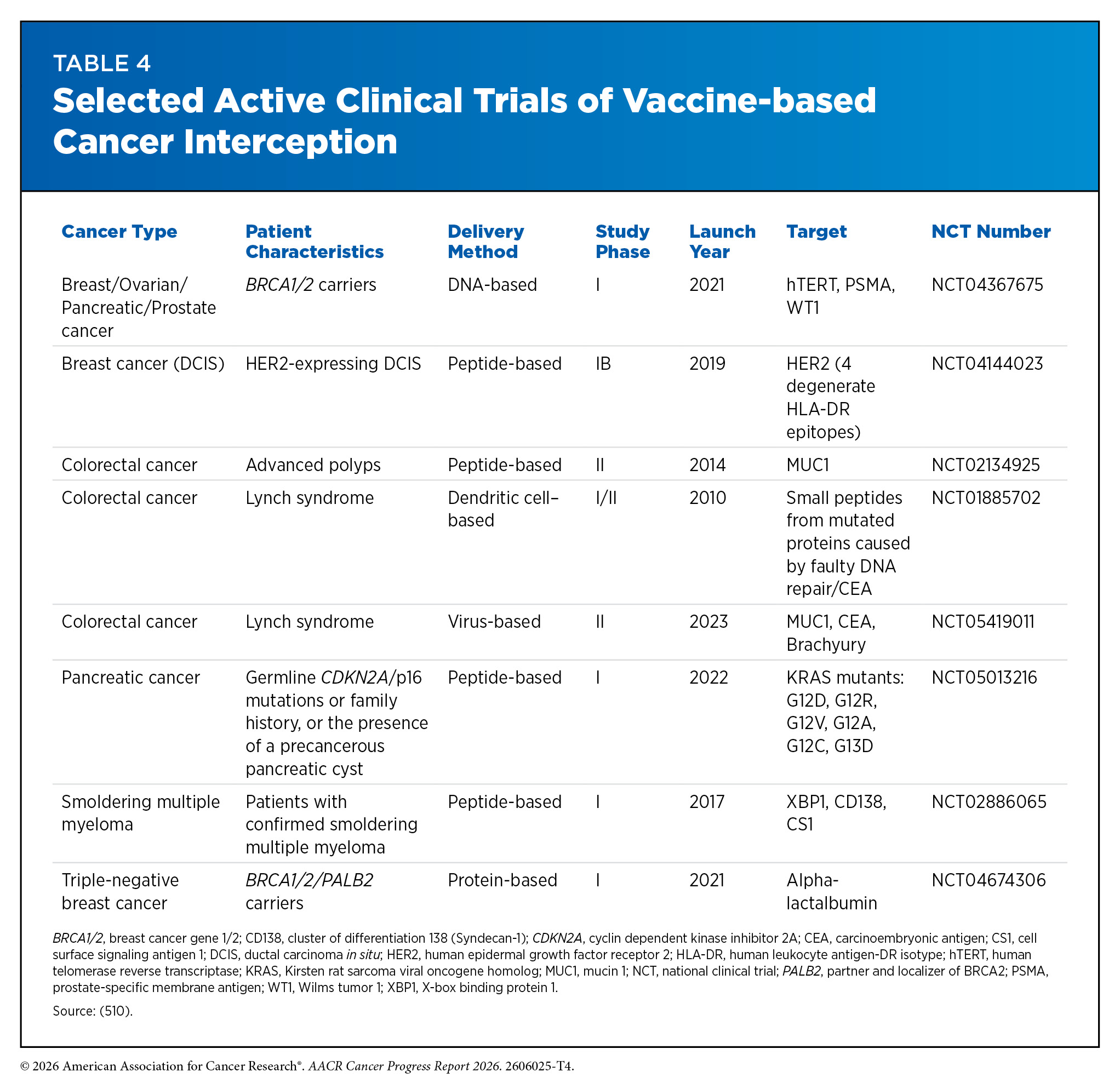
Genomics-based cancer early detection and risk stratification are enabling cancer interception, a strategy to stop, or intercept, precancerous states of cells before they develop into cancer (508)Gu M, et al. (2026) Nat Genet, 58: 704.. For example, individuals with Lynch syndrome have a significantly heightened risk of developing certain types of cancer because of mutations in genes involved in DNA repair. In a clinical trial involving 45 people with Lynch syndrome, researchers tested a messenger RNA (mRNA)–based vaccine (see Cancer Vaccines), called Nous-209, designed to train the immune system to recognize and attack cells carrying gene mutations associated with Lynch syndrome. The vaccine was safe, caused no serious side effects, and triggered a strong, durable immune response. These findings are a promising early indication that vaccination may one day prevent cancer in people with inherited gene mutations that increase their likelihood of developing cancer (509)D’Alise AM, et al. (2026) Nat Med, 32: 1002.. In addition to mRNA-based vaccines, several other cancer interception approaches are at various stages of clinical testing (see Table 4).
A meta-analysis of six studies involving more than 6,100 women with BRCA1 and BRCA2 gene variants found that risk-reducing bilateral mastectomy—surgical removal of both breasts—was associated with a 62 percent reduction in overall mortality and a significant reduction in breast cancer–specific mortality among BRCA1 gene carriers (511)O’Reilly C, et al. (2026) JAMA Surg, 161: 260.. Together, findings discussed in this section point to an exciting future of precision-based approaches for the early detection, prevention, and interception of cancer. Additional research is needed to ensure that these innovative and cutting-edge approaches are accessible and applicable to all segments of the population.
Next Section: Progress Across the Clinical Cancer Care Continuum Previous Section: Reducing the Risk of Cancer Development