The Honorable Gus Bilirakis
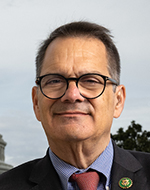
U.S. Representative for Florida’s 12th District
What are the most urgent gaps in rural cancer care, and what role should Congress play in closing them?
Despite tremendous advances in cancer treatment, too many patients still face barriers to timely diagnosis, innovative therapies, and affordable care. Delays in access to biomarker and genomic testing can prevent patients from receiving the most effective, personalized treatments. Many patients also continue to face high out-of-pocket costs for lifesaving medications, while cancer survivors often struggle with long-term health challenges, financial burdens, and gaps in follow-up care. My constituents have benefited tremendously from the continued expansion of the Moffitt Cancer Center, one of our nation’s premier cancer treatment and research institutions. The lifesaving work taking place there is nothing short of extraordinary. Moffitt is setting the standard for precision medicine, pioneering breakthrough therapies, and giving hope to patients and families facing some of life’s most difficult challenges. Seeing these innovations firsthand reinforces why we must continue investing in research and ensuring patients have access to the latest medical advancements. Congress has an essential role to play in closing these gaps. We must continue supporting robust funding for the National Institutes of Health (NIH) and the National Cancer Institute (NCI), while advancing policies that accelerate medical innovation, remove barriers to care, and ensure every patient has access to cutting-edge diagnostics and treatments regardless of where they live. We also have a responsibility to strengthen survivorship programs, reduce the financial burden of cancer care, and improve coordination across our health care system so patients receive comprehensive support long after treatment ends. Ultimately, our goal should be to ensure that every American has access to the right treatment at the right time while continuing to fuel the research that will lead to tomorrow’s cures.
Why must progress against cancer remain a bipartisan priority?
Cancer does not discriminate based on political affiliation, geography, or background. Nearly every American family has been touched by this disease in some way, making the fight against cancer one of the few issues that consistently brings Republicans and Democrats together.
Investments in cancer research have led to groundbreaking discoveries that have saved millions of lives and improved quality of life for patients across the country. Supporting research, expanding access to innovative treatments, and improving survivorship are goals everyone can rally behind because they strengthen families, reduce health care costs over the long term, and give patients hope. This is an area where Congress has repeatedly demonstrated that bipartisan cooperation can produce meaningful results.
How have you worked to serve the cancer community?
I have worked to support cancer patients, survivors, caregivers, and the researchers working to find tomorrow’s cures. Throughout my time in Congress, I have consistently supported increased federal investment in cancer research while advancing legislation that improves access to cutting-edge care.
One of my key priorities is the Finn Sawyer Access to Cancer Testing Act, bipartisan legislation that would expand patient access to comprehensive biomarker diagnostic testing. These advanced diagnostic tests help physicians identify the most effective treatments for each individual patient, allowing for more personalized care while avoiding unnecessary or ineffective therapies. I have also been a leading advocate for the Cancer Drug Parity Act, which would ensure patients pay the same out-of-pocket costs for orally administered cancer medications as they do for traditional intravenous treatments. As cancer care continues to shift toward innovative oral therapies, this legislation would help eliminate financial barriers that may otherwise prevent patients from accessing the treatment their physician recommends. Beyond legislation, I regularly work with patients, advocacy organizations, health care providers, and researchers to identify gaps in care, support medical innovation, and ensure federal policies keep pace with advances in cancer treatment. My goal is simple: Every patient should have timely access to the best available care while continuing to accelerate research that brings us closer to preventing and curing cancer.