AACR Cancer Disparities Progress Report 2026: Contents

A Snapshot of US Cancer Disparities and Progress Toward Equity – CDPR26

A Snapshot of US Cancer Disparities and Progress Toward Equity

Cancer health disparities caused by structural inequities are an enormous public health challenge in the United States.

The State of US Cancer Disparities in 2026 – CDPR26

The State of US Cancer Disparities in 2026

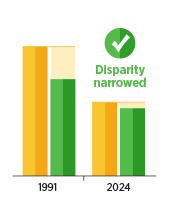
In recent decades, disparities in the burden of certain cancer types have declined among minority populations, but substantial differences in cancer burden remain. Key partners across the cancer care continuum are working together to understand and reduce cancer disparities.

Understanding And Addressing Drivers of Cancer Disparities – CDPR26

Understanding And Addressing Drivers of Cancer Disparities

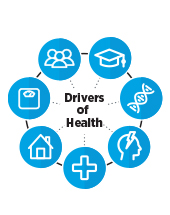
Social drivers of health—which include income, education, housing, and access to care—disparately and adversely affect racial and ethnic minority groups and other medically underserved populations. Policy interventions can mitigate upstream social barriers to care and reduce cancer disparities.

Understanding Cancer Development in the Context of Cancer Disparities – CDPR26

Understanding Cancer Development in the Context of Cancer Disparities

Cancer development is driven by complex interactions among factors inside and outside the cell. Broader social, environmental, and structural conditions can influence biology and contribute to differences in cancer risk, tumor behavior, and treatment response across population groups.

Disparities in the Burden of Modifiable Behavioral Cancer Risk Factors – CDPR26

Disparities in the Burden of Modifiable Behavioral Cancer Risk Factors

In the US, about 40% of all cancer cases are associated with modifiable risk factors. Built environments disproportionately expose racial and ethnic minority groups and other medically underserved populations to cancer risk factors, including commercial tobacco, pollution, and toxic chemicals.

Disparities in Cancer Screening for Early Detection – CDPR26

Disparities in Cancer Screening for Early Detection

Persistent gaps in screening uptake and follow-up care disproportionately affect racial and ethnic minority populations and other medically underserved communities. Targeted, evidence-based strategies can improve adherence to recommended screening and follow-up, thereby narrowing long-standing disparities.

Disparities in Clinical Research and Cancer Treatment – CDPR26

Disparities in Clinical Research and Cancer Treatment

Studies show that disparities in outcomes for several cancer types can be substantially reduced when all patients have access to guideline-adherent treatments. Diversifying clinical trials requires health care providers to offer trial options to all patients and eliminate barriers to participation.

Disparities in Cancer Survivorship – CDPR26

Disparities in Cancer Survivorship

Medically underserved populations shoulder a disproportionate burden of survivorship challenges, including late effects of treatment, mental health burdens, and financial toxicity. Patient-centered approaches such as patient navigation, telehealth, and community partnerships can help eliminate this disparity.

Disparities in the Cancer Training Pathway and Cancer Research and Care Workforce – CDPR26

Disparities in the Cancer Training Pathway and Cancer Research and Care Workforce

A diverse cancer research and care workforce strengthens trust, communication, treatment adherence, research participation, and patient-centered care, while reducing systemic bias and improving outcomes. Long-standing programs have diversified the workforce by supporting students from underrepresented backgrounds.

Overcoming Cancer Disparities Through Science-Based Public Policy – CDPR26

Overcoming Cancer Disparities Through Science-Based Public Policy

Investment in federal agencies and programs, promoting an inclusive workforce, increasing equity in cancer screening and follow-up care, and encouraging broader representation in clinical research are all fundamental to addressing cancer disparities.

AACR Call to Action – CDPR26

AACR Call to Action

To reduce cancer disparities, AACR calls upon policy makers to improve collection of disaggregated data for minority groups; increase access and participation in clinical trials; enhance prevention and screening efforts; ensure equitable patient care; and build a more diverse cancer research and care workforce.

Message from AACR – CDPR26

Message from AACR

Thanks to innovations in science and technology, we are living in an era of unprecedented progress against cancer and are poised to deliver even more transformative breakthroughs for our patients. But we must be equally committed to ensuring that no populations or communities are left behind.

Executive Summary – CDPR26

Executive Summary

Thanks to decades of research, we are witnessing unprecedented progress against cancer. Yet, these advances have not benefited everyone equally. Access to health care is a fundamental human right, and health care disparities remain among the most profound forms of injustice.

Steering Committee – CDPR26

Steering Committee

Mariana C. Stern, PhD, serves as the chair of the Steering Committee for the AACR Cancer Disparities Progress Report 2026.