The Honorable Mike Levin
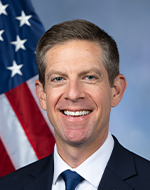
U.S. Representative for California’s 49th District
You have long been one of Congress’s strongest voices for biomedical research. What first drew you to championing federal investment in cancer research, and why has it remained a priority for you?
The region that I represent is home to some of the nation’s leading cancer research institutions, which rely on federal funding to conduct critical research and provide lifesaving treatment. Many individuals in our district need access to the most advanced care, and these institutions are at the forefront of providing essential cancer treatments. Many cancer and biomedical research institutions are facing drastic federal funding cuts, so it is more important than ever to defend their ability to conduct research and provide lifesaving care. As a member of the House Appropriations Committee, I am fighting these cuts and working instead to increase federal investments in these programs and resources.
Constituent Andrew Schorr, a two-time cancer survivor, credits a clinical trial funded by the National Institutes of Health (NIH) with saving his life. What have stories like his taught you about what federal investment in cancer research means for patients and families?
Andrew Schorr is a perfect example of how federally funded cancer research can truly mean the difference between life and death. Andrew was diagnosed with blood cancer twice, and in each instance, treatments powered by federal investments saved his life. We need sustained federal support for NIH so that every American battling cancer, including Andrew, has access to cutting-edge care when it matters most.
You championed billions in funding for NIH, including the Cancer Moonshot. Why is sustained funding for NIH and the National Cancer Institute (NCI) essential to continued progress against cancer?
When NIH funding falters, cancer research suffers. It’s as simple as that. That’s why I fought for language included in the fiscal year 2026 appropriations bill that prohibits this Administration from capping reimbursements for research institutions. Our research institutions need consistent support so that they can focus on making innovative strides in cancer prevention, diagnosis, and treatment, rather than worrying whether they’ll be able to afford the talent or resources they need.
Why is stable, predictable research funding important, and what role should Congress play in protecting it?
Stable funding is essential to progress. Without skilled researchers and multi-year trials, we cannot achieve breakthroughs in the field. Congress is responsible for passing funding bills before the end of the fiscal year. Unfortunately, due to the gridlock in Washington, that doesn’t always happen. I am the only Member from San Diego and Orange Counties on the House Appropriations Committee, where I fight for the timely passage of funding bills that impact cancer research, clinical trials, and other critical programs. I prioritize working with members on both sides of the aisle to get this done and ensure NIH receives funding yearly. I am acutely aware that any delays or lapses in funding in cancer research are not minor issues—these delays and lapses can have detrimental effects on breakthrough research for years down the line.
The 49th District sits within one of the nation’s leading life sciences regions. How do you see federal research investment shaping both the health of your constituents and the innovation economy of San Diego and North County?
Life sciences are a pillar of this region. Three out of California’s 10 NCI-designated cancer centers are right here in San Diego. The San Diego region at large has over 2,000 companies and over 100,000 jobs in the life sciences sector. Supported by federal funding, these companies and careers can continue to thrive and grow, maintaining our region’s stature as one of the leading hubs of innovation in both the United States and the world. When we produce these innovations, constituents can receive the most advanced care modern medicine has to offer.
What is your message to the scientists, physicians, and researchers working every day to make progress against cancer?
Thank you for your incredible work. You are actively saving or improving the lives of millions of people, and our country is better off because of it. I will continue to fight alongside you to find a cure for cancer and to ensure you get the resources you need to get the job done.