Impact of Federal Policy Changes on Cancer Disparities Research
Investment in cancer disparities research has led to meaningful advances in addressing inequities and improving outcomes for racial and ethnic minority groups and other medically underserved populations in the United States (US). However, federal policy changes related to diversity, equity, and inclusion (DEI) since the beginning of 2025 threaten to undermine this progress. AACR developed a brief survey to evaluate the adverse impact of these changes, including funding reductions, on the cancer disparities research workforce and to assess how these changes may affect the future of the field.
Methodology
- Data Collection: An online survey consisting of open-ended, single-choice, and multiple-choice questions was administered between April 8, 2026, and May 13, 2026. The survey was anonymized and collected limited personal information to protect respondent confidentiality.
- Population: Invitations to participate in the survey were distributed weekly via email to approximately 1,800 individuals who attended the AACR Conference on The Science of Cancer Health Disparities between 2020 and 2025.
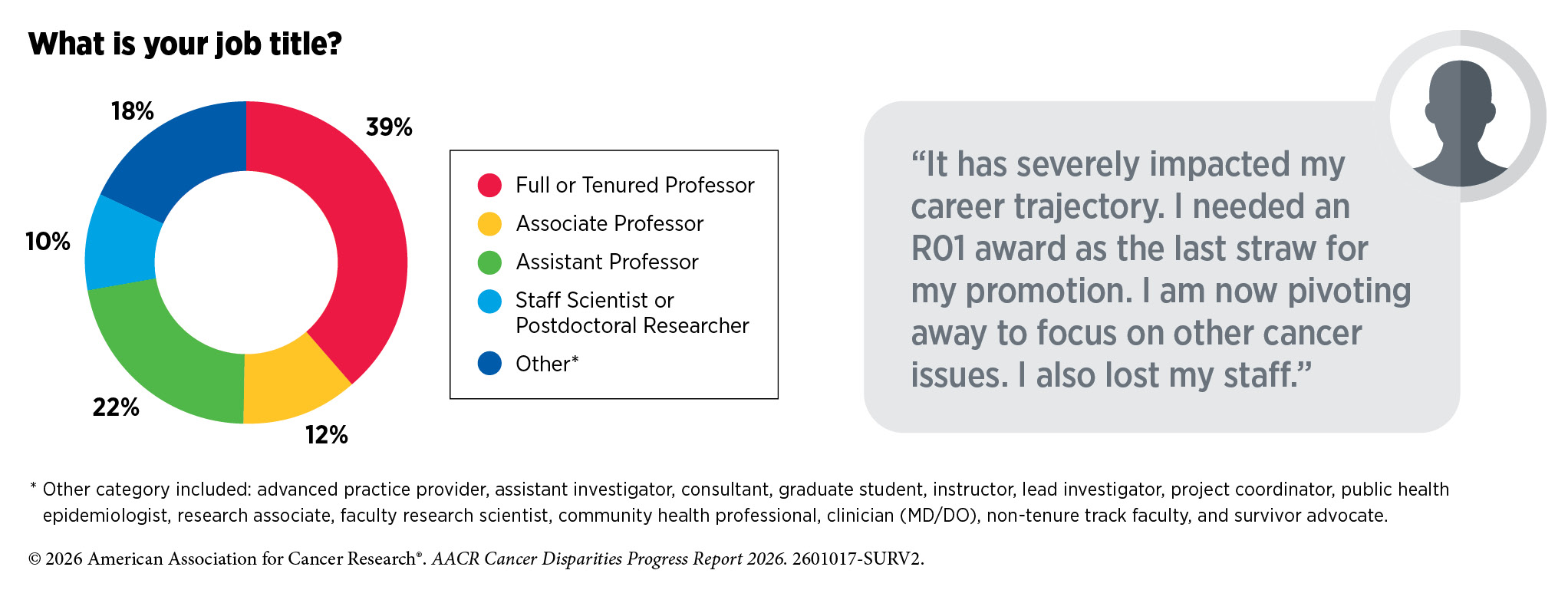
- Response Rate: Of the 289 individuals who opened the survey link, 122 completed the survey, resulting in a 42 percent response rate. Of the 122 respondents, 98 percent (n=119) were currently engaged in cancer disparities research and were included in subsequent analyses.
Findings
An Overwhelming Majority of Cancer Disparities Researchers Have Been Affected
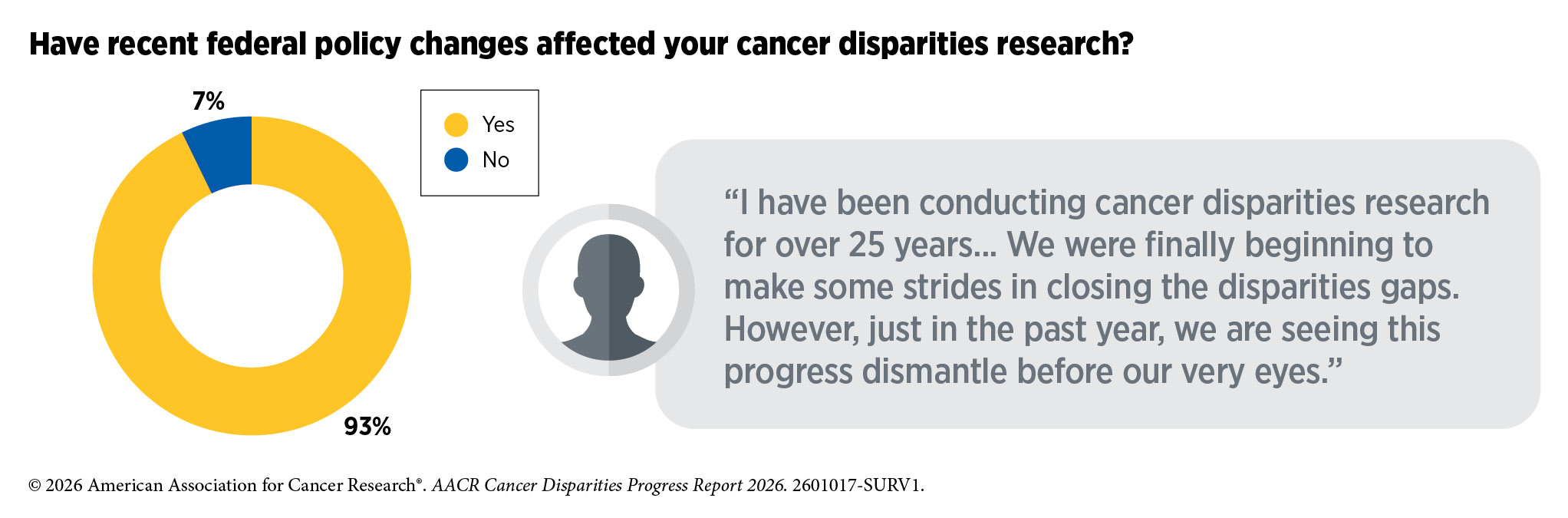
Policy Changes Are Disrupting the Cancer Disparities Research Pathway
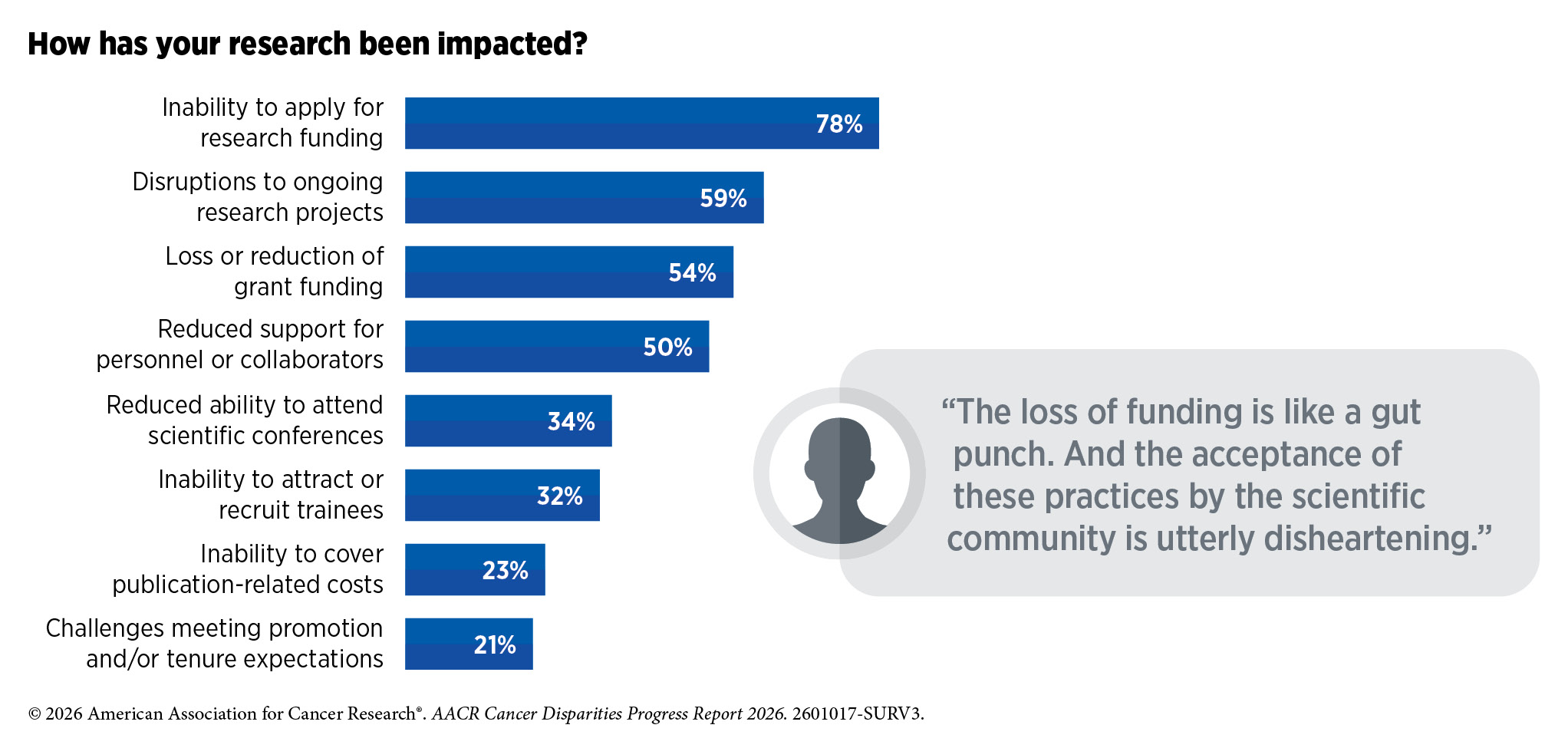
Federally Funded Cancer Disparities Research Has Been Most Disrupted
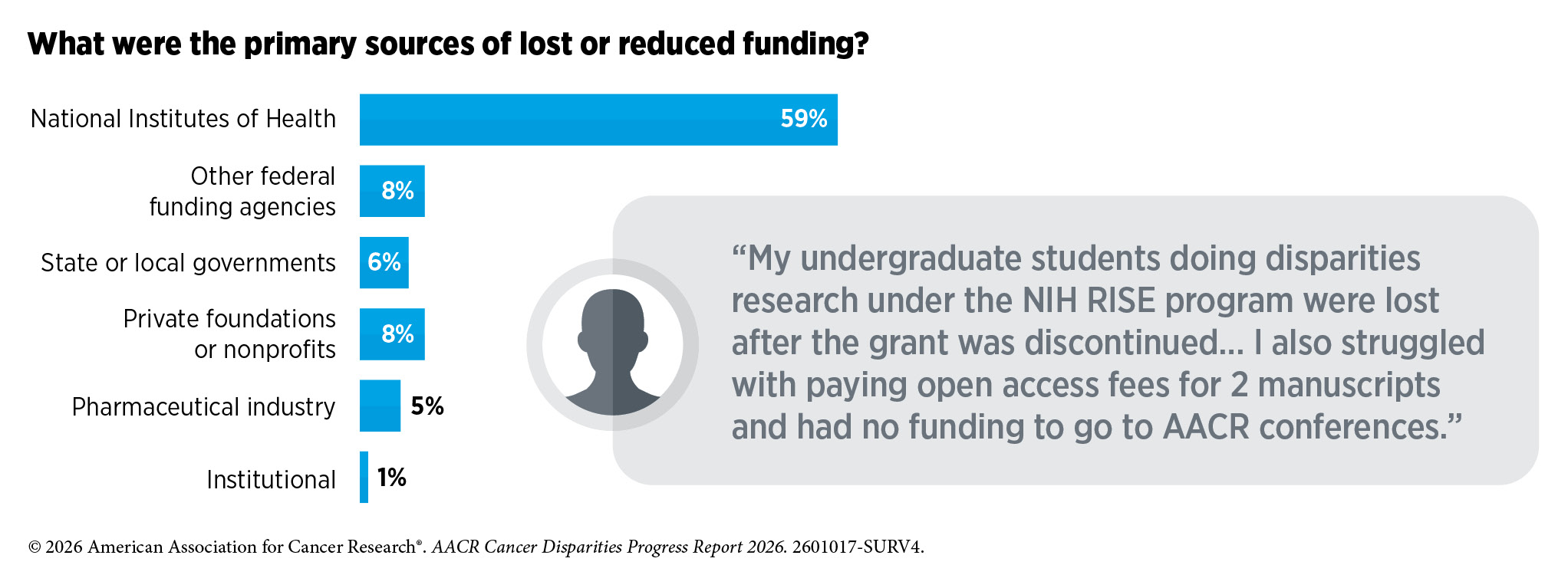
Funding disruptions have had a lasting impact on the cancer disparities research pipeline. Approximately 80 percent of respondents who experienced a loss or reduction in funding reported that their funding had not been restored by the end of 2025. Agencies within the National Institutes of Health (NIH) umbrella accounted for the majority (59 percent) of reported funding losses and were the most frequently cited source of disrupted funding.
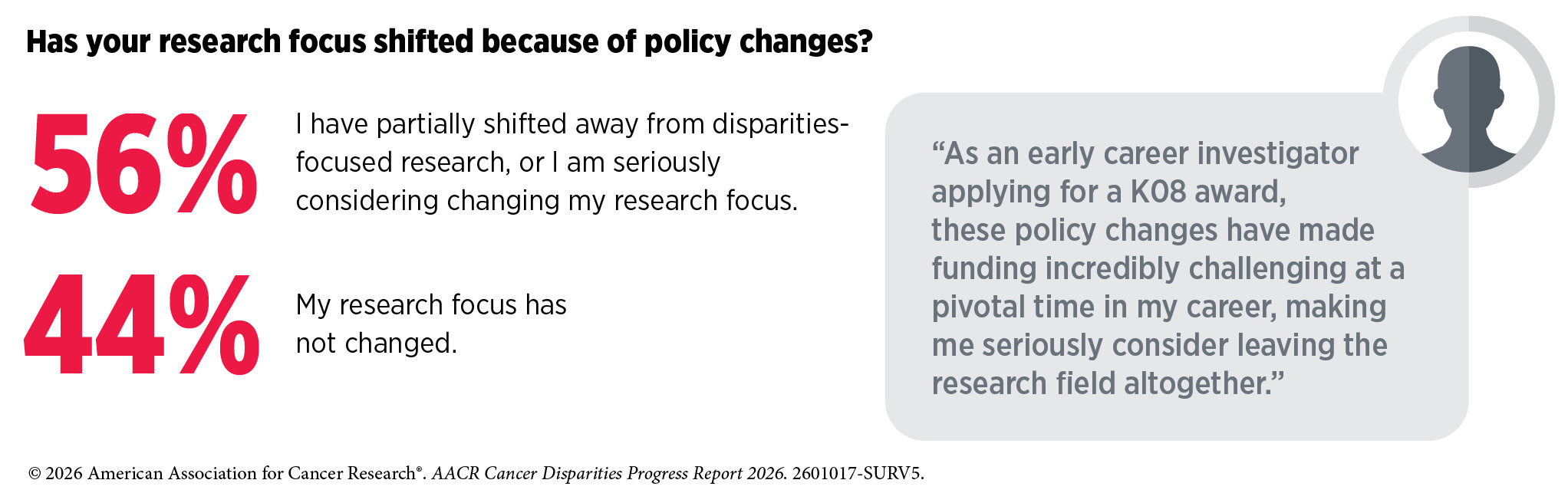
Collectively, these findings raise serious concerns about the future of cancer disparities research. With more than half of respondents reporting that they have partially shifted or are seriously considering shifting away from disparities-focused research, there is a real risk that progress in reducing cancer inequities will stall or be reversed. Addressing these challenges will require renewed and sustained federal investment in cancer disparities research, training opportunities, and workforce development to support the next generation of researchers and ensure equitable progress against cancer.