Sanya A. Springfield, PhD: A Steadfast Champion Advancing the Science of Cancer Health Disparities
Dr. Sanya A. Springfield’s distinguished career spans more than four decades of leadership and service dedicated to eliminating cancer disparities and strengthening the medical research workforce. Through her strategic vision, scientific leadership, and steadfast commitment to addressing health disparities, Dr. Springfield has played a central role in shaping national efforts to advance cancer disparities research by creating education and training pathways for individuals from all backgrounds to have equal opportunities to enter and thrive in cancer science and medicine.
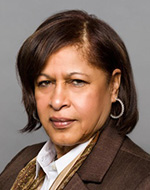
A graduate of Howard University with a PhD in physiology and biophysics, she became the third Black neuroscientist in the world. Dr. Springfield progressed through her teaching and research career at several institutions, including Robert Wood Johnson School of Medicine and the City College of New York. These early experiences as an educator and scientist helped shape the mentorship-centered approach that would define much of her later career. Dr. Springfield’s transition into federal scientific leadership began at the National Science Foundation, where she held several programmatic leadership positions related to neuroscience research. She later joined the National Institutes of Health (NIH) and subsequently the National Cancer Institute (NCI), where she spent nearly three decades in increasingly senior leadership roles, and led the development and implementation of a national framework to address cancer disparities as both scientific and structural challenges.
At NCI, Dr. Springfield spearheaded numerous programs that expanded disparities-focused research, strengthened community partnerships, and increased access to education and career pathways for individuals from populations historically underrepresented in medical research. She was instrumental in fostering partnerships among federal agencies, academic institutions, Minority-Serving Institutions, advocacy groups, and community organizations to strengthen infrastructure and create collaborative approaches to addressing disparities. As a member of NCI’s Scientific Program Leadership, she advocated for sustained investment in diversity, equity, and inclusion, as well as for supporting the research infrastructure that would sustain research on cancer disparities. Under her leadership, NCI’s efforts to address cancer disparities expanded substantially, encompassing both intramural and extramural initiatives aimed at reducing inequities in cancer burden while increasing diversity across the cancer research and care continuum.
One of Dr. Springfield’s most significant contributions was the creation of the Continuing Umbrella of Research Experiences (CURE) program. Designed as a comprehensive, longitudinal training pathway, CURE supports students and early-stage investigators from underrepresented and underserved backgrounds across multiple career stages. To date, the program has supported more than 4,000 participants, contributing to the development of a more diverse cancer research workforce. The program has also expanded to include middle school, undergraduate, and graduate students, providing early exposure to training opportunities in cancer research.
Dr. Springfield has also played a key role in strengthening institutional capacity to address cancer disparities. She contributed to the development and expansion of the Partnerships to Advance Cancer Health Equity (PACHE), which supports research infrastructure at institutions serving underserved populations while fostering collaborations with NCI-designated cancer centers. In addition, she contributed to NIH-wide initiatives, including the NIH Common Fund’s Faculty Institutional Recruitment for Sustainable Transformation (FIRST), Building Infrastructure Leading to Diversity (BUILD), and Broadening Experiences in Scientific Training (BEST) programs, as well as the NCI Cancer Moonshot Scholars Diversity Program (CMSDP), with the collective aim to broaden participation and improve equity across the biomedical research ecosystem.
Through her deep expertise and unwavering dedication, Dr. Springfield has been instrumental in the development and launch of several key American Association for Cancer Research® (AACR) initiatives aimed at eliminating cancer disparities. She served on the AACR Minorities in Cancer Research Council for 25 years. Dr. Springfield played a pivotal role in the launch of the annual AACR conference on The Science of Cancer Health Disparities and has served on the program committee for every meeting since its inception. She spearheaded the launch of the AACR Cancer Disparities Progress Report series, and contributed to the development of all prior editions of the report. Collectively, these efforts have fundamentally reshaped the cancer research landscape, bringing disparities research to the forefront and affirming it as indispensable to saving lives.
Dr. Springfield has received numerous accolades during her exceptional career. Her contributions have been recognized with multiple NIH and NCI Director’s Awards, as well as a lifetime achievement award from University of Puerto Rico Comprehensive Cancer Center for her dedication to advancing cancer research and workforce diversity.
Through her leadership, mentorship, and sustained commitment to health equity, Dr. Springfield has shaped a research and training workforce that is poised to deliver transformational advances in the science of cancer disparities. As she transitions from her leadership position at NCI’s Center to Reduce Cancer Health Disparities to pursue new opportunities, Dr. Springfield is leaving behind a legacy as a driving force behind transforming the national cancer research landscape that will continue to positively influence the cancer field for decades to come.
Return to Section: Disparities in the Cancer Training Pathway and Cancer Research and Care Workforce