Snapshot of Progress Against Pediatric Cancer
Between 2015 and 2025, FDA approved more than 20 molecularly targeted therapies and more than 10 immunotherapies for pediatric cancers.
Home > AACR Pediatric Cancer Progress Report > AACR Pediatric Cancer Progress Report 2025: Contents
Between 2015 and 2025, FDA approved more than 20 molecularly targeted therapies and more than 10 immunotherapies for pediatric cancers.
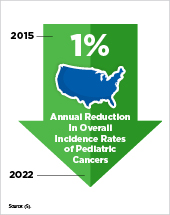
The 5-year survival rate for all pediatric cancers combined has increased from 63 percent in the mid-1970s to 87 percent in 2015–2021. However, progress has not been distributed evenly across all pediatric cancers.

Pediatric cancers usually arise during early development and harbor fewer mutations overall as compared to adult cancers. Pediatric cancers are more often driven by specific mutations or structural changes in DNA that modify the epigenome.
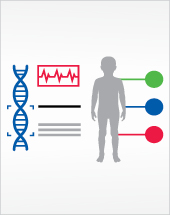
Pediatric cancer surveillance means structured monitoring of physical traits and/or clinical signs in children at higher risk of cancer. Physical traits, family history, and genetic testing are used to identify individuals with cancer predisposition syndromes.
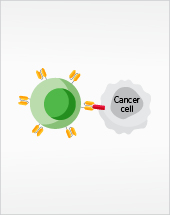
Despite remarkable progress, cancer remains the leading cause of disease related death in children, and more than 60% of survivors experience significant long-term effects of treatment. Increased investments in drug discovery and clinical trial collaborations are needed to accelerate progress.

Pediatric cancer survivors face a multitude of long-term physical, psychosocial, and financial challenges because of their cancer and treatment. Parents and caregivers also experience significant psychological and financial strain, highlighting the need for family-centered support.
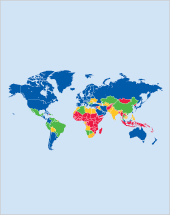
Global projections put the incidence of childhood cancers at close to 400,000 a year, with most cases and deaths occurring in lower- and middle-income countries. Progress depends on ensuring that breakthroughs in treatment and supportive care reach every child worldwide.

Sustained and robust investment in federal agencies and programs is vital to advancing pediatric cancer research and training the future workforce.

To continue the remarkable advances across the continuum of pediatric cancer science and patient care, the AACR calls on Congress to provide robust and sustained funding for the federal agencies and programs that are focused on supporting pediatric cancer research.

Significant progress has been made against pediatric cancers, with 5-year relative survival rate for all pediatric cancers combined now exceeding 85 percent. With sustained support, we can bring new hope to children and adolescents affected by cancer.
Remarkable progress against pediatric cancers is driven by discoveries across the basic, translational, clinical, and population sciences. AACR is committed to increasing understanding of pediatric cancers and advocating for research funding.

Elaine R. Mardis, PhD, FAACR, and Kimberly Stegmaier, MD, serve as the cochairs of the Steering Committee for the AACR Pediatric Cancer Progress Report 2025.
Your donation to the American Association for Cancer Research helps our more than 65,000 members worldwide drive progress against cancer.
Donate Today