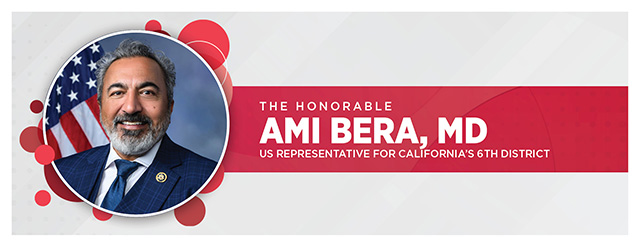
The Honorable Ami Bera, MD
Pediatric cancer has profound effects on children and their families. Could you share how it has impacted you personally, or someone close to you?
“As a young medical student, I initially thought I would become a pediatrician. During my pediatric rotation, I cared for children—sometimes infants—battling cancer. That experience left a lasting impression on me. I know it takes a resilient person to care for young patients whose lives are often cut tragically short. That’s one of the reasons I serve as co-chair of the Pediatric Cancer Caucus—because we must do everything we can not only to support children diagnosed with cancer, but also to ease the anguish on their parents’ faces. That sense of purpose has stayed with me throughout my medical career and continues to guide me in Congress.”
How has that experience influenced your work in Congress?
“One of the reasons I agreed to co-chair the Pediatric Cancer Caucus is because I strongly believe we can cure cancer. With major advances in gene therapy, biologics, and cutting-edge research, we’re not only slowing the disease—we’re helping more patients achieve remission and live longer, healthier lives. But the majority of that research is focused on adult cancers, and I want to make sure we’re making the same level of effort and investment to address pediatric cancer.”
How has the tremendous bipartisan support for pediatric cancer research helped make an impact?
“I’m extremely proud of the bipartisan effort to drive progress toward finding a cure for pediatric cancer. Through legislation like the Childhood STAR Act, we have provided critical federal support to advance research, improve treatments, and give more children the chance to grow up healthy and strong. We must maintain and expand these investments to ensure our doctors and researchers can continue building on this vital work and ultimately cure pediatric cancer.”
Over the next five years, what do you see as the best opportunities for further improving outcomes for children with cancer in the U.S., particularly in rural or underserved communities?
“In the immediate term, we must preserve a health care system that provides coverage for folks in rural and underserved communities. That means pushing back against Medicaid cuts, which disproportionately harm these areas. We’ve also seen reductions to the NIH budget that threaten our ability to advance cancer research. I’m committed to working with my Republican colleagues to prevent further cuts and to reverse those that have already been made.”
What message would you like to share with the scientists, clinicians, and patient advocates working every day to make progress against pediatric cancer?
“To the parents: Don’t lose hope.”
“To the children: You are some of the most courageous individuals I’ve ever met—bravely enduring incredibly difficult treatments.”
“To the scientists, clinicians, and advocates: Let’s keep working together to find a cure and ease the suffering. The breakthroughs we achieve in pediatric cancer research will not only save young lives—they’ll also help us better understand and treat cancer in adults.”
Return to Section: Advancing Pediatric Cancer Research and Patient Care Through Evidence-Based Policies